


Since the Bharatiya Janata Party assumed power in West Bengal in May 2026, minorities face a steady and now accelerating pattern of intimidation, harassment and violence. The past two months, civil society groups and faith communities warn, have seen a shift from sporadic, localised incidents to coordinated assaults and administrative measures that together threaten the liberty and dignity of religious minorities across the State.
Let me document here the incidents reported between May and early July, analyse the wider legal and political context, record the responses from community bodies and authorities, and conclude with concrete steps that church leaders and civil society can take now to protect lives, uphold constitutional rights and restore social trust.
Pattern of escalation
What began as isolated episodes in May has taken on a regular, replicable form. First came social media campaigns of invented videos and exaggerated allegations of "mass conversion." These are followed by street-level pressure: hostile crowds disrupting prayer meetings; mobs entering private homes and places of worship; public rituals on the margins of minority neighbourhoods curtailed or dispersed; and targeted administrative action against institutions that serve public needs, such as schools and mid-day meal programmes. The result is not merely ad hoc lawlessness but the creation of sustained fear and the chilling of communal life.
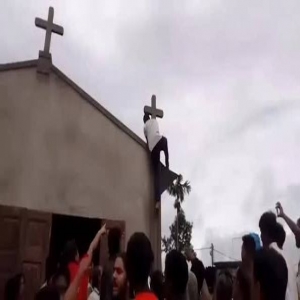
Sunday, July 5, stands out as a disturbing inflexion point. On that day, multiple attacks were reported across several districts: Murshidabad, Bankura, Sonarpur (Suvas Gram), and Purba Bardhaman's Katwa subdivision. In Murshidabad, a Christian widow's home was invaded and vandalised; in Bankura, a prayer meeting was forcibly broken up and worship materials seized; in Sonarpur, a Mizo Synod church was ransacked; and in Katwa—during a Sunday service—Grace Church was allegedly stormed, its members beaten, valuables looted, and the pastor threatened. Latest, in the list, is the gang rape of a Muslim girl, who was strangled to death and thrown into a pond in Baruipur, South 24-Parganas. These incidents, though geographically dispersed, show the same hallmark.
Targets and tactics
The targets are clear: visible minority institutions and domestic spaces where faith is practised and passed to the next generation. The tactics have become predictable. Mob entry into private premises, demands that victims renounce their faith or surrender property, seizure or destruction of religious texts, physical assault on clergy and lay participants, and the theft or misplacement of personal documents and cash, which compounds victims' vulnerability.
Alongside the physical actions are administrative moves that have an equally coercive effect. New restrictions on open air prayer in public spaces, curbs on loudspeakers near religious precincts, and removal of items from school midday meal menus that offend a majoritarian taste all signal a willingness to reshape public life to conform to a narrower cultural norm. The transfer of a school feeding programme to a religious organisation (ISKCON) that changed menus is not a neutral logistical decision; to many minority families, it reads as a subtle form of cultural coercion.
Who is responsible?
Victims and community bodies point to three interlocking sources of harm. First, activists and local affiliates who act as streetlevel aggressors. Second, political rhetoric and public campaigns—whether framed as opposition to "love jihad," "illegal conversion" or "land jihad"—that legitimise suspicion of minority communities and dehumanise religious difference. Third, administrative policies and legal reforms proposed or enacted by the state that, while couched in the language of uniformity or social reform, become tools for exclusion when applied selectively or without procedural safeguards.
The line between organised vigilantism and state complicity blurs when law enforcement response is inconsistent. On several occasions, victims had filed apprehension complaints anticipating an attack; still, the violence took place. In a statement, the IC and the SDPO, Katwa, regarding Grace Church Services & Mission School Activities, said that church services and Grace Mission school/coaching activities would remain suspended until further orders and submission of the required legal documents within 30 days. After verification, the authorities would consider allowing the resumption of both worship services and educational activities. In other instances, police intervention arrived after the fact to escort victims away and take preliminary statements, but community leaders say arrests are slow and prosecutions rarer still. This pattern breeds a sense of impunity among attackers and despair among victims.
Impact on communities
For minorities in these districts, the impact is immediate and cumulative. There is the fear for physical safety; men, women and children shaken by sudden, violent intrusions. There is the loss of property and documents that undermines families' financial stability. There is disruption to worship and communal life, weakening social networks and the charitable services run by faith communities. Finally, there is the longer term harm to social cohesion: when whole neighbourhoods watch places of worship being desecrated or private homes being targeted, intercommunal trust erodes and segregating responses follow, deepening polarisation.
Christian-run schools, hospitals and charities, many of which serve diverse socioeconomic groups, face reputational attacks through fake videos and social media campaigns that allege mass conversion or unscrupulous behaviour. Whether or not such allegations have any factual basis, they produce administrative pressure and social ostracism that can quickly choke institutions that provide education and healthcare in marginalised areas.
Legal framework and its limits
India's constitutional framework protects freedom of religion under Article 25 and freedom of ex
Draconian anti-conversion laws and the conversation around implementing a Uniform Civil Code create legal ambiguity and a chilling effect. Anti-conversion laws in other states have been deployed not solely against unscrupulous 'proselytisation' but also as pretexts to harass social service providers, interfaith couples, and ordinary worshippers. The problem is not only the text of new laws but how they are enforced: vaguely worded offences, discretionary application, and incentives for citizens to lodge complaints that then escalate into mob action.
When administrative decisions prefer one religious organisation over another in running welfare schemes, minorities see that as a structural tilt rather than an isolated policy choice. The removal of eggs from school meals after the feeding programme was transferred to an organisation associated with a single faith tradition is a case in point: it signals that state policy may reshape secular public provisioning around particular religious sensibilities.
Responses from civil society and faith bodies
The Bangiya Christiya Pariseba (Bengal Christian Council, BCP, a civil body) and other community organisations have taken two parallel tracks. First, legal and administrative: filing complaints, securing police protection where possible, and preparing legal remedies through dedicated legal cells. Second, advocacy and public mobilisation: launching memorandum submissions to the Chief Minister, district magistrates, and sub-divisional officers; conducting public documentation of incidents; and pressing for national and interfaith solidarity.
The BCP's "Memorandum Submission Fortnight," running into mid-July, aims to draw administrative attention to what it calls a "fortnight of fear" and to press for the sustained enforcement of existing laws. Its leaders have urged the state to act decisively to protect constitutional freedoms and to ensure that schools, hospitals and charities run by minority communities are not delegitimised by viral misinformation.
Other civil society groups and human rights organisations are conducting documentation work, providing medical and legal aid to victims, and preparing reports for national human rights bodies and media outlets. Church leaders, including denominational heads and parish priests, have also stepped forward to offer shelter, counsel and public statements condemning violence and urging calm.
Gaps and failures
Yet responses so far reveal serious gaps. Legal remedies are slow; FIRs are not always registered promptly; witness protection and victim compensation procedures are weak or unavailable; prosecutions, even when arrests follow, often stall in court. Political leaders' statements are mixed. Some offer unequivocal condemnation, others equivocal reassurances, but both fail to produce the decisive signal criminals need to deter future attacks.
Media coverage, while reporting incidents, often fails to provide sustained investigative follow-up that could document patterns of organisation behind the attacks or the administrative lapses that enable them. Social media platforms remain vectors for malicious content; fact-checking and content removal measures lag behind the pace at which fake materials propagate.
Why this matters nationally
West Bengal's history of pluralism, with long standing Christian, Muslim, and indigenous communities contributing to public life, makes the current trend particularly worrying. The state's civic fabric depends on the ability of diverse communities to live, worship and provide services without fear. If normative space for minorities narrows in West Bengal, the precedent will reverberate nationally, emboldening similar actions elsewhere and deepening the erosion of constitutional guarantees in practice.
The combination of legal reform talk, administrative choices that privilege one cultural norm, and streetlevel vigilantism creates an environment where minority rights are slowly sidelined. If the state machinery does not act to reaffirm the neutral administration of the law and protect vulnerable communities, the damage will be structural and long-lasting.
A moral and legal imperative for urgent action
There is both a moral duty and a legal obligation for the state to act promptly to protect minorities. Moral duty stems from the social contract that demands equal protection and respect for dignity, regardless of faith. The legal obligation derives from constitutional guarantees and statutory protections. In practical terms, this requires immediate policing responses to incidents, timely registration and investigation of FIRs, speedy arrests of perpetrators, and the use of criminal law to hold those who instigate or organise mob violence accountable.
Equally important is administrative restraint: the state must avoid policies that, whether intentional or not, erode the secular character of public provisioning. Decisions that transfer welfare programmes to faithbased bodies must be scrutinised for impartiality and their impact on social inclusion.
Recommendations for immediate action
Enforce the law impartially: register FIRs promptly, protect witnesses, and prosecute instigators and perpetrators without political bias.
1. Deploy protective policing to vulnerable communities and to places of worship when credible threats are communicated.
2. Institute rapid response legal aid cells at district levels to assist victims in filing complaints and in navigating procedures for compensation and document replacement.
3. Mandate transparency in administrative transfers of welfare programmes and restore neutral menus and service standards in public provisioning where changes have been made for religious reasons.
4. Press social media platforms to quickly take down fabricated content and support independent fact-checking.
Suggested Actions for Church leaders and civil society
1. Document and preserve evidence: Encourage congregations to keep secure records of all incidents, including written complaints, photographs, video evidence, medical reports, and witness names. Save copies of any social media posts, messages or audios that preceded or justified attacks. These are critical for legal action and for countering disinformation.
2. Legal preparedness: Work with the BCP legal cell or local legal aid organisations to file FIRs promptly and to seek interim protection orders where possible. Assemble a roster of lawyers willing to take emergency cases and to assist with the replacement of looted identity documents and loss claims.
3. Rapid response networks: Establish communication trees between parishes, schools and community centres so that an alert sent from one point reaches local police, human rights groups and neighbouring congregations immediately. Identify safe rooms or alternative venues where worship and educational activities can temporarily relocate if a building is threatened.
4. Medical and psychosocial support: Maintain a list of nearby clinics and sympathetic doctors for emergency treatment. Arrange counselling support for traumatised children and adults, including referral pathways to mental health professionals.
5. Public advocacy and media strategy: Set up a small, trained team to handle media queries and socialmedia rebuttals, ensuring consistent, factual messaging. Coordinate with interfaith partners to release joint statements and to organise solidarity vigils that reclaim public space and signal communal resilience.
6. Interfaith and civic coalition building: Reach out proactively to Muslim, Hindu, and secular civil society leaders to frame incidents as violations of the constitutional order, not merely as community conflicts. Convene district level interfaith committees to monitor hotspots and to approach police and administration collectively.
7. Legal and policy advocacy: Use the memorandum campaigns to demand clear action timelines from district magistrates and to press for monitoring by independent bodies. Lobby for state-level guidelines to prevent the arbitrary use of anticonversion provisions and for protective clauses that safeguard genuine welfare work.
8. Document service continuity: Ensure that schools, clinics and charity services maintain continuity by creating contingency plans—alternate staffing, secure transport for students, and remote learning options where possible.
9. International and national reporting: Prepare concise case files for national humanrights institutions and sympathetic media outside the state to ensure incidents receive sustained scrutiny. Where appropriate, engage national faith networks and legalpolicy organisations to amplify the call for accountability.
10. Community resilience and pastoral care: Provide steady pastoral leadership that combines spiritual solace with practical guidance on safety and rights. Prioritise the welfare of women and children, who are often the most vulnerable in such attacks.
Civil society's role in systemic reform
Beyond immediate protective measures, civil society must press for systemic change. Advocacy should aim to tighten accountability in policing, establish independent complaint-monitoring bodies, and demand transparent criteria for any transfer of public services to private or faith-based organisations. National legal groups and rights commissions should be urged to monitor the situation and to recommend reforms that close the gap between legal protections on paper and safety in practice.
Media organisations, too, must assume responsibility: credible, investigative reporting that traces patterns of organisation behind attacks, verifies and promptly debunks viral material, and holds both perpetrators and negligent officials to account is indispensable. A free and rigorous press acts as a safeguard against quiet normalisation of discriminatory practices.
Conclusion: solidarity and vigilance
West Bengal's plural history is not merely a matter of nostalgia; it is the practical basis for a functioning civil society where schools, hospitals and churches serve the common good. When those public goods are threatened by violence and by policies that privilege one cultural norm over others, the entire social compact is at risk.
The recent spate of attacks is a warning. It signals that without swift, impartial action by lawenforcement, decisive administrative restraint, and organised civic pushback, minority communities will become progressively marginalised first socially, then institutionally. Church leaders, civilsociety organisations and concerned citizens must therefore combine immediate protective measures with sustained legal and policy advocacy. The preservation of constitutional freedoms in West Bengal, as well as in other BJP-ruled States, depends, in the coming weeks and months, on this combination of practical care, legal rigour, and public moral courage.
.jpg)
 A. J. Philip

.png) Jacob Peenikaparambil
Jacob Peenikaparambil
.jpg) Renjith Leen
Renjith Leen
.jpg)

.png)
.png) Robert Clements
Robert Clements
.jpg) A. J. Philip
A. J. Philip