

 Pachu Menon
.jpg)
India's political landscape is a vibrant, chaotic, and fascinating study in contrast, driven by its massive diversity and multi-party democracy.
Governed by a mix of national coalitions and state-level regional forces, its massive electorate engages in vibrant, highly contested elections to balance local aspirations with national governance.
But whether people matter to politicians outside election years has been a profound question that eludes a sensible answer. Of course, people are indeed a consideration, but primarily as data points, economic drivers, and public opinion barometers rather than as individual citizens.
Political science and field experiments show that a 'representative system' is often structurally biased toward the more affluent classes or organised interest groups, rather than the general population.
Politicians in the country take pride in gauging the country's pulse through polling, public sentiment, and the backing of powerful interest groups rather than the direct, unmediated needs of the average voter.
However, over the past decade, the country has been experiencing profound political alignments and ideological divides defining governance, shifting the political landscape from consensus-driven administration to deeply polarised competition.
Political movements in the country have historically depended on grassroots mass mobilisation, issue-based collective action, and civil society campaigns.
In recent years, grassroots campaigns have increasingly merged traditional on-the-ground activism with digital organising, allowing localised protests to gain rapid national prominence and shape political discourses in the country.
Youth anger in India is a deep-rooted, decades-old phenomenon, originating from the mid-1970s and 1990s when systemic injustices, economic recessions, and a lack of opportunities first shattered the expectation of easy upward mobility.
The modern manifestation of youth frustration in India has, however, evolved into a fundamentally different, often non-ideological and digitally driven phenomenon.
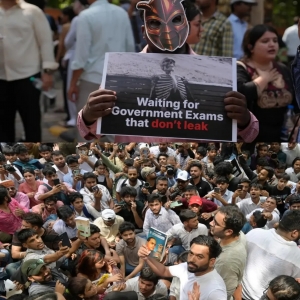
Just as the 'aam aadmi,' youth in India have long been treated as political mascots, reduced to campaign rally fillers and vote banks rather than decision-makers. The deep frustration with this tokenism has boiled over into a viral, Gen Z-led satirical uprising.
While traditional politicians from national parties to regional fronts have always established formal 'youth wings,' the new digital wave indicates a growing demand for genuine accountability rather than mere political branding.
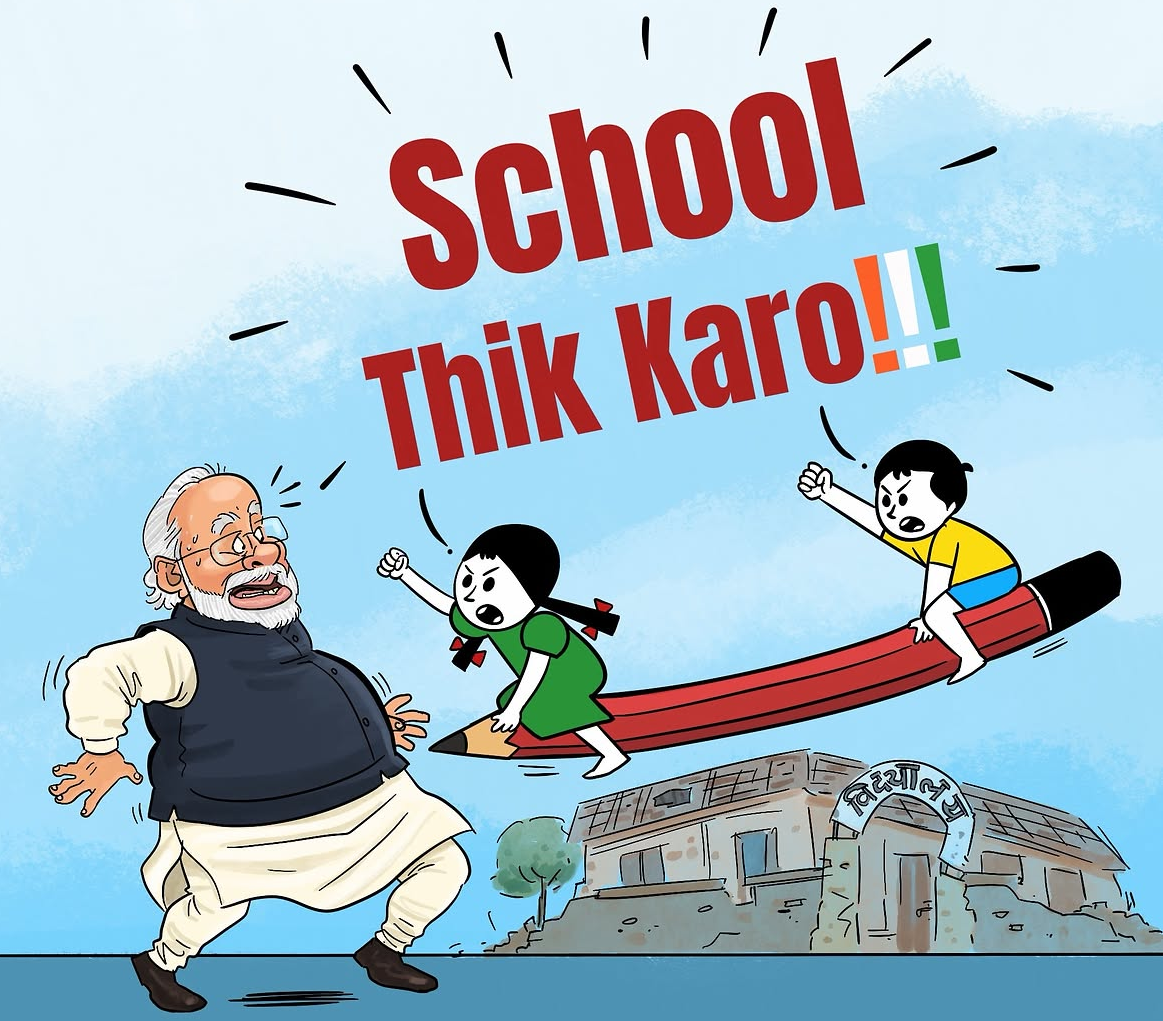
With Gen Z making up a significant portion of the electorate, their demands centre on transparency, unemployment, and fair governance.
Movements like the 'Cockroach Janata Party' represent the changing face of political protest in India, acting as a barometer for youth frustration.
Whether they become the future of Indian politics depends on their ability to transition from digital satire into organised, long-term grassroots action.
Considering the curiosity and eventual popularity the CJP has garnered, would virtual politics be a distinct possibility in the future?
Unfortunately for India, popular upwellings which sought to cleanse the system and successfully awaken the electorate have often struggled to transition from mass protests into lasting systemic reform.
Moreover, grassroots citizen crusades inevitably morph into formal political machines. This transition highlights a classic dilemma in Indian democracy.
This structural shift forces compromises, dilutes radical goals, and introduces bureaucratic hurdles that frequently cause movements to stall or dissolve entirely.
Citizen-led movements frequently find that to achieve lasting institutional change, they must participate in the very political system that they initially sought to reform.
Regional parties have historically dominated India's state-level politics, successfully addressing local aspirations, cultural identities, and regional development where national parties fell short.
Regional parties are currently navigating a shifting political landscape. While these parties have served as the primary voice for regional rights, they face increasing challenges.
In today's electoral scenario, these parties are usually relegated to acting as 'coalition crutches' in unstable coalition arrangements.
That is not to say the national parties have never shown any signs of brittleness. While the regional outfits are often the ones making headlines for breaking apart over leadership or succession disputes, national parties show structural and ideological bitterness of their own.
The BJP is the dominant political force in the country today, having been in power continuously since 2014. The current landscape could well be compared to the historic dominance once held by the Indian National Congress.
The Bharatiya Janata Party (BJP) functions as a hybrid cadre-mass party, combining an ideological grassroots-worker network with a mass-based electoral appeal. The party operates on a strictly hierarchical structure with millions of primary members worldwide.
Internal rifts and factionalism have significantly hampered the Congress for decades now. This continuous infighting frequently creates severe leadership struggles and damages the party's electoral prospects at both the national and state levels.
At the same time, it is observed that internal factionalism and mistrust are increasingly straining various state units of the BJP. The drive for rapid political expansion and the widespread induction of rival-party defectors have diluted the party's ideological discipline across multiple regions.
Across India, regional and national opposition parties are navigating precarious political realities. Driven by fragile coalitions, factional splits, and shifting loyalties, many outfits face an existential struggle to maintain governance or relevance.
Engineering defections has become an aggressive strategy actively pursued by ruling coalitions to break rival parties. From ethical to unethical, everything has become fair in Indian politics today.
But there is a gradual emergence of a new political landscape largely driven by growing voter dissatisfaction with legacy power structures.
Across both regional and national arenas, electorates are shifting away from traditional party monopolies toward issue-based and grassroots alternatives, challenging incumbents in critical election cycles.
The fragmentation of traditional blocks has paved the way for 'outsiders,' who include prominent figures from entertainment, to form new independent parties. Tamil Nadu, for instance!
In contemporary Indian politics, the traditional idea that 'the party is bigger than the individual' seems to be losing relevance, given the shift toward highly personalised, charismatic leadership, the rise of extensive social media campaigning, and the growing reliance on national leaders for state-level electoral success.
"The challenge, however, is whether democratic institutions, ideological debate, and internal party democracy can survive alongside overwhelming personal authority." (The Diplomat)
Indian politics is transitioning from a period of ideological dominance to a more competitive and distribution-focused era. Over the next decade, this drive is expected to be propelled by a massive, young demographic, a newly established reliance on coalition governance, and evolving digital mobilisation.
.jpg)
 A. J. Philip
.png) Jacob Peenikaparambil
Jacob Peenikaparambil
.jpg) Renjith Leen
Renjith Leen
.jpg)

.png)
.png) Robert Clements
Robert Clements
.jpg) A. J. Philip
A. J. Philip