
 Mathew John
.jpg)
No movement against tyranny can succeed without solidarity among the dissidents. To quote Malcolm X's terse observation: "Unity turns resistance into power." One recalls the Solidarity movement in communist Poland in the 1980s, where unity among workers and their sympathisers across the political spectrum ultimately brought down the communist government and unleashed a wave of democratic movements across Eastern Europe. It was the catalyst that brought down the mighty Soviet Union.
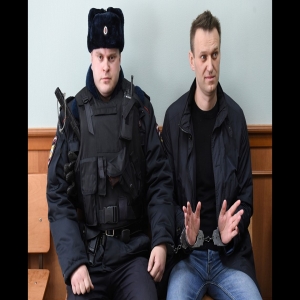
Conversely, we have the more recent tragic story of Alexei Navalny, the most powerful dissenting voice and critic of Vladimir Putin's rogue outfit. Beginning as a grassroots anti-corruption campaigner in early 2000, he emerged as a potent opponent of Putin's regime, which he dubbed an oligarchic state full of "crooks and thieves." He was seen as a threat to Putin's hold on power and was barred from standing in Russia's general election in 2017. There were several state-sponsored attempts on his life, but he remained a courageous and implacable critic of Putin, even daring to return to Russia from a safe haven in Germany in 2021. He was immediately interned and died a lonesome figure in a remote penal colony in the Arctic at the age of 47 years.
Navalny unsettled but failed to dislodge a hugely unpopular regime that carries on today in the same brutal fashion. Apart from having to contend with a stifling state apparatus, he was never able to rally around the Opposition to challenge Putin primarily because his critics, armchair liberals for the most part, missing the wood for the trees or with plain evil intent, sabotaged the resistance by constantly maligning him, quibbling about his past anti-immigrant rhetoric and support for the annexation of Crimea and for not outlining a comprehensive vision of a post-Putin state. The warring and dissensions within the Opposition ensured that Navalny's mission ended in abject failure.
The same destructive role is being played by a section of intellectuals in this country. Though every aspect of the polity – the economy, external relations, education, social cohesion - has fallen apart, the feuding and ugly opportunism among the resistance has enabled the authoritarian in our midst to motor on, unhampered. What was once an "electoral autocracy" is now a full-blown kleptocracy, with elections being rigged and corruption hitting oceanic levels, even God's abode unsafe from the brigands.
In a deeply perceptive piece last month titled "We Need to Stop Hunting for the BJP's 'B-Teams,'" the editor of The Wire, among other caveats, warns against the tendency among public intellectuals to blame Rahul Gandhi for every electoral setback and for the failure of the Opposition to effectively challenge the Modi-Shah duo. They ignore the uneven playing ground and stacked deck that the opponents of the regime are faced with - the 'brutal capture' of every democratic institution, including the Election Commission that brazenly disentitled 27 lakh 'under adjudication' potential voters from exercising their franchise in the recent Bengal election. By their unfair, misdirected criticism of even the Cockroach Janata Party, such intellectuals have ended up strengthening the Modi regime.
Speaking of which, the vitriolic attacks on Rahul Gandhi and his family by a renowned historian and self-appointed adjudicator on political correctness come to mind. In a recent piece that appeared in The Telegraph, he chastises intellectuals and journalists, specifically of Delhi, for proclaiming Rahul as a prime minister-in-waiting, accusing them of poor judgment and unkindly suggesting that they are perhaps swayed "by the seductions of being rajgurus."
He himself has been mulishly consistent in his denigration of the Nehru-Gandhi dynasty. Way back in 2014, in a Financial Times article, he laid into the Gandhi family with the very arguments that he repeats today. He accuses them of protecting the family's paramountcy at any cost and privileging their own interests over the country's and, for that matter, even the Party's. His pathological bias is revealed in his charge of nepotism when Priyanka Gandhi was nominated the Congress candidate from Wayanad, although the wider world acknowledged that she had more than earned her stripes.
In his jaundiced view, the entire blame for the Congress party's almost unbroken string of electoral losses in the last decade is attributed to the party being in thrall of the Family. He blithely ignores the magnitude of the challenge posed by the ruthless authoritarian and his minions, who have bent every institution to their will.
Even more inexcusable is the master historian's complete excision of the ruling party's single-minded campaign by means, mainly foul, of destroying the Gandhi family and the Congress for a "Congress mukt Bharat." On the contrary, he echoes the BJP IT cell trolls who have waged a relentless war of calumny against Rahul, mocking him with derogatory terms like "Pappu" and "Shahzada." He uses a more benign lexicon to convey the same message. Hurling accusations that are nothing short of trolling, he asserts that Rahul, at the age of 55, 'remains an instrument of his mother's will' and lacks 'discipline, gravitas and a curriculum vitae'; in short, he is a Pappu. He pettily accuses Rahul of "gestural gimmickry" for jumping into a pond with fisherfolk and for other overt shows of camaraderie with the common man.
Without a shred of evidence but based on the fulminations of the BJP trolls, he accuses Rahul of being incapable of sustained hard work and brands him a social media X warrior. In line with the propaganda of the trolls, he asserts that Rahul's involvement in politics is sporadic and is invariably "followed by a trip to Europe or Latin America." If Rahul was indeed such a hands-off and easy-going leader, why is it that the ruling party sees him as their biggest enemy and threat? In fact, Rahul has been in the trenches in every crisis, but the ruling party's gigantic propaganda machine would have us believe otherwise.
He is obsessed with the term "gravitas," which is what he claims Rahul lacks. It is obvious that for him, 'gravitas' means not calling a spade a spade and avoiding personal attacks on an opponent, even if that opponent - Modi - operates in a 'no holds barred' mode when dealing with his adversaries. He is guilty of prevarication and half-truths, accusing Rahul of indulging in personal attacks on Modi, "instead of focusing on governance failures or renewing his own party at the grassroots." That's a downright falsehood because no one has done more to expose the rot in the system than Rahul has. And he has paid a huge price for confronting this oppressive regime head-on, persecuted by the Godi media and IT Cell trolls, temporarily losing his Lok Sabha membership and being kicked out of his official MP's residence.
An authoritarian set-up elicits a range of responses from the citizenry. The majority of citizens are silent, petrified by fear. Some collaborators thrive in the unjust system. Then there are the dissenters who challenge the authoritarian in the best way they can. There is yet another category – the ones who run with the hares and hunt with the hounds. These guys are critical of the regime but neutralise the impact by being even more scathing of the Opposition.
As a means of self-preservation, it certainly helps to play both sides, which is what the historian has been doing as a political analyst. There is something dreadfully suspect in his equivalence - critiquing both the regime as well as the Opposition. And this is not the first time his democratic, secular credentials have been questioned.
In 2018, when the persecution of Muslims was at its peak, he wrote a piece titled "Liberals, sadly" in response to Harsh Mander's anguished cry at the discrimination, bigotry and hate against the Muslim community. In a stunning riposte to Mander, the historian charges Muslims with obscurantism and living in a "medievalist ghetto." He endorses a Dalit leader's advice to Muslims at a political rally to eschew wearing burkas and skull caps and, in fact, gives the rank bigotry of the Dalit leader a positive spin by stating that such counsel was not "a mark of intolerance but of liberalism and emancipation."
As one of the country's leading voices, with millions of admirers, the historian's views matter hugely. He has his knife into the Gandhi family, which he periodically turns, and justifies by proclaiming that as the future of the Republic is at stake, "one is forced to state one's case directly and even brutally." Likewise, considering the stakes involved, it is hoped that he receives forthright criticism of his stance in the right spirit.
.jpg)
 Cedric Prakash
.jpg)
 A. J. Philip
.jpg)
 Jacob Peenikaparambil

 Dr Suresh Mathew
.jpg)
 John Dayal
.jpg)
.jpg)
.png)
 Robert Clements
.jpg)
 P. A. Chacko