

.jpg) Rani Punnasseril
Rani Punnasseril
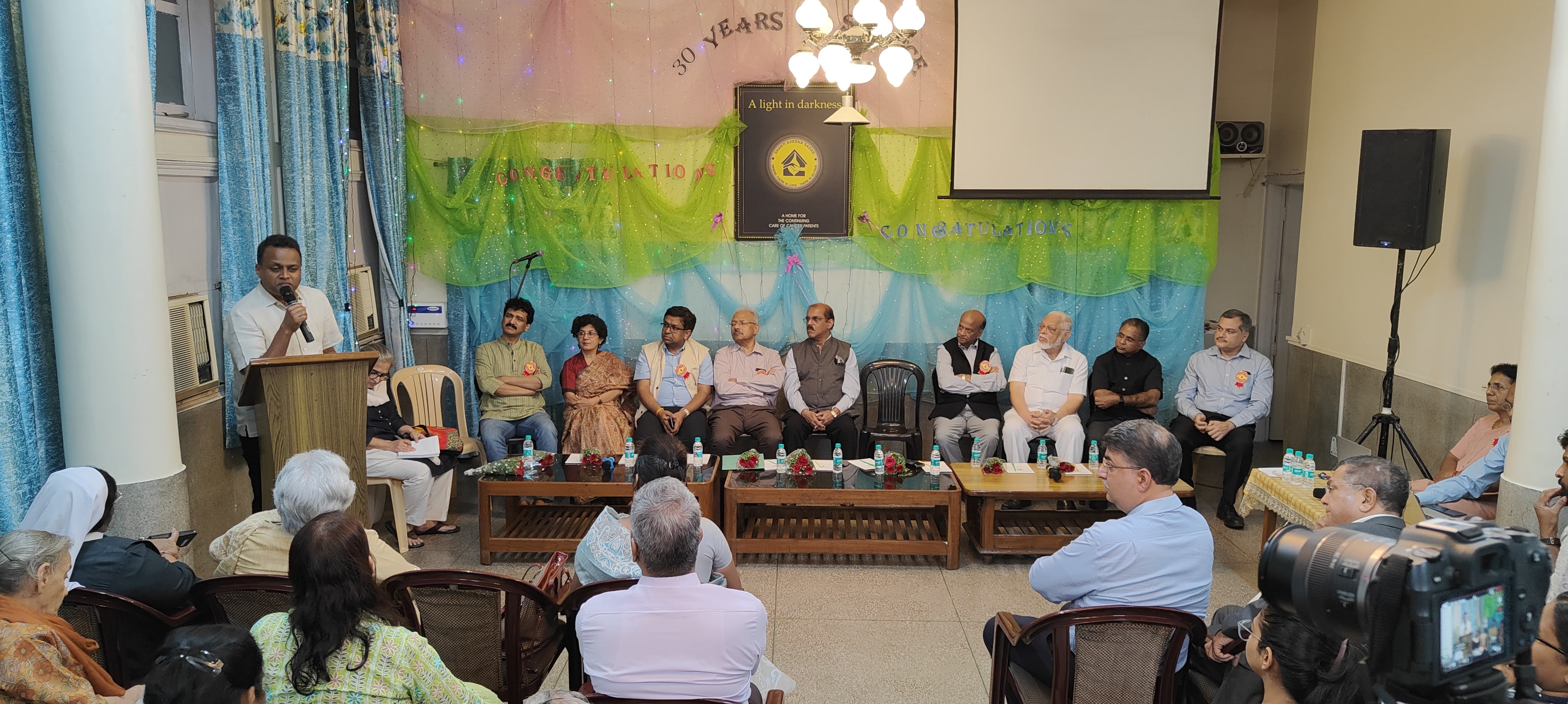
Shanti Avedna Sadan (SAS), New Delhi's pioneering palliative care centre for cancer patients, celebrated 30 years of dedicated service with a three-day series of impactful events. Spearheaded by Sr Tabitha Joseph, Administrator of SAS, and a devoted team, the celebrations honoured the legacy of hospice care while addressing crucial issues in palliative support.
The centre, run and managed by the Sisters of the Holy Cross Menzingen, North Indian Province, was supported throughout the event by Holy Cross sisters from various communities, including the Provincial, Sr Linet Kottappillykudy, who attended to show solidarity and support.
Founder and Managing Trustee Dr LJ de Souza, a visionary oncology surgeon, shared his inspiration and journey in establishing Shanti Avedna Sadan. Reflecting on his early work with TATA Hospital in Mumbai, Dr de Souza described how his faith in the Almighty helped him navigate the initial challenges of founding a free palliative care centre for cancer patients. His foresight led to establishing three Shanti Avedna centres - first in Mumbai, followed by Goa, and then New Delhi, each offering free, compassionate care. Dr de Souza emphasised the significance of providing this support, especially for patients exhausted by the financial burden of advanced cancer treatment, finding immense relief in the centre's services.
The events began on November 7, 2024, with a gathering for families of former patients, offering comfort and gratitude. On November 8, SAS brought together volunteers and trustees for a day of reflection and appreciation. The final day, November 9, included:
A roundtable with Principals from local nursing colleges.
Focusing on the role of nurses in palliative care.
Integrating hospice services.
Overcoming stigma around end-of-life care.
The evening symposium, "Voicing and Acknowledging Hospice Care," was inaugurated by Adv Haris Beeran, Member of Parliament. Dr de Souza addressed the ongoing need for policies supporting hospice care and SAS's unique role in providing accessible, free services for patients. Mr Hamsa, a volunteer and NGO representative, emphasised the need for uniform policies across states.
Adv Fr Jaisson Vadassery, Executive Secretary of the CCBI Commission for Migrants, highlighted the struggles migrants and refugees face in accessing palliative care, comparing their plight to travellers lost in a storm. He emphasised that volunteers are the lighthouses guiding these individuals, but their efforts need stronger governmental support. "The backbone is voluntarism; it needs to be supported well by the policies of the government," the urged, calling for a partnership between grassroots efforts and state policies to ensure palliative care reaches all who need it.
Dr Rakesh Garg from AIIMS, Delhi, moderated the session, emphasising the need for broader advocacy and accessibility in hospice care.
Adv Beeran conveyed his support for the concerns raised, pledging to raise these issues in Parliament and advocating for policies that streamline hospice care registration, making services more accessible for patients and their families.
Dr Aswin Desouza, Surgical Oncologist and trustee of Shanti Avedna Sadan presented the way forward to the participants, emphasising the importance of expanding palliative care services, raising awareness, and strengthening partnerships with various stakeholders to ensure broader access and quality care for patients.
In recognition of the tremendous contributions of volunteers to the growth and functioning of SAS, all volunteers were awarded mementoes for their excellent service at the concluding event.
The program concluded with a united pledge:
"We dedicate ourselves to being a light in the darkness for those who face the end of life. We commit to offering comfort, dignity, and love to cancer patients in their final journey, ensuring they are surrounded by peace and care. We vow to stand by them, honouring their courage and resilience, and providing palliative support that upholds their spirit and soothes their pain. In every action, we strive to be beacons of hope and kindness, illuminating their path with respect and compassion."
Shanti Avedna Sadan remains committed to providing comfort, dignity, and support, serving as a beacon of compassion for those on the final steps of their journey.
.jpg)
.png) Cedric Prakash
Cedric Prakash
.jpg) Elsa Lycias Joel
Elsa Lycias Joel
.jpg)
 A. J. Philip
.png) Jacob Peenikaparambil
Jacob Peenikaparambil
.jpg)
.png) John Dayal
John Dayal
.jpg)
.jpg)
.png) Joseph Maliakan
Joseph Maliakan
.png)
.png) Robert Clements
Robert Clements
.jpg) Cedric Prakash
Cedric Prakash
 ICPA
ICPA