

.png) Joseph Maliakan
Joseph Maliakan
.jpg)
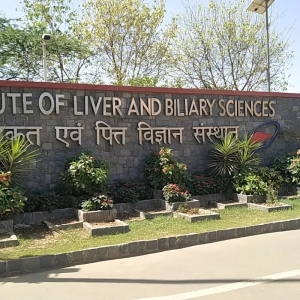
The Institute of Liver and Biliary Sciences (ILBS) is a mono-super speciality hospital for liver and biliary diseases established by the Government of the National Capital Territory of Delhi. It is located in Vasant Kunj, South-West Delhi. However, the poor have little access to its facilities.
On December 9, 2025, Jitender, a 24-year-old electrician working at IP Extension, Delhi, who had undergone a kidney transplant in 2022, was taken ill and admitted to Indraprastha Apollo Hospital, New Delhi, where his kidney transplant had been carried out.
Unable to bear the high expenses at Indraprastha Apollo Hospital, where daily expenses reached nearly ?80,000, Jitender's uncle, Khemchand, also an electrician, took him to ILBS around 6 pm on December 11. At the hospital casualty department, the duty doctor demanded a deposit of ?75,000 before the patient would be admitted.
When this writer, a veteran journalist who has extensively covered health issues in Delhi for decades, contacted the hospital and questioned how a Delhi government-funded institution could demand such a large sum from a poor Scheduled Caste youth, the doctor on duty replied that this was the hospital's standard practice. According to him, the deposit was being demanded under instructions issued by the Director of ILBS, Dr SK Sarin, who was not available for comment.
From ILBS, Jitender was taken to the All India Institute of Medical Sciences (AIIMS), which also declined to admit him. On December 12, Jitender was admitted to the casualty department of Safdarjung Hospital in the afternoon. However, at midnight, in the biting Delhi winter, when his condition became critical, he was discharged.
He was then taken to Nexis Multispeciality Hospital and Research Centre, Noida, a private hospital, where he breathed his last at 5.30 am on December 15.
Jitender could perhaps have been saved had any of the three publicly funded hospitals — ILBS, AIIMS or Safdarjung Hospital — provided timely treatment. Complaints to the Union Health Ministry regarding the alleged negligence by these government hospitals, which his family believes contributed to his death, have so far yielded no result.
One of the major complaints against leading government hospitals in Delhi is that many of them foster a distinct "VIP culture." The most advanced facilities in public hospitals are often perceived as being more accessible to VIPs, ministers, Members of Parliament, Members of Legislative Assemblies, senior bureaucrats and top police officials than to ordinary citizens.
One of the serious allegations against ILBS is that the Institute operates on a revenue-sharing model in which doctors, much like in the highly commercialised private healthcare sector, receive incentives linked to patient billing. Critics allege that this system encourages the prescription of unnecessary and expensive tests and procedures.
Admission to ventilator or ICU facilities at ILBS can reportedly cost up to ?1 lakh a day, an amount comparable to charges levied by leading private hospitals. There have also been complaints that patients are charged different rates for the same procedure depending on their social or official status — in other words, on how important they are considered. It is alleged that charges for the same procedure can range from ?3,000 to ?25,000.
Another controversy surrounding ILBS concerns the continuation of Dr SK Sarin as Director of the Institute from its inception in 2010 until the present day.
The appointment of Dr Sarin, a renowned hepatologist and recipient of the Padma Bhushan, originated from the Central Government Health Scheme (CGHS) cadre, where the retirement age is 65 years. He was initially appointed Director on April 20, 2010, for a five-year term. This was followed by a series of extensions.
Subsequently, Dr Sarin was appointed Vice-Chancellor on May 3, 2018, until the age of 70, and Chancellor on August 20, 2022, for a further five-year term.
Critics argue that Dr Sarin's repeated extensions and appointments did not always follow the procedures and regulations prescribed by the University Grants Commission.
There have been several efforts to find a replacement for Dr Sarin. Advertisements to fill the post of Director were issued on two occasions. In July 2024, interviews for the position were conducted and attended by a number of eminent candidates. However, the final decision was reportedly kept pending, paving the way for further extensions to Dr Sarin's tenure.
ILBS, funded by the Government of the National Capital Territory of Delhi, is an autonomous institution with Deemed University status granted by the University Grants Commission. The Lieutenant Governor of Delhi serves as the appointing authority for the Institute.
However, ILBS today presents what critics describe as a highly unusual governance structure, in which one individual has, by one means or another, remained at its helm from its inception in 2009 to the present day — a period of nearly 17 years.
Only an impartial and independent inquiry into the affairs of ILBS, they argue, can reveal the full truth.
In the meantime, it has been learned that several individuals who claim to have been adversely affected by ILBS's functioning have filed petitions before the Delhi High Court and the Supreme Court, seeking a court-supervised inquiry into the affairs of the publicly funded institution.
.jpg)
.jpg)
.png) Jacob Peenikaparambil
Jacob Peenikaparambil

.png) John Dayal
John Dayal
.jpeg) Joseph Maliakan
Joseph Maliakan

.png) Dr Arnald Mahesh SDB
Dr Arnald Mahesh SDB

.jpg) Jose Vattakuzhy
Jose Vattakuzhy
.png)

.jpg) Isaac Gomes
Isaac Gomes
.png)
.png) Robert Clements
Robert Clements