

.png) Robert Clements
Robert Clements
.png)
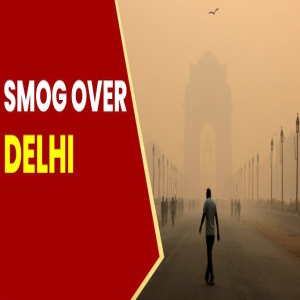
There's a deadly smog over the capital.
A dense, suffocating haze that hangs low over buildings, institutions, and common sense. This is not the kind that makes your throat burn or your eyes water. This one settles quietly in the mind, blurring judgment and numbing outrage.
In this smog, law enforcers struggle to distinguish between criminals and those protecting freedom. The man raising his voice for rights appears more threatening than the one quietly abusing power. Batons move faster than brains, and handcuffs seem magnetically drawn to dissent. Justice, squinting through the haze, often grabs the nearest inconvenient citizen and calls it law and order.
Journalists fare no better. Sitting behind polished desks, they inhale deeply of the same poisoned air. In this fog, injustice is repackaged as bold governance, and justice is dismissed as obstruction. Headlines shout achievements while whispering failures, and sometimes not whispering them at all. Questions are edited out because answers might be uncomfortable. Silence is called balance, and obedience is praised as responsibility.
The government insists it sees clearly. In fact, it assures us that visibility has never been better. When global indices gently but firmly point out that the nation is slipping toward the bottom in poverty, freedom of ex
And then the dinner invitations: In the smog, etiquette becomes strategy. The leader of the opposition is not invited, but a friendly dictionary-brained opponent is. This, we are told, is statesmanship. Exclusion is dressed up as diplomacy. Loyalty is measured not by constitutional role but by personal convenience. Those left out are accused of being irrelevant, while those invited are paraded as proof of inclusiveness.
Inside the House and outside on the streets, the smog grows thicker. Leaders shout hate speeches with alarming ease. Some are scripted, others spontaneous, but all are delivered with confidence. The applause is thunderous, loud enough to drown conscience. Division is celebrated as clarity, and prejudice is waved like a flag.
Meanwhile, ordinary citizens walk through this smoggy haze, sensing something is wrong even if they cannot name it. They notice that asking a question now requires courage, and silence feels safer than speech. They wonder when love for the country only means unquestioning loyalty to those in power.
There is smog over the capital.
It dulls empathy, distorts vision, and convinces people that shouting is the same as strength. This is not a problem that can be solved with emergency meetings or reassuring speeches. This smog will lift only when we voters force political leaders to choose humility over hubris, truth over triumph, fairness over fear, and accountability over applause.
Until then, breathe carefully. This smog does not merely cloud the air. It clouds the soul of a nation...
.jpg)
 A. J. Philip
.png) Cedric Prakash
Cedric Prakash
.jpg)
 P. A. Chacko
.jpg)
.jpg)
.jpg) Thomas Menamparampil
Thomas Menamparampil
.png)
.png) Robert Clements
Robert Clements
.jpg)
.png)
.png) Chhotebhai
Chhotebhai