

.png) Aarti
Aarti
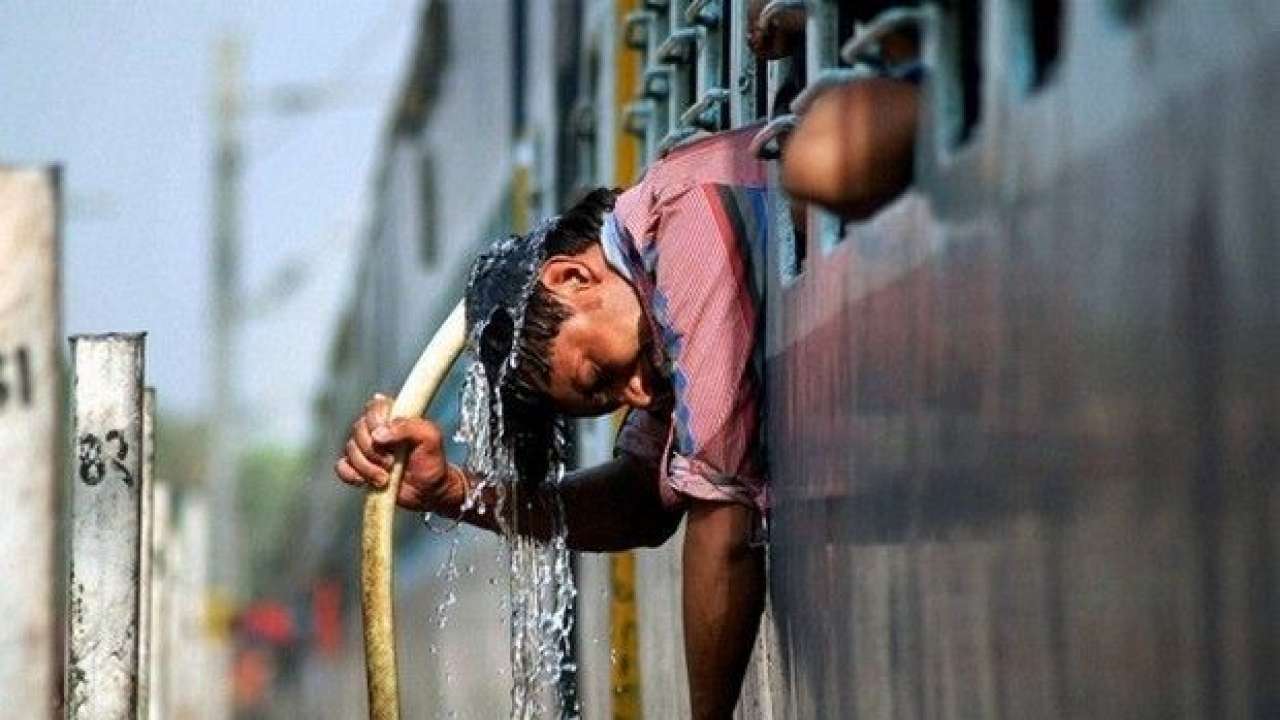
Ever since the global pandemic COVID-19 silently struck, humanity across the globe has been facing unprecedented challenges. Amidst soaring power demand, rising temperatures coupled with extreme heat waves literally roasting many of our towns and cities, we are living in turbulent times. Scientists would be quick to point out that the current heatwaves are as a result of human activities like recklessly burning coal and other fossil fuels.
In India, usually heat waves, typically occur between March to June. At times they extend till July over the Indo-Gangetic plains. On an average, 5-6 heat wave events occur every year over the plains of northwest India, Central, East and North Peninsular India across Punjab, Haryana, Delhi, Uttar Pradesh, Bihar, Jharkhand, West Bengal, Odisha, Madhya Pradesh, Rajasthan, Gujarat, parts of Maharashtra, Karnataka, Andhra Pradesh, Telangana, Tamil Nadu and Kerala.
When the temperature reaches extremely high levels or when the combination of heat and humidity causes the air to become uncomfortable, extreme heat or heat waves occur. The cause for concern is that such heat waves seem to happen more often, affecting humans, flora and fauna, both directly as well as indirectly.
Notably, its related illness ranges from mild conditions such as a rash or cramps, to potentially fatal conditions such as heat stroke. Although the body normally cools itself by sweating, it may not be enough during extreme heat thus causing a person’s body temperature to rise faster than it can cool itself down. Such situations can cause severe damage to the brain and other vital organs. Even though older adults and children are generally at risk, heat waves can also affect healthy people if they participate in strenuous activities during the hot weather.
When hot weather continues for some days, according to reports, it can worsen chronic conditions especially among those with comorbidities. Notably, when humidity increases along with temperature, it can compound the situation. During extreme hot weather, due to continuous sweating, blood sugar levels may rise and blood pressure drop. Also, rapid increase in heat may compromise the body's ability to regulate temperature. This can result in a host of health issues like heat cramps, dizziness, fainting, exhaustion etc., thereby placing significant demands on health and emergency services.
Another stark reality is that heat wave seems to have disrupted industrial activity. More so because, with the demand for power rising across States, scheduled power cuts are in vogue. As an immediate measure, to ensure movement of freight trains laden with coal towards power generation plants, the Indian Railways has cancelled nearly 650 passenger/express trains and diverted another 42 of them.
In 2019, as the temperature rose to about 44 degrees Celsius in Argentina’s Chubut Province, considered one of the largest colonies for Magellanic penguins (known for its black body and white belly), the resultant heat wave left about 354 penguins dead.
Similarly in June last year, a village in British Columbia, Canada, experienced the country’s highest-ever temperature of 49.6 degrees Celsius, a wildfire brought on by the heat wave killed 1,400 people.
In India, there have been 6495 deaths between 2010 and 2020 due to heatwaves. A whopping 2081 deaths were recorded in 2015 and 433 deaths in 2013.
Activists seem to point out that landfill sites ought not be the last resort for waste which cannot be recycled but landfills have become major sources of pollution, contaminating both air as well as water. They are considered the ultimate waste management solution, globally and India is no exception.
The infamous fire that began seemingly out of nowhere this April 26 at the Bhalswa landfill site in Delhi is still being extinguished at the time of writing this article. 30 fire tenders and 100 fire personnel are said to be on the job. According to an Indian Express news report, the landfill site is simply unapproachable as the garbage mounds are tall (54 metres – nearly as tall as the Leaning Tower of Pisa) and unstable, thereby posing risks for the fire-fighters to move around and douse the fire.
But what have landfills to do with heat waves?
Well, according to the International Solid Waste Association, a global, independent and non-profit making association, landfill sites are partially responsible for global warming as they generate and release biogas which is a mixture formed primarily of methane gas and carbon dioxide - two of the gases that cause climate change and an increase in the planet's temperature. If timely action is not taken and the current situation continues, worldwide, landfill sites will account for 10 per cent of greenhouse gas emissions by 2025.
Although the Bhalswa landfill fire is just a tip of the ice berg, during his recent interaction with Chief Ministers on Covid-19 situation, Prime Minister Narendra Modi reportedly did mention that “the heat is increasing rapidly in the country and it is getting very hot before time…”.
Therefore, we as a community need to take note of the writing on the wall and act in the right earnest, because, heatwave conditions are on the forecast once again for the national capital on May 10 and 11. During this period, the maximum temperature is predicted to be around 43 or 44 degrees Celsius.
With health experts cautioning that the prevailing heat wave conditions could lead to serious health issues, it is important to handle the situation with care and caution.
There is a need to balance activities in order to allow the body cool itself.
To sum up, those at high-risk ought to totally avoid going out in the sun as heat would intensify the stress on their heart and lungs.
Further as the blood temperature rises, it can curdle proteins in the brain, thereby leading to neurological damages and even prove fatal sometimes.
At an individual level, staying hydrated with lots of rest is the best way to manage heat waves when such forecast are announced by the authorities.
Apart from avoiding direct exposure to sunlight, wearing light-weight loose fitting and light-coloured clothes, simple precautionary measures to avoid the risk of heat-related ailments merit consideration.



.jpg)
 A. J. Philip
.jpg)
.png) Jacob Peenikaparambil
Jacob Peenikaparambil

.png) Chhotebhai
Chhotebhai

.jpg) P. A. Joseph
P. A. Joseph
.png)
.png) Robert Clements
Robert Clements
.jpeg) A. J. Philip
A. J. Philip
.jpg) Jacob Peenikaparambil
Jacob Peenikaparambil