

.jpg) Mathew John
Mathew John
“Imagine there are no countries
It isn’t hard to do
Nothing to kill or die for
And no religion too
…No need for greed or hunger
A brotherhood of man.” - John Lennon
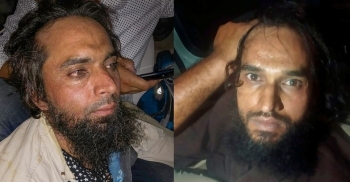
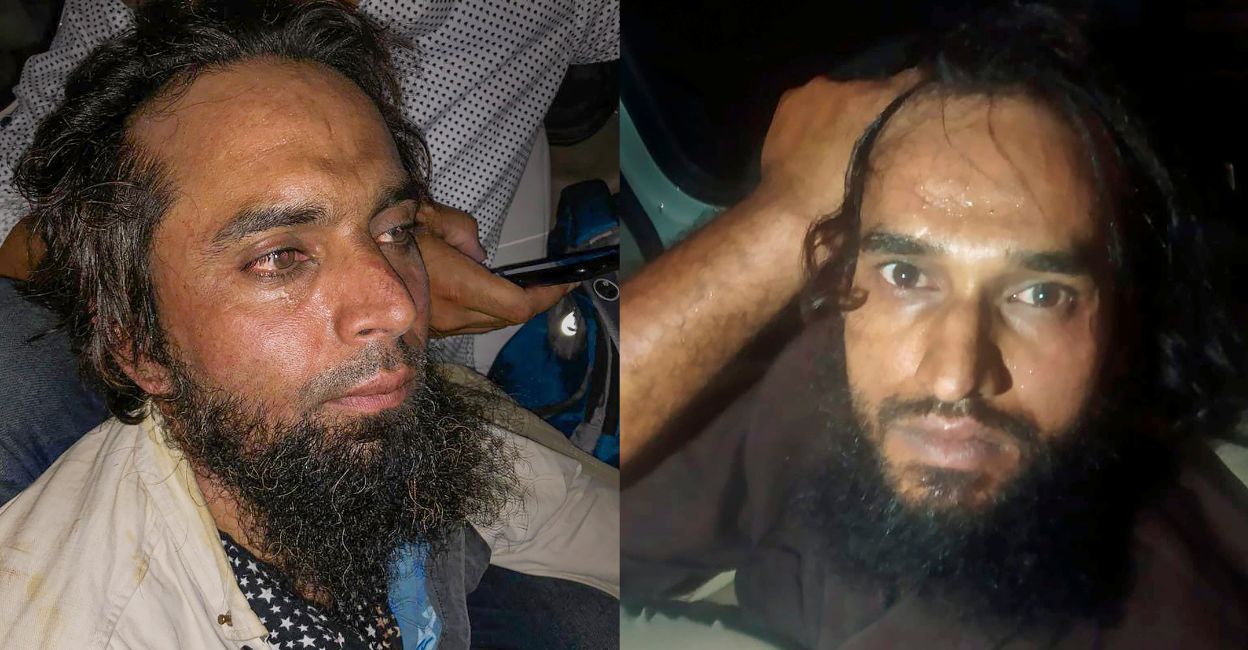
In our depraved, sick society, religion seems to be the driving force for man’s inhumanity to man. A few days back in Udaipur, in another diabolical crime committed in the name of God, two bestial human vermin, masquerading as crusaders of the faith, beheaded a Hindu tailor as revenge for the disrespect shown to Prophet Muhammad. They even released a video smugly justifying the killing, vindicating Umberto Eco’s observation that people are never so completely and enthusiastically evil as when they act out of religious conviction. And so morally diseased have we become that there are any number of bigots who perceive the two killers as martyrs for a cause.
It’s a surreal contradiction: in our heathen godless world, religion has smashed the walls that corralled it from the State and is now front and center in the public arena, the ultimate arbiter of temporal power. No longer the harbinger of peace and brotherhood, it has become a dubious expedient for gaining worldly control. It frightens to see the cold ferocity of religion as it plays powerbroker, devoid of the moral, spiritual essence. So virulent is the religiosity on display that, to recall Edmond de Goncourt’s sardonic observation, God might view atheism as less of an evil than religion.
The deepest philosophical musings on life can, on occasion, spring up from where you least expect it! Even at the cost of raising the hackles of highbrow pundits of philosophy and religion, I strongly commend the pop artist, John Lennon’s uncomplicated and insightful understanding of our conflicted world and the healing potential of secular humanism that he so poignantly articulated in that phenomenal ode to brotherhood and caring, titled “Imagine”. The thinker in the famed Beatles band, Lennon was a contrarian at heart who proclaimed that the Beatles were more popular than Jesus, for which blasphemy he is thought to have paid with his life at the hands of a crazed fan.
Lennon preached a sermon on religion and humanism that was putatively profane but even the gods above would grudgingly acknowledge that he understood their message better than their legions of spurious followers who have forgotten the intrinsic spirit of faith in their obsession with power and pelf. He said: “I believe in God, but not as one thing, not as an old man in the sky. I believe that what people call God is something in all of us. I believe that what Jesus and Muhammad and Buddha (and Ram) and all the rest said was right. It’s just that the translations have gone wrong.”
And so terribly misguided have been the translations that they are an insult to the fundamental precepts that the founders of the religions envisioned. In the mad jousting for terrestrial power, religion has become a key participant. Look at what’s happening in the Ukraine war, the gravest man-made crisis since World War II. Patriarch Kirill I, the Supreme head of the Russian Orthodox Church and leader of 100 million faithful, by bestowing ecclesiastical imprimatur to Putin’s unconscionable invasion of Ukraine, has provided him a protective spiritual shield in return for vast material resources from the Kremlin. He remains unmoved by the world’s opprobrium, choosing to ignore Pope Francis’s sage counsel that the Church authorities should not act as “clerics of the State” and that the patriarch should not “transform himself into Putin’s altar boy.” Putin continues to rain bombs on Ukraine killing thousands of innocents, while the believers in Russia applaud.
The USA has the largest population of Christians in the world, roughly 246 million, but that does not, in any way, betoken the country’s devotion to the Christian values of compassion, caring and justice. While it is true that no politician in America can advance professionally without showcasing his fealty to Christianity on his sleeve, it is largely a superficial, fake religiosity, epitomized by the contemptible President Donald Trump in 2020 standing outside the St John’s church in Washington DC, striking different poses holding a Bible aloft, ostensibly upside down. Despite being a White racist, an unmitigated purveyor of falsehoods, and personally degenerate, Trump continues to command the support of most White evangelicals and the majority of White Catholics, whose Christian faith sits easily alongside their unchristian racist bigotry. Even the alleged “high-minded” ban on abortion is nothing but a self-righteous, majoritarian imposition that tramples on individual freedom and has no place in a truly democratic society. Legislating a particular creed’s dogma into a law subjugating all women, denies them independence and the personal right to bodily autonomy.
Religion in many predominantly Muslim countries is a complete distortion of the faith, diminished to an instrument of oppression that is misogynistic, homophobic and malevolently unjust. What we are witnessing in our religion-tainted country is the hijacking of the public square by a menacing religiosity that has already fragmented our society. Take, for instance, the outrageous happenings at the hallowed Golden Temple some weeks ago. On the 38th anniversary of Operation Bluestar, the Jathedar or chief priest of the Akal takht sent out a public appeal that sounded like a war cry, urging his flock to strengthen the Sikh religion, and calling upon Sikh organizations to encourage training, especially of the youth, in the traditional martial arts and modern weaponry. He warned against insidious conversions to Christianity in the border districts of Punjab. All this was spewed within the sacred precincts of the Golden Temple, whilst a large number outside shouted slogans in support of Khalistan and Bhindranwale. Stated mildly, this spectacle of aggressive religious militancy would not have pleased Guru Nanak who preached virtue, equality, brotherhood and love.
For the spiritual head of a religious organization to make such a bizarre appeal to arms, is a depressing reminder of how far we have regressed from the “Secular, Democratic Republic” that our founding fathers envisaged, but the Jathedar’s rant is merely an addendum to the main show that kicked off eight years ago, orchestrated by a dispensation that has weaponized religion to remain in power. The most vivid manifestation of our theocratic proclivity, and that too under strobe lights, was our obsessive, publicity-crazed Prime Minister conducting the Shilanyas and Bhumi pujan for the Ram Mandir in Ayodhya, a glitzy spectacle that was a public demonstration of brute majoritarian power. The message was unmistakable: the incense-filled air, the puja, the chanting announced the terminal decline of secularism in our country.
It is worth noting that the meaning that our Constitution has bestowed on the word “secularism” is this country’s contribution to the richness of the English language. For us, secularism is not a term to denote the State’s separation from religious or spiritual matters but is defined as the neutrality of the state in matters of religion and opportunity for all religions to flourish and grow subject, as Article 25 puts it, “to public order, morality and health.” Our secularism sees religion as a force for good that can contribute to enhancing the quality of life of the people as also individual groups. Curiously, though, our interpretation of the term “secularism” finds no place in the Oxford English Dictionary, which limits its meaning to the principle of separation of the state from religious institutions. Does this omission reflect a burgeoning perception that our version of secularism is turning out to be so much hot air?
In the last few years, we have debased secularism as a concept by perceiving it as a concession made by the religious majority in the State to the minority cults subsisting within its borders. But there is much more to this assault on secularism. Whereas the earlier attacks quibbled over “pseudo-secularism” and its perversions, without questioning its sanctified niche in our Constitution, in recent years the very idea is being challenged. Stated bluntly, the objections stem from the fact that secularism is a repudiation of the totalitarian concept of the State and emphasizes the belief that there are areas of human interest and endeavour wherein the state has no role to play. But what these critics most resent about secularism is its courageous hospitality to ideas; it does not refer to dissident views as an affront to majority opinion.
This is certainly not the country I knew as a young man. I remember Arun Shourie, arguably the most intrepid editor in Indira Gandhi’s time, being extremely critical of her election campaign in Chikamangalur in 1978, pointing out her hypocrisy in “preaching secularism in between visits to every temple in the vicinity.” Religiosity in the public square was then frowned upon. Today, the public flaunting of religious fervour is the norm, not for bringing people together but for dividing them. Religion has not only become integral to politics but is functioning as a disruptive and disintegrating force. Instead of celebrating our rich cultural heritage, of which religious traditions are a conspicuous ingredient, what we now witness is the menace of one religion’s absolute power abetted by the State, threatening the diversity of traditions and cultures that constitute the Indian nation.
The bleak reality that more people have been killed in the name of religion than for any other single reason is cause for concern. What should worry the world even more is that religious fanaticism is growing. At home, religion has mutated into a terrifying gospel of hate that is relentless and overweeningly self-righteous. Which brings me to a story that may have been told before but bears repeating for its relevance to the subject at hand. There was a public sinner who was excommunicated for his derelictions as a Christian. He took his woes to God about not being allowed into Church, to which God responded: “What are you complaining about? They won’t let me in either.”
I suspect Lord Ram would echo similar feelings about the grandiose temple being built in his honour in Ayodhya!
(The writer is a former civil servant. Views are personal)
.jpg)
 A. J. Philip
.jpg)
.png) Jacob Peenikaparambil
Jacob Peenikaparambil
.png) Chhotebhai
Chhotebhai
.jpg) P. A. Joseph
P. A. Joseph
.png)
.png) Robert Clements
Robert Clements
.jpeg) A. J. Philip
A. J. Philip
.jpg) Jacob Peenikaparambil
Jacob Peenikaparambil