

.jpg) Paul Thelakat
Paul Thelakat
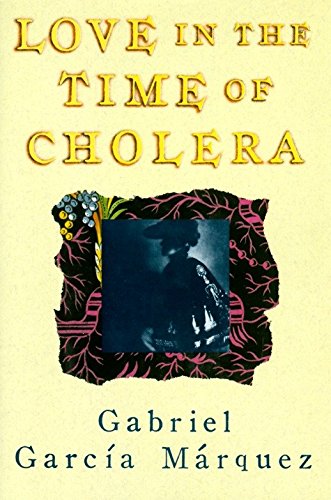
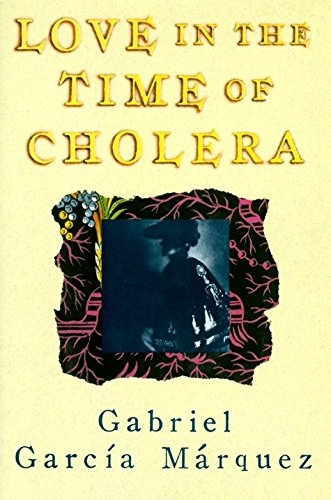
Gabriel Garcia Marquez published ''Love in the Time of Cholera'' which he calls a novel of two people’s love, thwarted in their youth, finally flourished when they are aged. Love is the life-breath of any and every one. But the air we breathe is infected by plagues of different hues and natures. Does the author spell out what the plague is in his novel? It is called cholera, but what is it in reality? He seems to say the Western concept of development is the plague. Development is domination. Camus spoke of the plague which is nothing but fascism and war. There was an insomnia plague in ''One Hundred Years of Solitude.'' Sophocles speaks of two plague infecting Thebes. ''A Journal of the Plague Year'' by Daniel Defoe is one of my favourite books on plague. Plagues are like imponderable dangers that surprise people. Black plague caused the death of 75–200 million people, peaking in Europe from 1347 to 1351.
“Books are written on Florence and Athens. These cities have what it takes to entice or exalt. They appease a certain hunger of the soul whose nourishment is memory. But no one would have an idea to write on a city where nothing tempts the mind, where ugliness has taken on a measureless part, where the past is reduced to nothingness. And yet sometimes this is very tempting … Oran is one of these cities.” These are Camus’ opening words of The Plague. While speaking of middle-eastern countries affected by the plague, it leads us into an allegorical tale about the relationship between man and his environment. Oran is personified in The Plague and becomes a collective protagonist in its own right. Rieux, the narrator, does not provide political, socio-economic, or statistical information. The leaders and administrators remain anonymous both in name and function, referred to only as “the authorities,” “the municipality,” or “the administrators.”
The first step is the much-delayed realisation of the plague, where the administration finally calls It’s Life, That’s All. Plague ends with the administrative order of quarantine or a lockdown -- “Proclaim a state of Plague. Close the town.” There is a sudden disruption in the city’s activities, a work stoppage. When freedom is curtailed do the citizens ruminate about the availability of real choices. The next part sees mass-death in the city which is personified to highlight the suffering of the city-dwellers, whilst the penultimate part describes the gradual departure of the plague. The last part becomes a mirror-opposite of the first, the closing is replaced by the opening and the moroseness by a certain impression of victory. But what strikes immediately is – a victory against whom? What was the city protected against, or rather, what weapon did the city house that had to be contained and not let out into the rest of the world? Sophocles’ Oedypus is concerned with the crime and the criminal which causes the plague. Purging the enemy is the only way of salvation from the plague.
The drama of Oedypus Rex opens with a prayer service at the very entrance of the palace of the king Oedypus. The priest and the people are praying to the king to save them from the plague. Oedypus asks the question, why is there a plague at all? The accepted answer is, there lives in the country the killer of the king. The regicide is parricide as well. The father of the nation is killed. The killer has to be hunted out. Oedypus starts the investigation and ends with the sharp words of the prophet of the country Tiresias pointing the accusing finger at the king, telling him “You are the killer you hunt”.
Similar prayer services take place in two places in Kerala: in the capital city, the priests and people are praying to the king to save them from a plague. The same thing happens in Ernakulum where the priests and people are praying to their king to spare them from legal domination. Any demonstration or protest is a linguistic ex
At the very end of the Plague of Camus, the meaning of The Plague is stated as denial of the values that the city stands for. Civilization fell apart, and the survivors, scattered as in a primitive world, had to fight for survival, echoing Darwinian theories: Civilization was crumbling, and it was each for himself. Everything is commodified and de-personalised. The God of the globalised market is money. Money power creates vicious hate campaigns in the community by truth departments of communal forces. We wait for barbarians. It was an amazing loss of communication with the world. It was exactly as if the world had ceased, been blotted out. Corporates rule by capital. Man is a worm. The city is always linked to the plague. It can never be entirely free of this association. “All the world is topsy-turvy, and it has been topsy-turvy ever since the plague,” says The Scarlet Plague.
The Plague also provides for a rigorously cerebral experience of “Pandemic Literature”, although the term is not a standardised one related to the texts written about disease. Camus’ allegory of the plague continues to resonate worldwide today, and reaffirms the importance of literature in both articulating and reclaiming the state of humanity. Boccaccio, in the Introduction, chronicles the devastation he writes on the first day in The Decameron: “In this sore affliction and misery of our city, the reverend authority of the laws, both human and divine, was all in a manner dissolved and fallen into decay, for (lack of) the ministers and executors thereof, who, like other men, were all either dead or sick or else left so destitute of followers that they were unable to exercise any office, wherefore everyone had license to do whatever pleased him.”
Albert Camus’s The Plague is an allegory of fascism in France and the novel presents no anger or bitterness but just immense spirit of forbearance and pity; it presents the capitalist and ideological agenda petrified and humiliated before the power of pandemic. His meaningful act in the face of the absurd human living condition that human beings are pushed into because of capitalism, fascism and totalitarianism. And he comes to the conclusion: “Each of us has the plague within him; no one, no one on earth is free from it. And I know, too, that we must keep endless watch on ourselves lest in a careless moment we breathe in someone's face and fasten the infection on him. What's natural is the microbe. All the rest – health, integrity, purity (if you like) – is a product of the human will, of a vigilance that must never falter.”
.jpg)
 A. J. Philip
.jpg)
.png) Jacob Peenikaparambil
Jacob Peenikaparambil
.png) Chhotebhai
Chhotebhai
.jpg) P. A. Joseph
P. A. Joseph
.png)
.png) Robert Clements
Robert Clements
.jpeg) A. J. Philip
A. J. Philip
.jpg) Jacob Peenikaparambil
Jacob Peenikaparambil