

.jpg) Adv Jessy Kurian
Adv Jessy Kurian
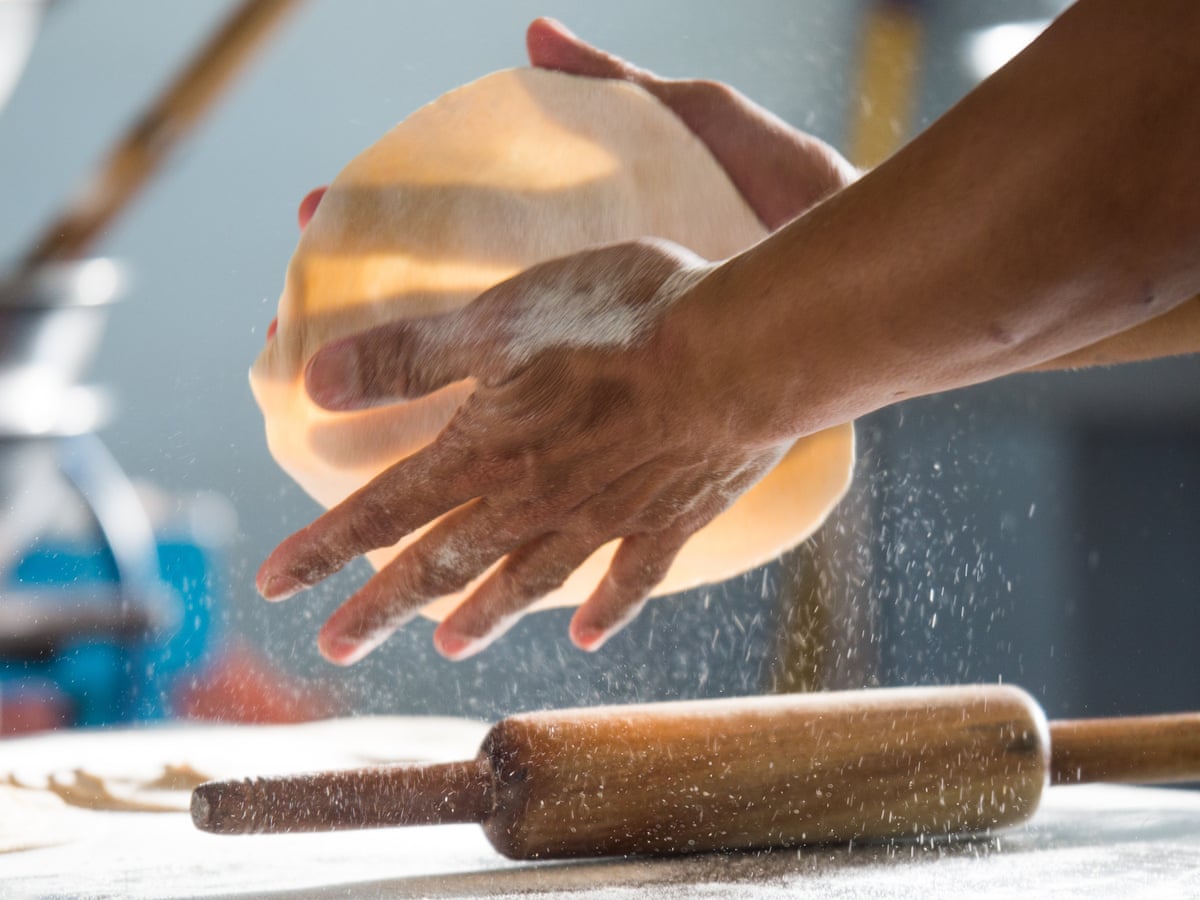
The degrading, discriminatory and stereotype term “house wife” is done away with a more dignified and neutral term “homemaker” by the Supreme Court of India. “A ‘homemaker’ often prepares food for the entire family, manages the procurement of groceries and other household shopping needs, cleanse and manages the house and its surroundings, undertakes decoration, repairs and the maintenance work, looks after the needs of the children and any aged member of the household, manages budgets and so much more,” said Justice Ramana in a judgment where the Bench comprised Justices Abdul Nazeer and Surya Kant apart from himself.
However, the untiring day and night work of a homemaker goes unrecognised and unnoticed by the society and the family. This attitude of the society is engraved in the minds of growing sons. When I asked a little boy in Class 1, “What is your father?” he answered, “He is a bank manager”. When I asked, “What is your mother,” he said “Nothing, a house wife”. His answers shocked me.
I started asking him more questions. Who prepares food for you all? Who washes your clothes? Who helps you to wear shoes? Who bathes you? Who feeds your little brother? Who makes you sleep at night? Who cleans the house? Who washes dishes? For all my questions his answer was “Mother”. My next question was, “Then how can you say that your mother is not doing anything. To escape from me, he said loudly “Mother is doing everything” and he ran to the classroom.
However, the term “homemaker” is a recognition to the unreported and untold sacrifices of women at homes. By this judgment, the Supreme Court upheld the dignity of women, affirmed women’s status who are generally called “house wives”. It reaffirmed equality of women and dignity of labour. Terming the house wives as “homemakers”, Supreme Court established equality of men and women who are taking care of household affairs. This is a neutral term.
In many houses, the bone of contention for fight between the husband and the wife is that the wife is not working and, according to him, she is sitting and eating out of his income. Women become homemakers due to various reasons, often against her will and interest. Even professionally well-qualified women become homemakers because of compelling circumstances like, after the marriage not allowed to go for employment, after child-bearing she has to take care of the child/children or to look after a sick member in the matrimonial home etc. Under such circumstances she is compelled to remain at home. Despite her qualification or employment she held before marriage, she sacrifices everything for the wellbeing of the family. A woman spends her physical and mental energy for home building.
The only sector there is no fixed working hours is ‘home sector’ where the ‘homemaker’ works day and night.
In such situation, the Supreme Court in Kirti & Anr. Etc. vs Oriental insurance Company Ltd. upheld the status of women equal to men. The case was that the deceased couple, Vinod and Poonam, while commuting on a motorcycle in Delhi at around 7 a.m. on 12.4.2014 were hit by a Santro car. It incapacitated both of them and they soon passed away due to cranio-cerebral damage and haemorrhagic shock caused by the accident.
The insurance company offered as settlement a compensation of Rs 6.47 lakhs for the death of Poonam and Rs.10.71 lakhs for Vinod. However, the Tribunal awarded a sum of Rs.40.71 lakhs for both deceased to the claimants.
This computation was challenged by the respondent-insurer before the High Court of Delhi contenting that the Tribunal erred in its order.
It is pertinent to note that husband was qualified and was a teacher in a Delhi school though there was no evidence to that effect and the wife was a ‘house wife’ in common language who was taking care of household affairs.
The High Court concurred with these contentions and taking various matters into consideration reduced the notional income granted by the Tribunal to Rs 22 lakhs. It is pertinent that the Tribunal as well as the High Court took note that the woman was a ‘house wife’ and ‘not employed’ and, therefore, not entitled to future prospectus as an employee.
The claimants challenged the order of the High Court before the Supreme Court which, taking various factors into consideration, increased the amount to Rs. 33.20 lakhs.
Taking note of the observation of the High Court, Justice Ramana said, “The sheer amount of time and effort that is dedicated to household work by individuals, who are more likely to be women than men is not surprising when one considers the plethora of activities a homemaker undertakes”. The Judge also said: “There can be no exact calculation or formula that can magically ascertain the true value provided by an individual gratuitously for those that they are near and dear to. The attempt of the Court in such matters should therefore be towards determining in the best manner possible the truest approximation of the value added by a homemaker for the purpose of granting monetary compensation.”
The Court noted that fixing the notional income for homemakers serves a very important purpose as it signals that they “in a very real way contribute to the economic condition of the family, and the economy of the nation, regardless of the fact that it may have been traditionally excluded from economic analyses”.
It is high time that the Government introduces a policy or passes a law to bring the ‘homemakers’ under the coverage of social security where every month they are entitled to a reasonable income. It can raise their status as well as self- esteem. It can create a feeling of equality between husband and wife and can establish peace in the family against the superiority complex of the husband or working partner/employed outside.
As the Court rightly said, the gendered nature of housework, with an overwhelming percentage of women being engaged in the same as compared to men, the fixing of notional income of a homemaker attains special significance. It becomes a recognition of the work, labour and sacrifices of homemakers and a reflection of changing attitudes. It is also in furtherance of our nations’ international law obligations and our constitutional vision of social equality and ensuring dignity to all.
(The writer is an advocate in Supreme Court of India)
.png) Cedric Prakash
Cedric Prakash
.JPG)
 A. J. Philip

.png) Jacob Peenikaparambil
Jacob Peenikaparambil
.jpg)
.png) John Dayal
John Dayal
.jpg)
 Pachu Menon
.png)
.png)
.png) Robert Clements
Robert Clements