

.png) Robert Clements
Robert Clements
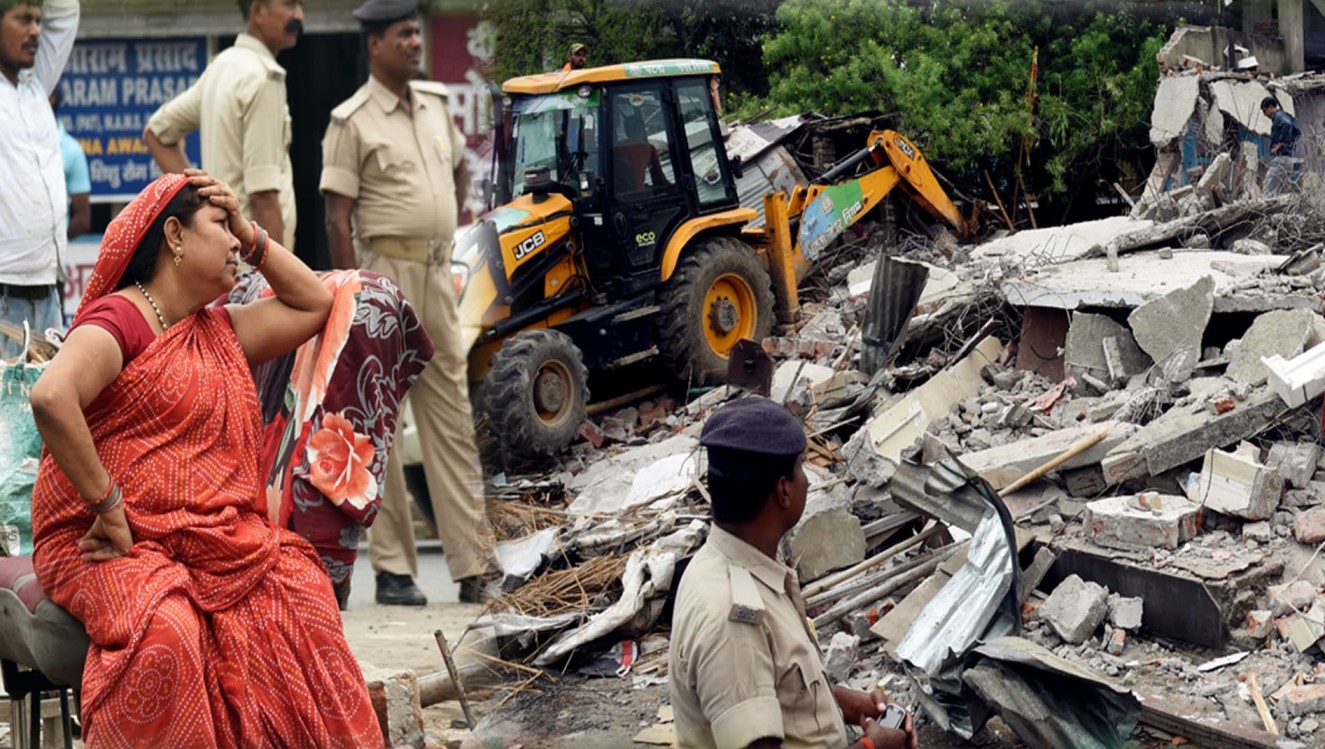
The first time I saw a bulldozer, it was an awe-inspiring sight. A giant machine, powerful and imposing, tearing through mounds of earth with a mechanical efficiency that seemed almost hypnotic. It was a thing of purpose—used to build roads, clear debris, and shape landscapes.
Lately, however, the bulldozer has taken on a new role: judge, jury, and executioner.
A bulldozer used against someone accused of a crime is the equivalent of using a sledgehammer to swat a fly. It is brute force, untempered by logic or law.
It is not justice; it is vengeance. And if history has taught us anything, it is that vengeance has an insatiable appetite.
The practice begins subtly. It starts with criminals—real, hardened criminals, whom no one will defend. Their homes are razed, their possessions buried under the weight of state-sponsored retribution. And the people cheer. "Good riddance," they say. "Let the bulldozer teach them a lesson."
But justice, my dear reader, is a fickle thing when left in the hands of power without accountability. Yesterday, it was the criminal. Today, it is the dissenter. Tomorrow? Well, tomorrow it could be you. Because one day, you might find yourself disagreeing with someone in power.
One day, you might make a statement, write a post, or raise a question that doesn't sit well with the ruling forces.
And on that day, the bulldozer might come for you.
Will you cheer then? Or will you watch in silent horror, realising too late that by tolerating bulldozer justice for others, you invited it upon yourselves?
"Look at the crime," we are told, "Don't look at the method of punishment."
But isn't that the very essence of civilisation—that punishment must be fair, proportionate, and legal? Once the bulldozer becomes the gavel, the courtroom ceases to exist.
And when the courtroom ceases to exist, so does the very concept of justice.
Laws are meant to protect us, not pulverise us. They are meant to ensure due process, not dictate destruction. The moment we normalise punishment outside the legal framework, we exchange democracy for dictatorship, rights for ruin, and fairness for fear.
So, let's ask ourselves: Do we want to live in a nation where homes are razed at the whim of authority? Where punishment is carried out not in courts but in the streets? Where power is measured in the weight of demolition rather than the strength of the law?
The time to act is now before the rumbling of the bulldozer becomes the soundtrack of our silence. Before we wake up to find that justice, like the homes it once protected, has been reduced to rubble…!
.png) Cedric Prakash
Cedric Prakash
.JPG)
 A. J. Philip
.png) Jacob Peenikaparambil
Jacob Peenikaparambil
.jpg)
.png) John Dayal
John Dayal
.jpg)
 Pachu Menon
.png)
.png) Robert Clements
Robert Clements