

.jpg) Prem Antony IMS
Prem Antony IMS
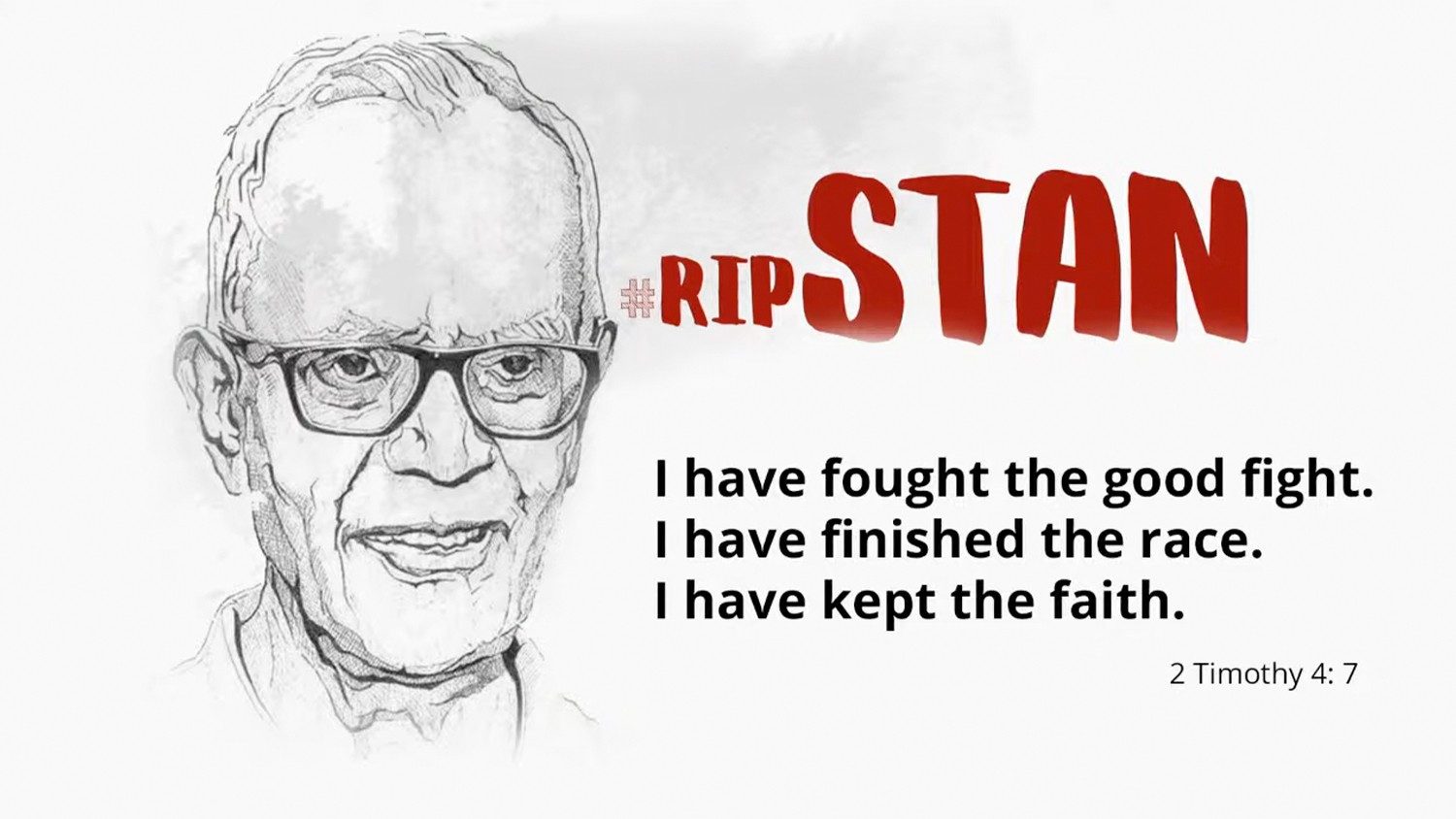
Fr. Stan Swamy SJ died a few weeks ago. There has been an outpouring of differing views on the circumstances of his incarceration leading to his death what many term as ‘institutional killing’. Most of the write-ups have been lavish in praising his courage to stand up to the powers-that-be, silently and in the most dignified manner. One article that was at odds with others titled Marxist Jesuits Are Not for Tribal Welfare appeared in an online portal. The author makes it appear that as a product of a Jesuit educational institution, he is sympathetic to the Christians, and appreciates the Jesuits for their work in the field of education. However, he makes it clear that Catholic priests, Jesuits in particular, who work with the people on the margins of our society are influenced by Marxist ideology and are a threat to the integrity of the nation.
There are many priests in the Catholic Church who work with the downtrodden of society; there are several, I believe, who may regard them as ‘left-leaning’. It is true that many Jesuits, among others in the 70s and even later, influenced by Liberation Theology, adopted the specific approach of preferential option for the poor. That was a choice they made arising out of their devout reading of the Bible, their understanding of their vocation as shepherds, and from their involvement in the daily struggles of the people. Priesthood in the Chrisitan tradition is not merely cultic; it involves committed leadership that gets itself involved in the joys and sorrows of the people they choose to serve.
For any committed Catholic, especially for a priest, option for the poor is not merely a choice, it is essentially a defining aspect of her/his vocation as a Christian. Jesus of history emphatically proclaimed that he came to inaugurate the kingdom of God. We see him in the gospels unambiguously taking sides with the poor, the sick and the marginalised, socially and otherwise, following the dictum that it is the sick who need the doctor, and not the healthy. It is precisely this core precept of the Bible -- the establishment of the kingdom of God which is partially translated as the realisation of some kind of a socio-economic parity -- that every Christian, and more so a priest, is supposed to abide by. This is not an opportunistic or ‘selective’ understanding of the Biblical theme.
The God of the Bible is anawim Yahweh, the God of the poor and the marginalised. Therefore, Apostle James declares, almost defining what Christianity should be: “Religion that is pure and undefiled before God, the Father, is this: to care for orphans and widows in their distress (everyone who is in real need), and to keep oneself unstained by the world” (Jas 1.27).
It is high time that Christian leaders recapture the primary spirit of the scriptures and come to the assistance of all sections, especially the aggrieved sections of our society. That is what the death of Stan Swamy challenges them to do. Many of the priests could be becoming increasingly conscious that it is not enough to be busy oneself with the regular parish work, and may therefore be involved in the day-to-day life struggles of the people. It is this spirit of the Bible that urged Stan Swamy to take a consistent and principled stand in favour of the Adivasis of Jharkhand and engage himself in democratically sanctioned ways of struggle to ensure that they get their rights. If some individuals come to lead a movement of Dalits or Tribals to protect their rights or demand what legitimately should belong to them, they cannot be labelled as hate-mongers and Marxists though that is the easiest thing to do for the powers-that-be!
Nothing could be farther from truth than the allegation by the writer that the ‘Marxist Jesuits’ “want to overthrow Indian society and specifically Hindu society, which, in the vocabulary of cultural Marxism, is seen as hegemonic, patriarchal, misogynistic, and casteist -- a society that the Marxist Jesuits cannot and will not come to a peaceful engagement with.” It is absolutely unfair and unjust to say that the Jesuits and many Catholic priests want to overthrow Indian society, of which they are equally a part. Of course, as persons with deep social concern many of them would wish to usher in certain changes in our society, which includes all sections of people. Caste hierarchy, for example, is a pan-Indian issue, plaguing every religious group. If an intellectual fight against it comes to be seen as an attempt to overthrow the Indian society, Hindu society in particular, that is indeed a sad reading and an opportunistic interpretation of affairs.
For some, anyone will be considered a nationalist and sober as long as he or she serves the interests of ‘the people who matter’. But the moment someone dares to speak up for those at the cutting edge of the society, especially for the Dalits and the Tribals, they become ‘sickulars’, Marxists and Maoist sympathisers, and therefore, anti-nationals. The Catholic Church has not and does not advocate overthrowing of the government or society, “specifically Hindu society”, as the author insinuates. The Church in India unambiguously stands for peaceful, non-violent, constitutionally legitimate and democratic path to bring in any societal change it may advocate with the hope that the rest of the society advocates the same, and not merely promote a majoritarian lipstick democracy.
(The writer teaches Political Science and Philosophy at the Vishwa Jyoti Gurukul, Varanasi. Contact: premanto@gmail.com )
.png) Cedric Prakash
Cedric Prakash
.JPG)
 A. J. Philip
.png) Jacob Peenikaparambil
Jacob Peenikaparambil
.jpg)
.png) John Dayal
John Dayal
.jpg)
 Pachu Menon
.png)
.png)
.png) Robert Clements
Robert Clements