

.jpg) Dr Bernard D’ Sami
Dr Bernard D’ Sami
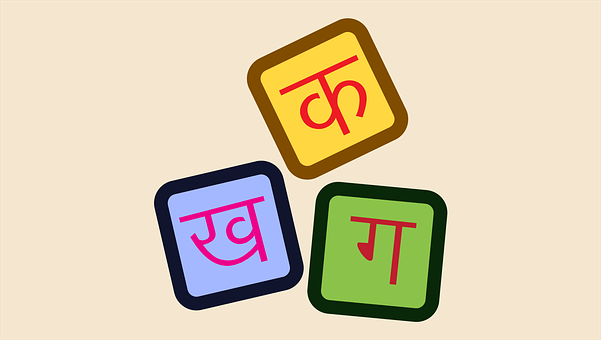
Language is a powerful instrument in creating a nationalist consciousness, endowed with the potential to forge new states. In 1971, when the then East Pakistan was fighting for its identity, Bengali or Bangla speaking-Muslims did not accept West Pakistan's authoritarianism and their patronising attitude when they imposed their language on them. Eventually, a new nation was born of linguistic nationalism — Bangladesh. A closer look indicates that many countries today are states created on the grounds of linguistic identity.
The visionaries who contributed to the formation of the Indian Republic were conscious of the linguistic plurality, which they used against the British by printing as many newspapers and magazines in the vernacular languages as possible. One of the responses of the British to the growing vernacular press was that Her Majesty’s government requested Reuters in 1893 to investigate the emerging vernacular press, which was ‘tiny’ at that time but had the inherent ability to scare the mighty British Empire. Therefore, the Reuters correspondent recommended the suppression of the nationalist vernacular press.
As early as 1937, C. Rajagopalachari, former Governor-General of India, introduced Hindi across 125 government schools in the Madras state. He formed the government in the Madras state under the Government of India Act of 1935, which DK (Dravida Kazhakam) stoutly opposed. Highly influential political activist and social reformer, Periyar (EVR), termed it as an "imposition" on the Tamils and protested against this move, resulting in its withdrawal. On January 26, 1965, the Official Languages Act came into force, making Hindi the official language.
When the Constitution of India was drafted, it granted both Hindi and English the status of official languages for fifteen years, and later Hindi would be the official language. The DMK rose again under the leadership of CN Annadurai, who organised massive demonstrations, meetings, and self-immolations. The agitations forced the former Chief Minister of Tamil Nadu, Kamaraj, to convince the then Prime Minister, Lal Bahadur Shastri, to let English and Hindi continue as the official languages of India. The succeeding Prime Minster, Mrs Indira Gandhi amended the Official Languages Act to make English and Hindi permanent official languages of India.
Frequently, Delhi continues to impose Hindi, in some form or other, which has been consistently opposed in Tamil Nadu. An interesting fact is that many states are also resisting the imposition to varying degrees. Assam, West Bengal, Karnataka, Andhra Pradesh, Telangana, Kerala, and the North Eastern States oppose Hindi imposition. The Constitutional status of "Hindi and English will continue as the two official languages of India".
However, frequently politicians stir up the hornet’s nest to disturb the linguistic plurality of the country. India is a union of states according to the Constitution of India and the State Reorganisation Act of 1956. The reorganisation of states was a linguistic reorganisation. A language spoken in an area served as the primary criteria for creating new states to give burial to the princely states.
Ganesh Devy, a former professor of English at MS University, Vadodara, for 23 years, moved to Dharwad in 1996 after retirement. He embarked on a search for India's languages and carried out the People’s Linguistic Survey of India (PLSI) between 2010 and 2013. He called it a "right-based movement for carrying out a nation-wide survey of Indian languages as people perceive them." Some of the findings of this study are the following:
• The People's Linguistic Survey of India (PLSI) counted 780 Indian languages across the country, and there could be another 100 languages. The Census of India counts only languages spoken by 10,000 people or more and lists 122 languages.
• Arunachal Pradesh, according to Prof. Devy, with 90 languages, emerged as the state with the highest number of languages.
• The survey found that around 220 languages have become extinct in the past five decades.
• 197 of these are endangered, 42 of them critically so, according to UNESCO.
• Arunachal Pradesh and Assam in the northeast, Maharashtra and Gujarat in the west, Orissa and Bengal in the east, and Rajasthan in the north have the most languages.
• India has 68 living scripts.
• The country's newspapers are published in 35 languages.
• Only 4% of languages are represented in India's Parliament.
• He discovered that some 16 languages spoken in the Himalayan state of Himachal Pradesh have 200 words for snow alone.
• He found that the nomadic communities in the desert state of Rajasthan used a large number of words to describe the barren landscape.
• In a dozen villages on the western coast of Maharashtra, not far from the state Capital of Mumbai, he discovered people speaking an "outdated" form of Portuguese.
• A group of residents in the far-flung eastern archipelago of Andaman and Nicobar spoke in Karen, an ethnic language of Myanmar. And some Indians living in Gujarat even spoke Japanese. He found that Indians spoke some 125 foreign languages as their mother tongue.
(Sources: Census of India, 2001; UNESCO; and People's Linguistic Survey of India 2010)
The above report by Prof. Ganesh Devy is a concrete example of a country whose strength was plurality of languages. By championing one or a few languages, the rulers are destroying the diversity that has been the strength of this country for centuries. When Venkatraman Ramakrishnan, Nobel Prize winner for Chemistry in 2009, from India spoke a few years ago at the Hindu Lit Fest on ‘What Ails India’s Science', he said it was important to let the children study science in their mother tongue and that would give them a better understanding of science. Because children studying "science" in another language, which is not their own, makes it difficult for them to understand the concepts and fundamentals. According to him, most of the Nobel Prize winners in science do their research in their own language. Linguistic pluralism will give India an edge over others in science and technology and will promote the growth of every language in India, whereas one nation and one language will be a disaster for the country.
(The writer is Senior Fellow, LISSTAR, Loyola College (Autonomous), Chennai)
.png) Cedric Prakash
Cedric Prakash
.JPG)
 A. J. Philip
.png) Jacob Peenikaparambil
Jacob Peenikaparambil
.jpg)
.png) John Dayal
John Dayal
.jpg)
 Pachu Menon
.png)
.png)
.png) Robert Clements
Robert Clements