

.png) Dr Suresh Mathew
Dr Suresh Mathew
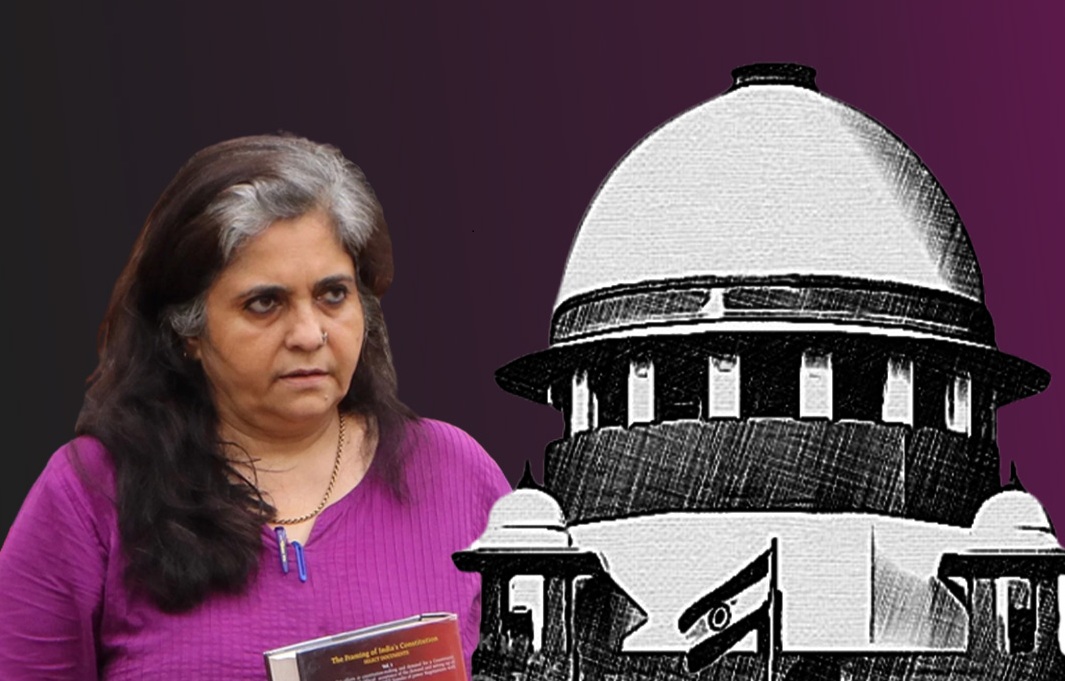
At last bail has been granted to Siddique Kappan and Teesta Setalvad. Kappan was in jail for nearly two years; Teesta for over two months. Though Teesta walked out of the imposing gates of an Ahmedabad jail, Kappan has not been fortunate enough to do so as an Enforcement Directorate case is pending against him.
The news of bail soothes the ears and comforts the hearts of those who have been agitated over the vindictiveness of the government against the two -- one a rights activist and the other a journalist. However, crucial questions beg to be answered as their arrests, and prolonged incarceration, have wider implications.
The Supreme Court’s observation that every citizen has the right to free ex
The malicious mind of the government and its police was exposed when the court told on the face of the prosecution that it has not shown anything against Kappan that was provocative. Similarly, Teesta, who was charged with forgery and criminal conspiracy related to 2002 Gujarat riots, was granted interim bail on four grounds.
The arrest and imprisonment of Kappan and Teesta bare the malevolent and mala fide intentions of the government and its agencies to foist rigorous sections of UAPA on those who are perceived to be dissenters and working against the powers-that-be. The bail and the Court’s observations are a rap on the knuckles of the law-enforcing agencies who are apparently working at the behest of their masters; it is a signal to the prosecuting agencies that imprisoning people for long duration without bail is against the spirit of the law. It also speaks poorly on the judiciary that it took two years for Kappan to get bail though the prosecution could not provide any substantial evidence against him. The same is true for Teesta too.
The oral observation of the Court, as to how possession of pamphlets could be construed as one’s involvement in violence or incitement to violence, has far-reaching impact on the pending cases in which scores of people are languishing in jail, without bail, for years together.
In the case of late Stan Swamy, or others who are in jail, in connection with the Bhima-Koregaon case, the investigating agencies have shown possession of leaflets and letters as ‘clinching’ evidence against the accused. Intriguingly, in some cases, it has come to light that the agencies had surreptitiously planted those evidences on the computers of the accused.
The relief to Kappan and Teesta, though came belatedly, could become a precedent in cases in which people are jailed on ‘trumped up’ charges. It is a message to the judiciary at all levels that people should not be allowed to be persecuted, disallowing them bail. It is pertinent to listen to what Justice H. R Khanna, in a dissenting judgment, wrote, many years ago: “The rule of law is the accepted norm in all civilised societies. Everywhere it is identified with the liberty of the individual. It seeks to maintain a balance between the opposing notions of Individual Liberty and Public Order.”
.jpg)
.png) Cedric Prakash
Cedric Prakash
 ICPA
ICPA
 ICPA
ICPA
 ICPA
ICPA
 ICPA
ICPA
 ICPA
ICPA
 ICPA
ICPA
.jpg)
 A. J. Philip
.jpg)
.png) Jacob Peenikaparambil
Jacob Peenikaparambil
.jpg)
.png) John Dayal
John Dayal