

 George Plathottam
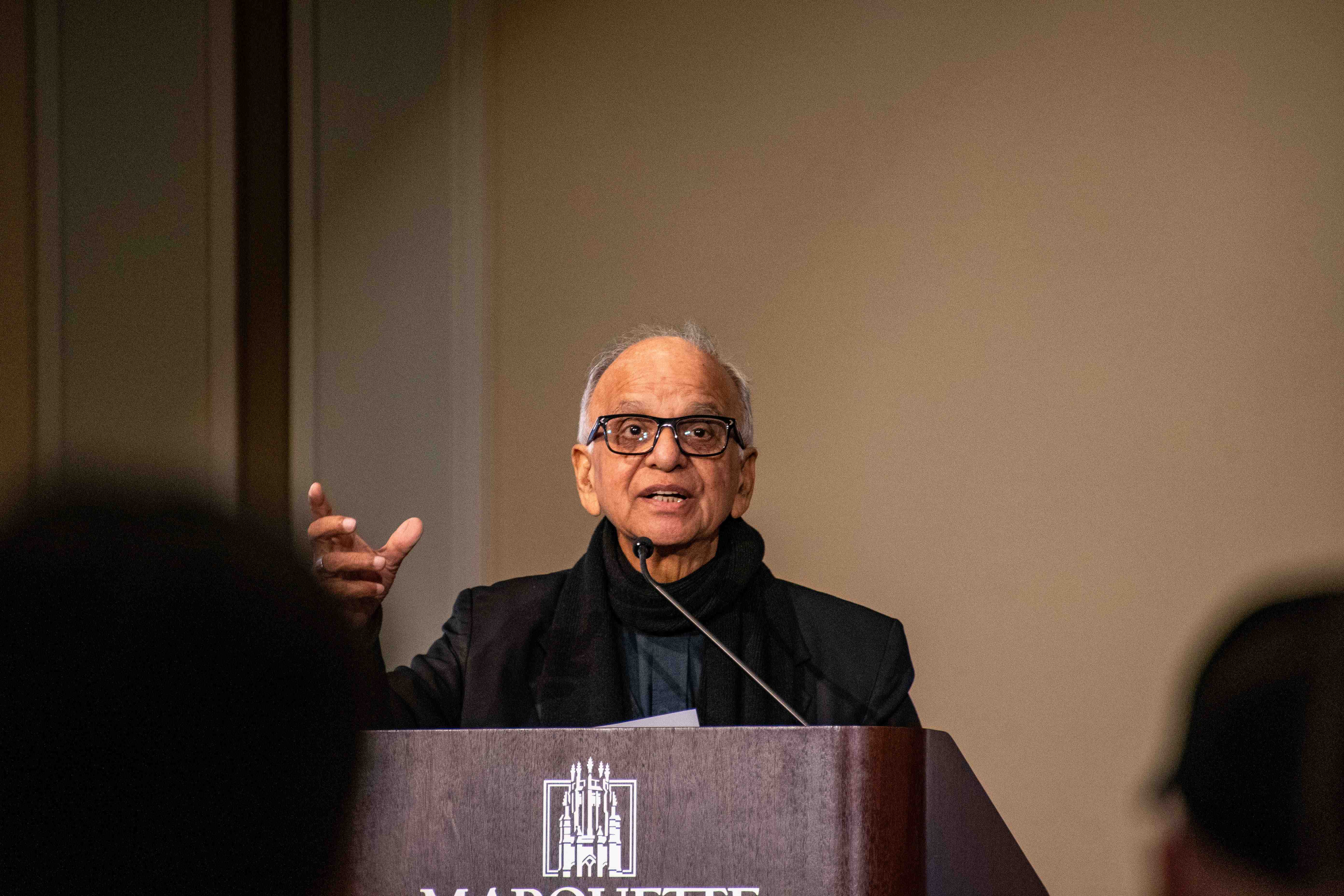
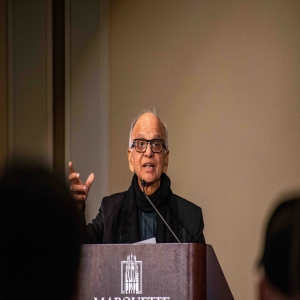
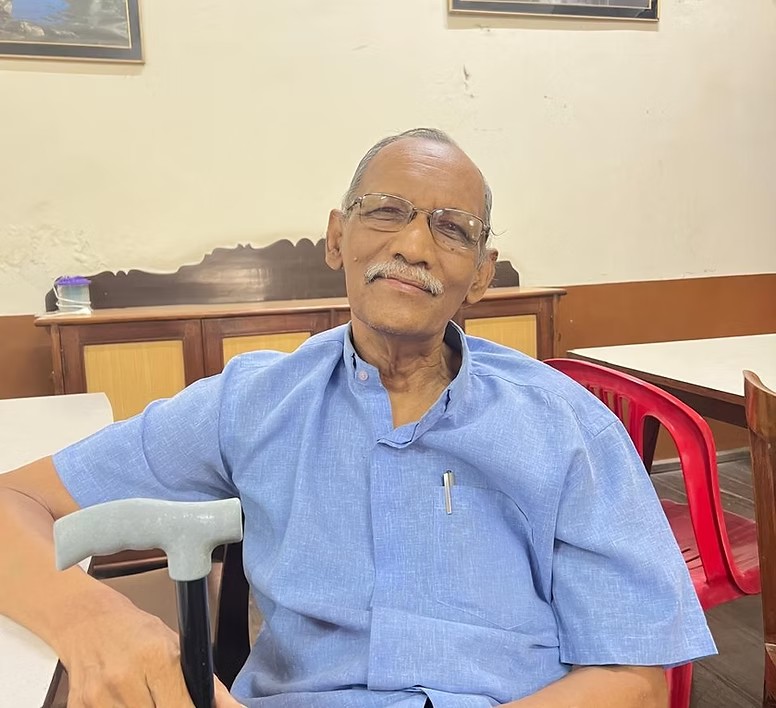
An unassuming shepherd, an erudite scholar, and a prophet of peace, Archbishop Thomas Menamparampil was a light for those who sought wisdom and enlightenment. After nine decades on earth, most of which he dedicated to serving God and his people, he has passed from life to eternity. He left us gently and unexpectedly, and thousands of people from all walks of life feel the void he left behind. His gentle voice will be greatly missed from the church pulpits and academic platforms, from round tables and conferences at the universities and gatherings of leaders in the villages of Northeast India. He has gone from us, but his memory and legacy will live on. His thoughts and ideas will continue to reverberate in the innumerable literary works that he has bequeathed to us as a priceless legacy.
Early Life and Formation
Born on October 22, 1936, in Vakakkadu, Kerala, Thomas completed his primary education at St. Thomas English School in Palai, Kerala, before joining the Salesian seminary in Bandel, West Bengal. Later, he attended Salesian College, Sonada, Darjeeling, where he completed high school. After his novitiate in Yercaud, Tamil Nadu, he made his religious profession in the Salesian Society on May 24, 1955. Ten years later, Venerable Stephen Ferrando, SDB, ordained him a priest on May 2, 1965. He obtained Master's degrees in history and English.
Following his priestly ordination, he was appointed headmaster of Savio Juniorate, a house of formation for future Salesians, in Shillong, Meghalaya. From 1969 to 1972, he served as warden of Stephen Hall, the hostel of St. Anthony's College in Shillong. In 1972, he was appointed Vice-Provincial of the Don Bosco Society in Northeast India. He then became the Rector of Don Bosco Technical School, Shillong. During these years, he was actively involved in forming youth from across Northeast India. Through extensive reading and study, he also developed a deep knowledge of the region, its people, its challenges, and its potential.
In 1981, Pope St. John Paul II appointed him Bishop of Dibrugarh, Assam, and in 1992, he was transferred to the newly established Diocese of Guwahati. Three years later, he was made Archbishop when Guwahati was elevated to an archdiocese. As a bishop, Menamparampil expanded Catholic education in Assam, establishing numerous parishes, schools and hostels. He invited numerous religious congregations and pastoral collaborators to work in the region. His efforts led to the establishment of the Diocese of Bongaigaon in 2000. He retired as Archbishop of Guwahati in 2012. He was appointed as Apostolic Administrator of Jowai Diocese, Meghalaya, from 2014 to 2016.
A Prophet of Peace
Archbishop Menamparampil's efforts to bring communities divided by ethnic violence to the negotiating table earned him the enduring reputation of a peacebuilder in Northeast India, where his work extended beyond Church leadership to reconciliation, humanitarian assistance, and dialogue among diverse communities. In recognition of his contribution to peacebuilding efforts amid ethnic conflicts in Northeast India, a region marked by complex ethnic, cultural, and political tensions, he came to be known as the Prophet of Peace. He called for patience, perseverance, selfless service, compassion, and cooperation across communities as foundations for peace.
He appealed to Church leaders and civil society to engage in peace efforts and conflict resolution, listen to marginalised communities, and recognise their responsibility in preventing violence. He helped provide relief to displaced people and initiated dialogue between leaders of the opposing groups. Working with other Christian Churches and the local government administration, he brought representatives of the conflicting communities to sit across the table to seek a peaceful settlement.
He was at the forefront of relief and peace efforts during the 1996 ethnic violence in the Kokrajhar region of Assam, which forced about 250,000 Bodos and Adivasis, particularly members of the Santal community, to flee to refugee camps. The conflict claimed more than 500 lives. He helped establish the Joint Ecumenical Peace Team, which facilitated dialogue among conflicting communities across the region.
In 1999, he played a mediating role following clashes between the Kuki and Paite communities in Churachandpur district of Manipur. The violence left more than 400 people dead and resulted in the destruction of hundreds of villages. Through dialogue with leaders of both communities, a settlement was reached.
He also intervened in conflicts between the Dimasa and Hmar communities near Haflong in Assam and between Kuki and Karbi communities near Diphu. Both initiatives contributed to restoring peace in the affected areas. In August 2003, Churches across Northeast India established a Joint Peace Team, with Archbishop Menamparampil serving as its convener. His last efforts were directed towards restoring peace in Manipur, which continues to simmer with ethnic clashes and violence.
Archbishop Menamparampil was recognised for his grassroots approach to mediation and his efforts to bridge divisions among communities in the culturally and ethnically diverse northeastern region of India. He was nominated for the Nobel Peace Prize in 2011. He received the Ambassador for Peace Award and the Dr APJ Abdul Kalam World Peace Award in 2023. In 1998, he was conferred the Maschio Award in Mumbai. Among the previous winners of this prestigious award were Mother Teresa and Baba Amte.
Archbishop Menamparampil, who turned 90 on October 22, 2026, just a month before his death, was conferred with what would become the last of the many awards he would receive. He received a peace award during the 19th Peace Knit Fest at the Peace Centre in Chümoukedima, Nagaland, in recognition of decades of dedicated work in conflict resolution, reconciliation, and interreligious dialogue in Northeast India. In his acceptance speech, Archbishop Menamparampil thanked the Peace Channel and its founder director, Fr CP Anto, and emphasised empathy as essential to resolving conflicts.
Condolence messages have been pouring in as the news of death spread. Among them was that of Assam Chief Minister Shri Himanta Biswa Sarma, who called Archbishop Thomas Menamparampil "a man of deep faith and tireless champion of peace. He worked selflessly for reconciliation among communities and for the education of our youth across Assam and the Northeast."
Archbishop Menamparampil was a man who, with prophetic insight and gentle candour, could bring people in conflict to the table of communion. He ceaselessly preached the Gospel of peace and reconciliation his Master, Jesus Christ, taught. Now that his Master has called him to the eternal banquet, he surely inherits the promise of the Beatitude: Blessed are the peacemakers, for they shall be called children of God (Matthew 5:9). His efforts will now continue through the many leaders in the Church and society he inspired.
Eminent Pastor and Erudite Scholar
Those who knew Archbishop Menamparampil as a teacher, pastor, mentor, and guide will testify that he was unparalleled in the depth and profundity of his knowledge and understanding of human life, history, cultures, and social thought. His numerous books, hundreds of articles, and talks bear ample testimony to his wisdom. They will continue to be a priceless legacy.
Jesus told Peter, "feed my lamb, feed my sheep." Archbishop Menamparampil was a zealous pastor, faithful priest and bishop who ceaselessly fed thousands of his flock with the word and sacrament of Christ across the vast region of Northeast India. He proclaimed the word with gentle persuasion and candour. His famous phrase, "whispering the Gospel to the soul of Asia," became a catchphrase across the continents and a pleasing pastoral mantra for many. He urged gentle persuasion and avoidance of aggressive talk. He insisted on understanding human emotions and subjective conditions rather than asserting truth through arguments. His words were marked by gentleness and kindness, devoid of aggression or force. One of his recent books urged people to avoid exaggeration, which only begets exaggeration.
At the Service of the Church
He served on several international Commissions and participated in several meetings, conferences, and Synods in the Vatican and at the continental and national level. He served as special secretary of the Asian Synod in Rome, a major gathering of Catholic bishops focused on the Church's mission in Asia. He was also appointed to the Vatican's Congregation for Institutes of Consecrated Life and Societies of Apostolic Life and served as chairman of the Catholic Bishops' Conference of India's Commission for Education and Culture. He led the Office of Evangelisation in the Federation of Asian Bishops' Conferences (FABC). In 2010, Pope Benedict XVI entrusted him with preparing the meditations for the Way of the Cross at the Colosseum in Rome on Good Friday.
At most conferences and gatherings, Archbishop Menamparampil's name was among the prominent speakers. His speeches and interventions contained profound wisdom and rich insights. He proposed creative ways to present the Gospel in ways that are acceptable to people and to address difficult problems. His meticulous writings provided new perspectives and invaluable lessons from history.
A Passionate Missionary and Visionary Leader
His passion for the Gospel spanned a lifetime of missionary endeavours that drew thousands of people to embrace the message of Christ. He was a pioneer in evangelisation and education in Arunachal Pradesh. His audience included not only the Catholic faithful, but members of other Churches, religions and ideologies. His precepts and ideas carried a touch of genius and originality that enriched innumerable people. Now, in his passing, his rich wisdom, ideas, and methods will endure. He frequently visited remote villages and took pastors, young seminarians, and religious in formation on tours and exposure visits for study and reflection.
In his columns in the Indian Currents, he touched on several contemporary political and social issues. He proposed formulas that would help uplift the lives of millions of the poor and the marginalised, the weaker sections and the exploited. He called for transparency and accountability and fiercely denounced all forms of bigotry, exploitation and corruption. He fearlessly challenged the hegemony of the rich and powerful over the Dalits and tribals, the poor and those on the periphery.
A Legacy that will Live on
As a deeply committed pastor, erudite scholar, peacebuilder, and man of God, he led from the front. His vast knowledge of history, culture, and human civilisations, coupled with his deep commitment to the Church and people of all religions, made him a much-sought-after speaker. His extensive writings reflect his deep insights.
He called for building a civil society founded on good governance, people's integral well-being, and lasting peace. For people and communities estranged by conflict and violence, he became a pillar of strength, a beacon of hope, and a sure bridge to pass through. No one doubted his intentions, sincerity, or commitment. His words exuded confidence and hope. His actions showed purpose. He put into perspective the meaning of suffering and the need for patient endurance.
He dedicated much of his 90 years to serving people as an educator, writer, pastor, bishop, friend, philosopher, and mentor. From India's Northeast, he rose to a global stage and became a visible face and a sure voice on many international platforms. His audience would listen to him with rapt attention. He became a voice listened to with keen interest across global platforms, whether in the Church, renowned universities, or other fora.
His death leaves a void that is hard to fill, but he leaves behind a rich legacy of dedication and zeal, inspiring leadership, scholarship, and deep commitment. Northeast India was blessed by his presence and ministry as Shepherd and Pastor. May the legacy and memory of Archbishop Menamparampil endure for years to come.
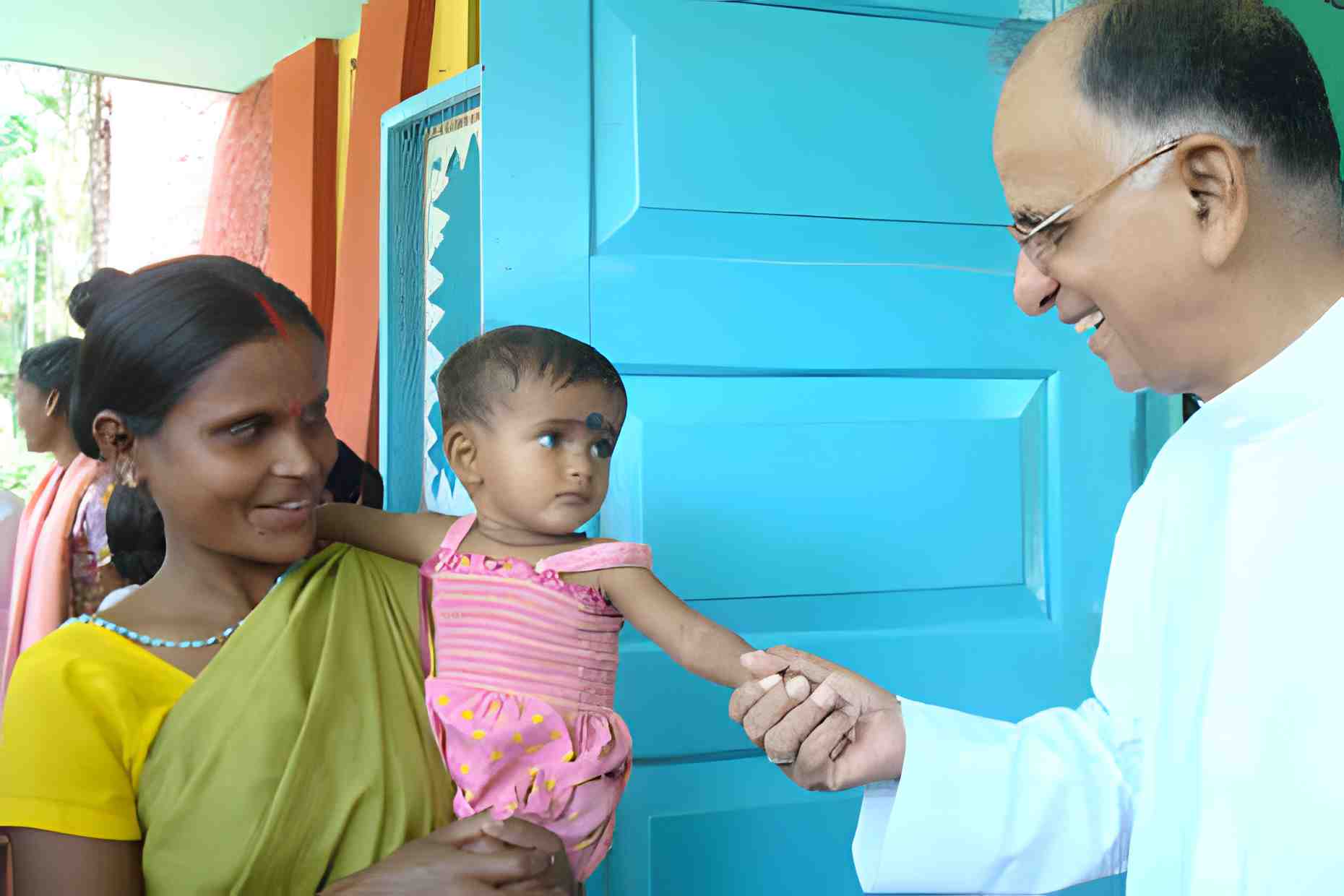
 Cedric Prakash
.jpg)
 John Dayal
.jpg)
 A. J. Philip
.jpeg)
 Jacob Peenikaparambil
.jpg)
 Joseph Maliakan
 Jose Vattakuzhy
.png)
 Robert Clements
.jpg) Cedric Prakash
.jpg) A. J. Philip