

.jpg) Adv. Jijo Thomas Placheril
Adv. Jijo Thomas Placheril
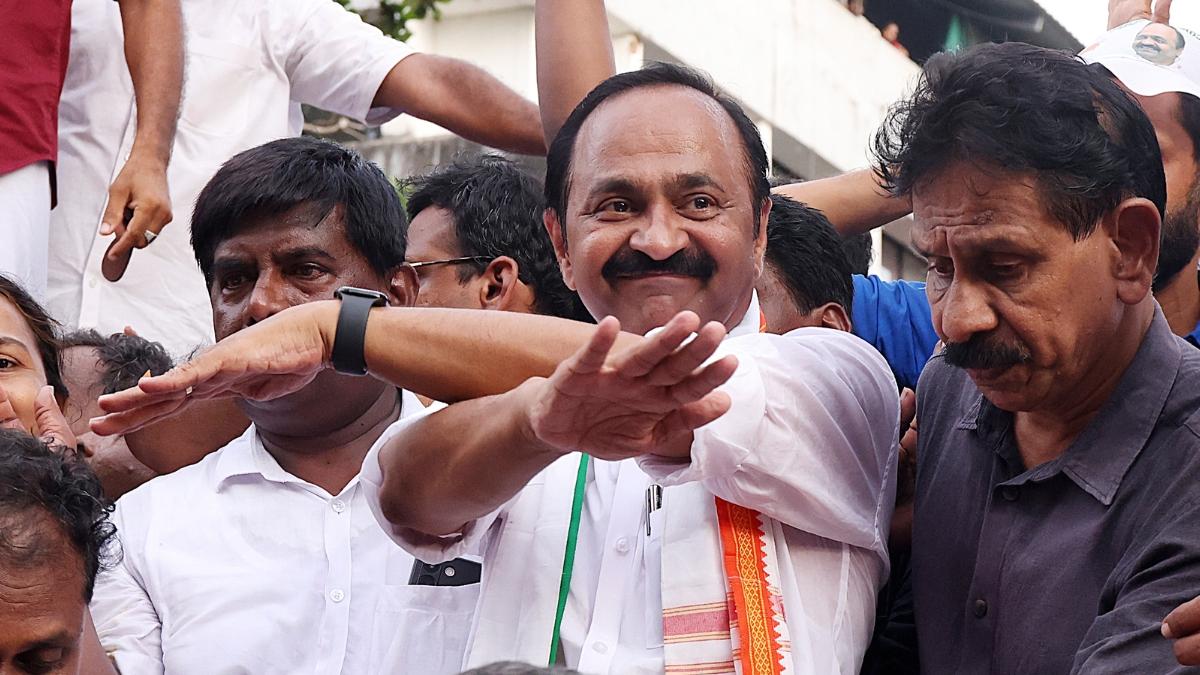
The Kerala state assembly election took place on April 9, 2026, with results announced on May 4, 2026. The United Democratic Front (UDF), a right-leaning political party led by the Indian National Congress, achieved a significant victory by securing a majority of 71 out of 140 seats. The UDF won 102 seats, effectively ending a decade-long Left Democratic Front (LDF) rule.
In India's broader political landscape, while the Congress party appears to be struggling, its success in Kerala alongside the UDF is noteworthy. The electorate of Kerala delivered a strong message against the corrupt and autocratic rule of the LDF government under Mr Pinarayi Vijayan.
Regardless of their political beliefs, many voters in Kerala were determined to oust the LDF. Numerous individuals cast their votes for the UDF despite differing political convictions. Ultimately, this outcome was not a reflection of the merits of the Indian National Congress or the UDF, but rather a manifestation of the people's frustration with the LDF's misgovernance, which led to their electoral defeat.
This presented a significant opportunity for the Congress party to demonstrate its commitment to the nation's democratic values, showing that its members operate without selfish interests and are attuned to the sentiments of the people, especially in the current context of the BJP's rise across various Indian states.
The joy stemming from the UDF's historical victory in Kerala was short-lived, as some leaders were eager for power. While the UDF successfully united voters for the election, the Indian National Congress (INC) quickly divided the people into various groups following the election results.
Before the election, the UDF did not nominate a candidate for chief minister; however, the high command should have had a definitive understanding of who would assume that role upon the party's victory.
Engaging in discussions and debates before making a decision is a fundamental aspect of democracy. Conversely, a delay in decision-making invites negative perceptions of the party and reflects poorly on the high command's effectiveness. This procrastination indicates a lack of effective leadership within the party. It represents a significant failure on the part of the high command for not reaching a decision before the voters took to the streets and engaged in media discussions.
In Kerala, 63 MLAs from the INC participated in the election, and any one of them could become the Chief Minister. If the high command intended for Mr KC Venugopal to be the Chief Minister of Kerala, he could have boldly resigned from his position as an MP and contested in the State Assembly elections. The voters in Kerala would likely have accepted him as their Chief Minister.
In the current political climate in Kerala, the people do not desire a pre-packaged chief minister. Consequently, the people of Kerala might have rejected him in a by-election, which would have been a significant embarrassment for him in his political journey.
In 2004, K Muraleedharan, who served as the president of the Kerala Pradesh Congress Committee (KPCC) and was not a member of the Kerala Legislative Assembly, was appointed to AK Antony's cabinet as the Minister for Electricity.
Under Indian law, a minister who is not a member of the legislature must secure an election victory within 6 months to retain their position. K Muraleedharan contested a by-election in Wadakkanchery, resulting in a significant political upset: he lost and was compelled to resign as Electricity Minister.
Indian democracy prioritises the will of the people, and political parties are tasked with implementing this will. If any political authority acts contrary to the people's desires, the people will ensure that such authority is removed.
In contrast, KC Venugopal did not face the same fate, as the high command made the decision, though delayed. VD Satheesan is the most suitable candidate to serve as the Chief Minister of Kerala, having led the opposition during the LDF's tenure and worked diligently at the grassroots level to ensure the party's electoral success.
The high command's decision to appoint VD Satheesan as the Chief Minister of Kerala indicates that the Congress party has understood local sentiments. The Congress party must cultivate strong leadership and refrain from an excessive desire for power and positions.
Internal opposition poses a greater threat than external opposition. The people of Kerala have granted you another chance. Unite and strive for the state's development and the welfare of its citizens, free from selfish interests.
Let us hope to witness significant developments in Kerala under the leadership of VD Satheesan, the newly appointed Chief Minister.
.jpg)
.jpg)
.png) Jacob Peenikaparambil
Jacob Peenikaparambil

.png) John Dayal
John Dayal
.jpeg)
.png) Joseph Maliakan
Joseph Maliakan

.png) Dr Arnald Mahesh SDB
Dr Arnald Mahesh SDB

.jpg) Jose Vattakuzhy
Jose Vattakuzhy
.png)

.jpg) Isaac Gomes
Isaac Gomes
.png)
.png) Robert Clements
Robert Clements