

.png) Jacob Peenikaparambil
Jacob Peenikaparambil
Hate speech against minorities has been one of the most significant strategies used by the BJP to polarise the majority community and secure electoral victories over the past eleven years. Several BJP leaders are notoriously known for their abusive rhetoric, and there is no shortage of examples of despicable hate speech over the last decade.
During every election season, such rhetoric intensifies. As Assembly elections approach in three states—West Bengal, Assam, and Kerala—the frequency and ferocity of hate speech have escalated sharply. In fact, a disturbing competition appears to have emerged among BJP leaders in practising the cruel art of hate speech.
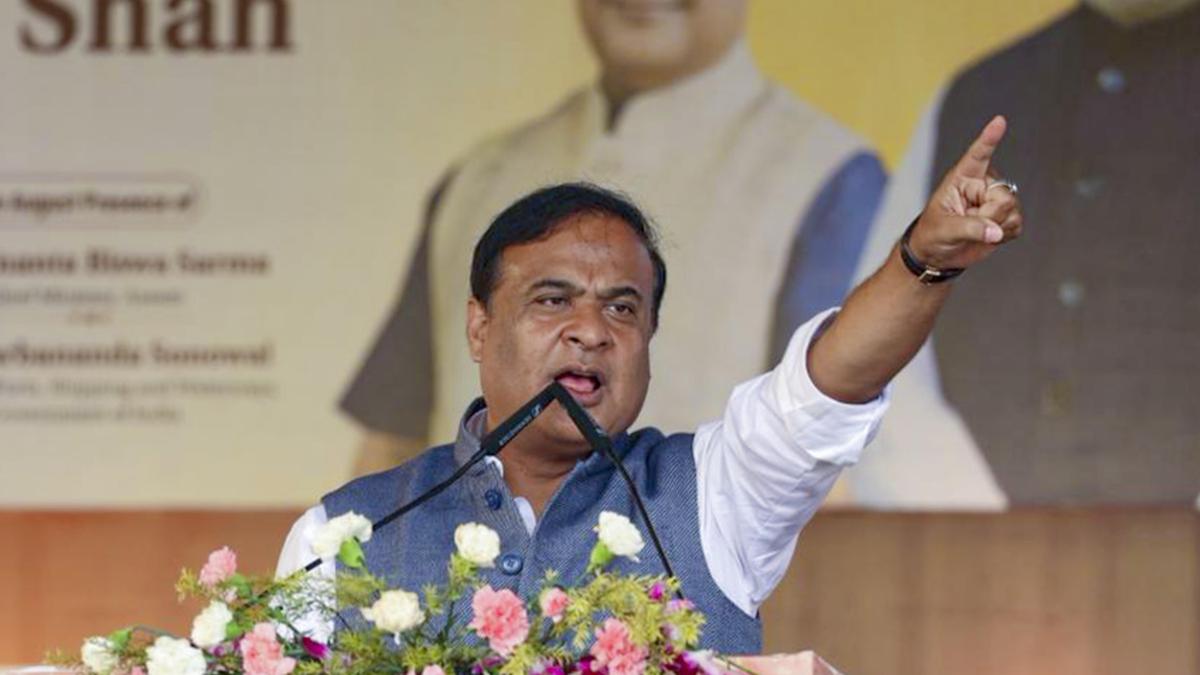
The recent communally charged rhetoric of Assam Chief Minister Himanta Biswa Sarma has crossed all limits. On January 27, while addressing reporters on the sidelines of an official event in Digboi in Tinsukia district, Sarma claimed that "four to five lakh Miya voters" would be removed from the electoral rolls during the Special Intensive Revision (SIR) process in the state. He further declared that "Himanta Biswa Sarma and the BJP are directly against Miyas" and urged people to "trouble" them, stating that "only if they face troubles will they leave Assam."
He went on to assert that it was his responsibility to cause hardship to the Miya community—a term commonly used in Assam in a derogatory sense to refer to Bengali-speaking Muslims.
Responding to questions regarding notices issued to thousands of Bengali-speaking Muslims during the claims and objections phase of the ongoing Special Revision (SR) of electoral rolls, the Chief Minister remarked: "Vote chori means we are trying to steal some Miya votes. They should ideally not be allowed to vote in Assam, but in Bangladesh."
According to media reports, Sarma also openly instigated the public by saying, "Whoever can give trouble in any way should give, including you. In a rickshaw, if the fare is ?5, give them ?4. Only if they face troubles will they leave Assam."
These outrageous remarks triggered widespread political controversy. Opposition leaders and civil rights activists accused the Chief Minister of promoting hatred and violating the Constitution by targeting a specific community. Jamiat Ulema-e-Hind subsequently filed a petition in the Supreme Court against Himanta Biswa Sarma over his remarks.
Justice Govind Mathur, former Chief Justice of the Allahabad High Court, observed that by "spreading fear, exclusion or hatred," Sarma may well be "guilty of undermining the foundations of the Indian Republic."
Peace and justice activist and writer Harsh Mander stated that he had filed a police complaint against Sarma over his public statements made on January 27, which, according to Mander, "promote hatred, harassment and discrimination against Bengali-speaking Muslims in Assam." He said he had sought prompt action and the registration of an FIR under relevant provisions of the Bharatiya Nyaya Sanhita, 2023.
Former Supreme Court Justice Madan B. Lokur, in an interview with journalist Karan Thapar on The Wire, said that action should be taken against Himanta Biswa Sarma for his hate speech against Bengali-speaking Muslims. He asserted that the remarks were unconstitutional, incited public disorder, and warranted resignation from office. Describing Sarma's use of the term "Miya" and his call to "trouble them by any means," Justice Lokur termed the statements "clearly hate speech" and "despicable," adding that they amounted to incitement that could seriously disrupt law and order.
Justice Lokur also rejected Sarma's claim that his language was derived from Supreme Court judgments, particularly the 2005 Sarbananda Sonowal case. He clarified that the phrase "demographic invasion," cited by the Chief Minister, originated from a 1998 report by the then Governor of Assam, which was merely quoted by the Court. Neither the Governor nor the Supreme Court ever used the term "Miya." "To attribute this to the Supreme Court is factually incorrect," he said.
According to legal experts, Sarma's statements go beyond mere hate speech. They violate the Indian Constitution, particularly Articles 14, 15, and 21, which guarantee equality before the law, prohibit discrimination on the grounds of religion, and protect human dignity. One cannot speak of fraternity while simultaneously urging people to harass or drive out a section of citizens.
It is deeply unfortunate that Prime Minister Narendra Modi and senior BJP leaders have remained silent on this issue. They should have unequivocally condemned Sarma's statements and taken action against him, given their unconstitutional nature. Their silence is not only distressing but also dangerous for democracy and for the unity and integrity of the nation.
Another incident, this time from Kotdwar in Uttarakhand, illustrates how the administration—particularly the police—often colludes with hate-mongers. In this case, the police filed FIRs against two men who intervened when Hindutva supporters were harassing an elderly Muslim shopkeeper, as reported by The Hindu.
On January 26, Kotdwar residents Deepak Kumar and Vijay Rawat witnessed a group harassing 70-year-old Vakeel Ahmed over the fact that his shop was named "Baba School Dress." In a widely circulated video, Kumar is seen confronting the group. When asked his name, he responds, "My name is Mohammad Deepak."
According to police accounts, on January 31, a group of more than 40 people gathered outside Kumar's gym and residence, raising slogans against him. The mob even blocked a national highway, disrupting traffic.
As reported by The Wire, an FIR against Kumar and Rawat was lodged following a complaint by two members of the Vishwa Hindu Parishad (VHP) and Bajrang Dal, Gaurav Kashyap and Kamal Pal. Because of the pressure from the Hindutva groups, Kumar and Rawat were booked for criminal intimidation, voluntarily causing hurt, rioting, and breach of peace. The complaint alleged that Kumar and Rawat had attacked them with the intent to cause harm.
Two additional FIRs were registered against unnamed members of right-wing groups for breach of peace after they blocked roads during protests against Kumar and Rawat. Although the police could clearly identify the troublemakers, their names were conspicuously omitted from the FIRs. This makes it evident that the Uttarakhand Police have sided not with the victims, but with the perpetrators affiliated with right-wing groups.
What deserves appreciation is that Deepak Kumar remains undeterred. In an Instagram video, he said: "I am not Hindu, not Muslim, not Sikh, not Christian. First and foremost, I am a human being... No one should be targeted for their religion." He added that while hatred spreads easily, standing up for love and humanity requires courage.
In a post on X, Leader of the Opposition in the Lok Sabha and Congress leader Rahul Gandhi called Kumar a hero and wrote:
"Deepak is fighting for the Constitution and humanity—for that Constitution which the BJP and the Sangh Parivar conspire every day to trample underfoot. He is a living symbol of a shop of love in the marketplace of hate, and that is what stings those in power the most. The Sangh Parivar is deliberately poisoning the country's economy and society so that India remains divided and a few continue to rule on the crutches of fear. Uttarakhand's BJP government is openly siding with antisocial forces engaged in intimidating and harassing ordinary citizens. No country can move forward in an atmosphere of hate, fear, and anarchy. Without peace, development is just an empty slogan. We need more Deepaks—those who do not bow, who do not fear, and who stand firmly with the Constitution. We are with you, brother. Don't be afraid. You are a lion-hearted warrior."
Some legal experts believe that the Supreme Court should have taken suo motu cognisance of the Assam Chief Minister's hate speech, given its divisive and unconstitutional nature. In April 2023, the Supreme Court had instructed all governments to register FIRs suo motu against purveyors of hate speech, without waiting for formal complaints, to pre-empt mob violence and promote communal harmony. The same Court that stayed the University Grants Commission (UGC) Regulations, 2026, on the grounds that they would "divide society," should have initiated legal proceedings against the Assam Chief Minister.
In the face of such blatant hate speech, both the executive and the judiciary have failed to act. The political opposition, too, has not responded with sufficient strength or decisiveness. In this situation, "We, the People of India" must raise our voices.
As Justice Madan Lokur has rightly observed, "If everyone remains silent, this will keep happening again and again. The bell tolls for everyone in the country." Defending constitutional values is the responsibility of every citizen.

.jpg)
 A. J. Philip
.jpg) Jacob Peenikaparambil
Jacob Peenikaparambil
.png) Chhotebhai
Chhotebhai

.jpg) P. A. Joseph
P. A. Joseph
.png)
.png) Robert Clements
Robert Clements
.jpeg) A. J. Philip
A. J. Philip
.jpg) Jacob Peenikaparambil
Jacob Peenikaparambil