


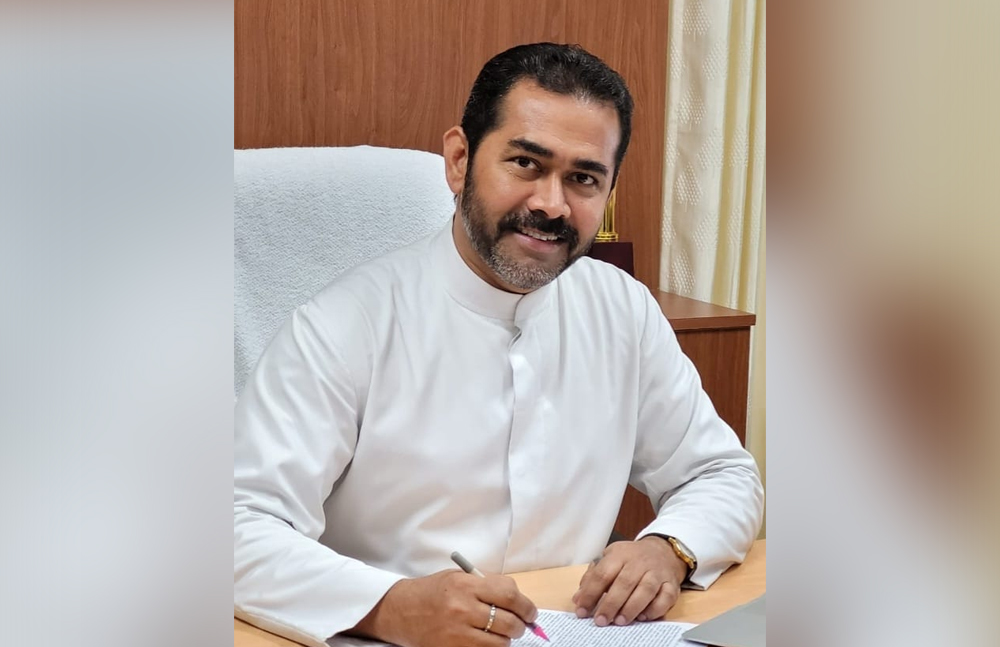
 Dr S. Rajasekaran
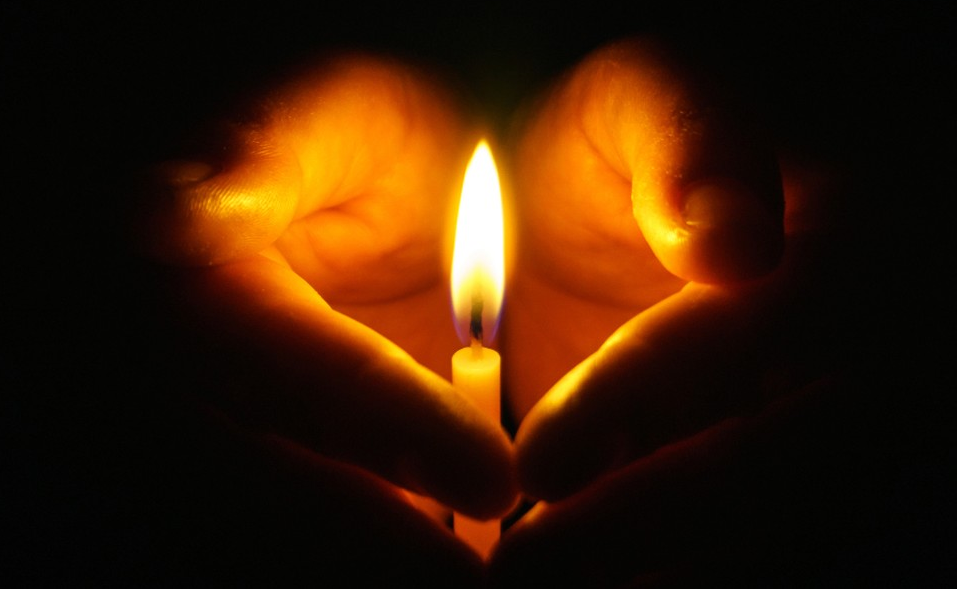
Christmas is not merely a religious festival marked by lights, carols, and seasonal celebrations. At its core, it carries a powerful socio-political message rooted in simplicity, humility, and radical love. In today's Indian context, shaped by polarisation, widening economic inequality, migration distress, and growing insecurity among minority and vulnerable communities, the birth of Jesus in a manger speaks with renewed urgency and relevance.
The Christmas narrative begins not in a palace or at the centre of power, but on the margins of society. Jesus is born into poverty, without social privilege or political protection. This is no coincidence; it is a profound theological and moral statement. It reminds us that genuine social transformation does not emerge from dominance or exclusion, but from solidarity with the poor, the displaced, and the voiceless. In an India where farmers, informal labourers, migrants, and the urban poor often remain invisible in policy decisions, Christmas confronts us with a challenging moral question: whose lives truly matter?
As the rich continue to grow richer and the poor remain trapped in cycles of deprivation, millions struggle to survive without job security, social protection, or a sense of belonging. Their suffering echoes the journey of the Holy Family itself, forced to flee violence and uncertainty in search of safety. Christmas thus becomes a mirror held up to our national conscience, urging society and the state to recognise the poor, migrants, minorities, and other vulnerable populations not as burdens, but as bearers of dignity, rights, and hope.
Pope Leo XIV, in his document Delexti te (no. 9), reminds us that poverty takes many forms: material, social, cultural, moral, spiritual, and political. He speaks of those who are denied a voice, deprived of freedom, and pushed to the margins of society. This broader understanding of poverty sheds light on the alarming realities faced by many marginalised communities in India today. Such suffering, the Pope insists, cannot remain a private concern or an act of occasional charity; it demands a collective social and political response. We are called to be the voice of the voiceless and the face of the faceless, recognising Christ in the wounded and suffering faces of innocent people.
India's constitutional ideals of justice, liberty, equality, and fraternity are repeatedly tested by fear-driven narratives and communal divisions. Against this backdrop, the Christmas proclamation of "peace on earth" offers an alternative vision. This peace is not passive silence in the face of injustice, but an active commitment to inclusion, dialogue, and compassion, especially toward those pushed to the margins by economic and social forces.
For Christians, Christmas is therefore a call to public witness through compassionate action, standing with the poor, defending minorities, and safeguarding constitutional values. For all citizens, regardless of faith, Christmas offers hope: that even in uncertain times, a just, inclusive, and humane society can be rebuilt from the margins. In the child of Bethlehem, India is invited to rediscover a future grounded in dignity, justice, and hope for all.
Merry Christmas!
.jpg)
.png)
.png) Chhotebhai
Chhotebhai
.jpg)
 A. J. Philip
.jpg)
.png) Jacob Peenikaparambil
Jacob Peenikaparambil
.jpg)
.png)
.png)
.png) Robert Clements
Robert Clements
.jpg) Joe Eruppakkatt
Joe Eruppakkatt
.jpeg) A. J. Philip
A. J. Philip