

.png) Joseph Maliakan
Joseph Maliakan
Article 21 of the Indian Constitution states in straightforward, explicit language, "Protection of life and personal liberty - No person shall be deprived of his life or personal liberty except according to procedure established by law."
The ex
The Executive, in the absence of any procedure prescribed by law for sustaining the deprivation of personal liberty, shall act in violation of Article 21 if it interferes with the life or personal liberty of the individual.
The Constitution provides that a person cannot be deprived of his liberty except by "due process of law." The interpretation is that the court guarantees to examine a law to ascertain if it is a just law, both as to the procedure and to the substantive provisions contained therein.
In AK Gopalan v. State of Madras (1950), it was held that the ex
This doctrine of exclusivity was seriously questioned in the Bank Nationalisation case (RC Cooper v. Union of India, 1970). It was overruled by a 6-to-1 majority in that case. It was explained in Shambu Nath Sarkar v. State of WB (1973) that the central premise of the majority in the Gopalan case was held to be incorrect in the Bank Nationalisation case. Thus, though a preventive detention law may pass the test of Article 22, it has yet to satisfy the test of other fundamental rights, such as Article 19.
Subsequently in the Menaka Gandhi case, 1978, it was laid down by Justice Bhagawati, who delivered the leading opinion, that the law must now be taken to be well settled that Article 21 does not exclude Article 19, and law prescribing a procedure for depriving a person of 'personal liberty must meet the requirement of Article 21 and also Article 19 as well, and ex-hypothesi, of Article 14.
In his exposition of the concept of 'procedure' in Article 21, Justice Bhagawati was inspired by the great equalising principle enunciated in Article 14, and extended its application to the nature and requirement of the procedure under Article 21. It was explained that the principle of reasonableness, which was an essential element of equality or non-arbitrariness pervading Article 14, must also apply with equal force to the procedure contemplated by Article 21, that is, the procedure must be 'right, just and fair' and not 'arbitrary, fanciful, or oppressive.'
So that the procedure is right, just and fair, it should conform to the principles of natural justice, that is, 'fair-play in action.' Hence, it was held that any procedure which permits impairment of the constitutional right to go abroad, giving a reasonable opportunity to show cause, cannot but be condemned as unfair and unjust.
In this context it is relevant to recall the dissenting judgement in ADM Jabalpur v. Shivkant Shukla (1976) by Justice HR Khanna, who observed that Article 21 cannot be considered to be the sole repository of the right to life and personal liberty as this is the most precious right of human beings in civilised societies governed by the rule of law and sanctity of life and liberty was not something new when the Constitution was drafted.
The majority's interpretation that, in an emergency, the right to life and liberty cannot be enforced by the courts does not seem to be in accordance with the scheme outlined in the Constitution. The source is the Executive's obligation to act within the authority of law as an essential facet of the rule of law, and it may be found elsewhere, for example, in Articles 14, 22, and 73 of the Constitution.
In fact, Article 22 provided for the mandatory procedure to be prescribed in a law providing for preventive detention. Even if Article 21 is deleted from the chapter on Fundamental Rights, it does not necessarily mean that the citizens will be left with no right to life or personal liberty under the overall scheme of the Constitution, Justice Khanna had pointed out.
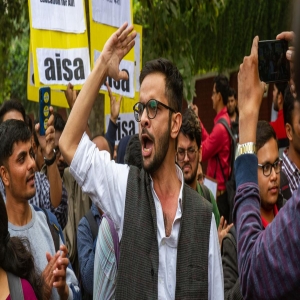
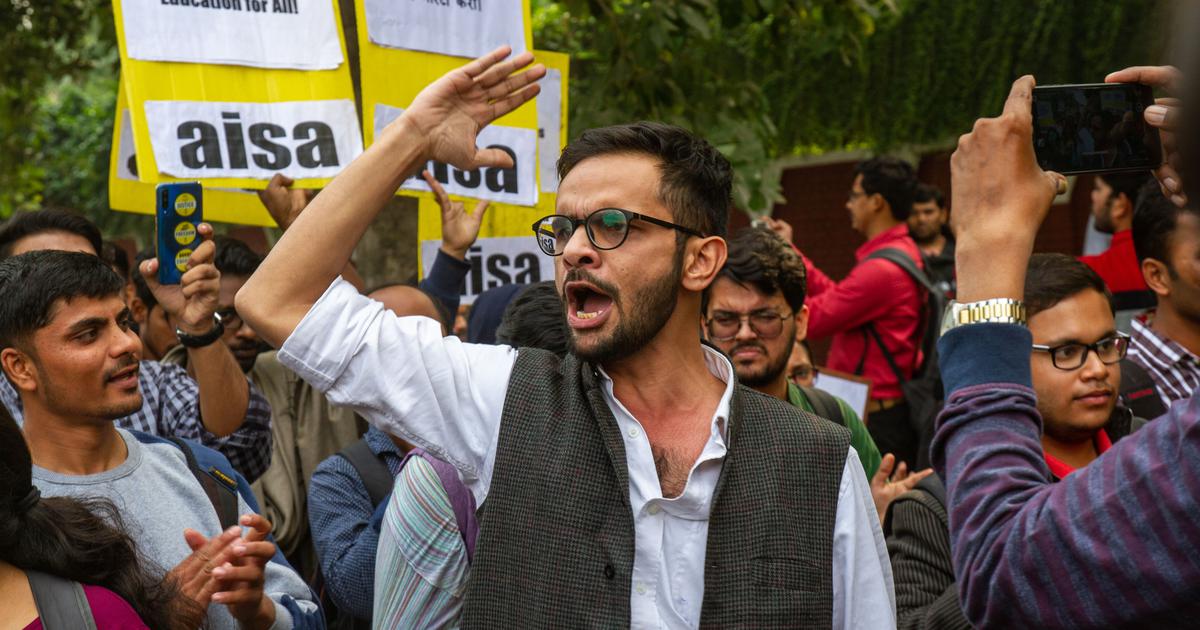
Umar Khalid and Sharjeel Imam, whose only crime was to express political dissent publicly, were, along with several others, all Muslim youth pursuing education in universities, charged under the draconian Unlawful Activities Prevention Act, 1967, the constitutionality of which itself is under challenge in the Supreme Court.
What is appalling is that, in its order declining bail to the scholars, the Supreme Court bench comprising Justices Arvind Kumar and Justice NV Anjaria has accepted the prosecution's interpretation that plans to organise 'chakka jam' and hold protest meetings are "terrorist acts."
Defying all logic and without regard to previous bail orders given to UAPA accused by the Supreme Court and various High Courts, the SC declined to consider any defence arguments, saying that at the bail stage, after more than five years of imprisonment without trial, the Supreme Court is not obliged to consider anything besides the prosecution's arguments.
At many places, the SC order denying bail to the two young scholars reads like the prosecution's charge sheet. In fact, it reads like a very poorly edited version of the charge sheet, to the point that one feels the Supreme Court judges have turned into prosecutors!
.jpg)
 A. J. Philip
.png) Cedric Prakash
Cedric Prakash
.jpg)
 P. A. Chacko
.jpg)
.jpg)
.jpg) Thomas Menamparampil
Thomas Menamparampil
.png)
.png)
.png) Robert Clements
Robert Clements
.jpg)
.png)
.png) Chhotebhai
Chhotebhai