

 Fr. Gaurav Nair
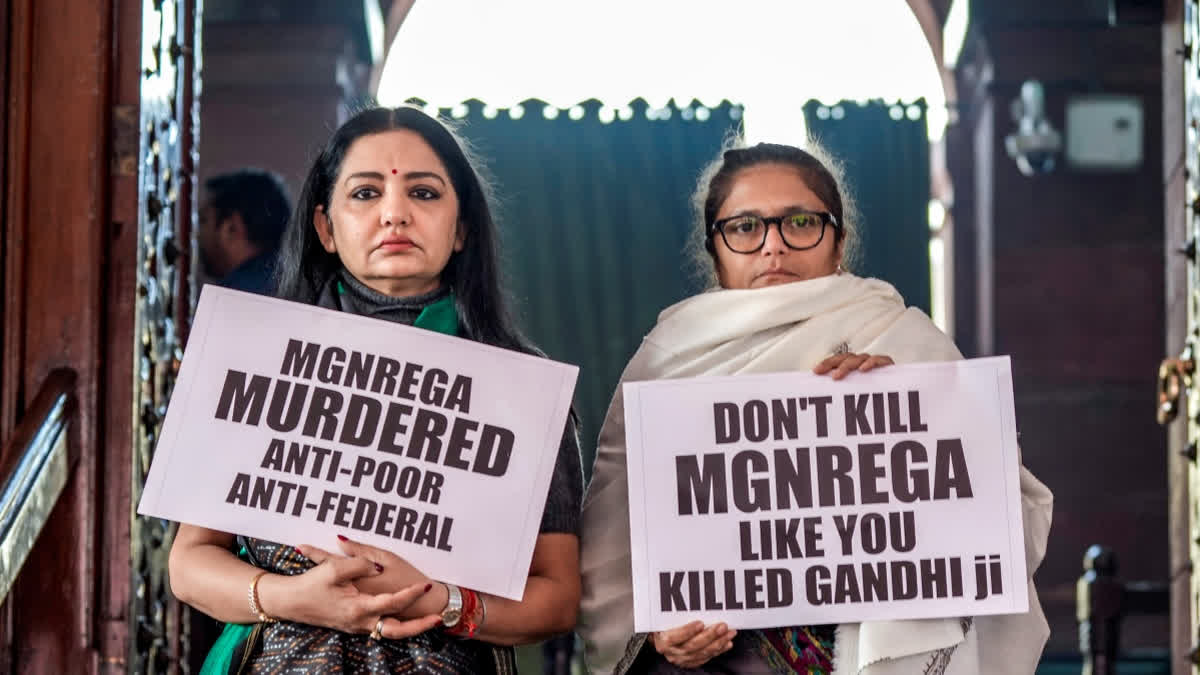
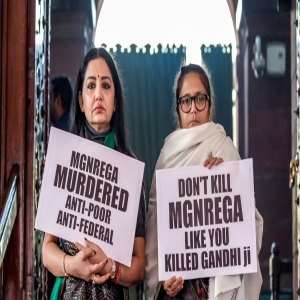
MGNREGA was a covenant the nation made with its poorest citizens. It was a promise of dignified work and not starving due to a lack of it. That promise is now being broken, deliberately and with disturbing impunity.
The government's decision to replace MGNREGA with the grandly titled Viksit Bharat–G RAM G Bill is a reversal in disguise. A cursory glance at it would seem lofty. Indeed, it would be impossible to push something that was not covered in a veneer of beautiful promises; however, its intent is anything but.
The right to work did not fall from the sky. It emerged from a hard constitutional debate, born of resistance from those who feared binding obligations on the state. It was placed among the Directive Principles because it demanded political will. MGNREGA was that will made law. For the first time, the rural poor could demand work as a right, not beg for it as charity.
That is what made the law dangerous to those who dislike accountability.
MGNREGA worked because it trusted people. It was demand-driven. If there was no work, the state was at fault. Wages were equal for men and women. The Centre paid, and states and panchayats planned projects based on local needs. Workers could leave at any time for better jobs. The scheme did not trap them. It was a buffer that held the floor beneath their feet. The new Bill pulls that safety net out from under them.
The Centre is seeking to game the system with plausible deniability, escaping responsibility by replacing demand with fixed allocations. By shifting 40 per cent of costs to states already gasping for funds, the burden is quietly dumped downstream while the control moves upward.
The ban on work during peak agricultural seasons sounds tidy on paper. On the ground, it is brutal. Machines have already reduced farm jobs. Wages fall. That is exactly when workers turn to MGNREGA. Blocking access weakens their bargaining power and pushes them back into the hands of big landowners. In this, women suffer the most. They already carry tonnes of mud every day just to meet norms.
As much as the government wants to spin the narrative, the scheme did not "fail." It was starved by year after year of consistent funding cuts. Wages were delayed, and work was denied. Then the same government which sabotaged it pointed to low averages and claimed a broken model.
Over seven crore people still seek work under MGNREGA. Adivasis and Dalits form its backbone. Scrapping their legal guarantee while handing tax gifts to corporations is a moral choice.
Renaming the scheme does not obliterate its purpose. It only exposes the fear behind the move. A government confident of its intentions does not need to bury rights under acronyms.
Surely, MGNREGA needed strengthening, but not burial. It needed more funds, timely wages, and better assets. That would have been the constitutional path. What is now being offered instead is a hollow shell.
.jpg)
 A. J. Philip
.png) Cedric Prakash
Cedric Prakash
.jpg)
 P. A. Chacko
.jpg)
.jpg)
.jpg) Thomas Menamparampil
Thomas Menamparampil
.png)
.png)
.png) Robert Clements
Robert Clements
.jpg)
.png)
.png) Chhotebhai
Chhotebhai