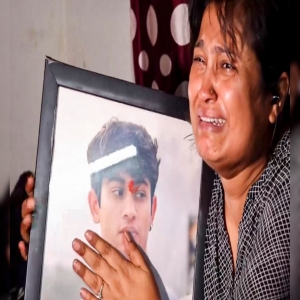


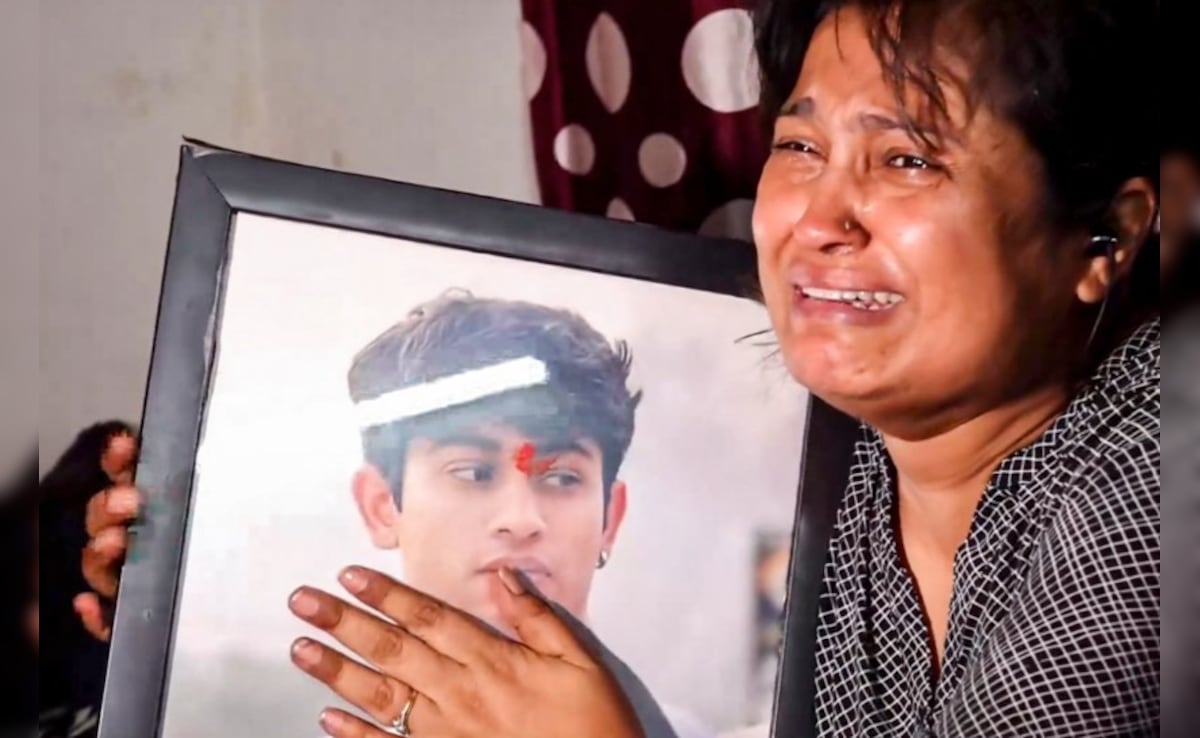
The tragic accident involving Sahil Dhaneshra, a 23-year-old youth brimming with promise, a wall adorned with medals, and the inconsolable anguish of a mother, has shaken the nation and compelled us to confront a series of "What ifs?"
What if parents had not handed car keys to a 17-year-old?
What if social media did not glorify speed and reckless driving?
What if laws relating to underage driving were implemented with greater stringency?
Sahil died instantly when a speeding car, driven by a 17-year-old, struck him, leaving behind unfulfilled aspirations and a grieving single mother. Having raised her son alone for 23 years, Makaan now finds her life irreparably shattered. In her interview, she pleaded for justice, even as the accused was produced before the Juvenile Justice Board and subsequently granted interim bail on account of his Class 10 board examinations. This raises a painful moral question: can academic examinations outweigh the imperatives of justice?
As both a mother and a rational observer, I wish to foreground certain structural concerns. Had parents denied a minor access to car keys, the victim might still have been alive, and the accused might have been preparing for his examinations without the shadow of tragedy.
In India, the legal driving age for cars is 18, as prescribed under the Motor Vehicles Act, 1988 (as amended). How, then, did an underage adolescent gain access to a vehicle? Where was parental supervision? Parenting is not confined to biological procreation; it encompasses the inculcation of values, the transmission of civic responsibility, emotional guidance, and the cultivation of legal awareness.
Given that the statutory driving age is unambiguous, parents bear a duty to communicate and enforce these norms. Admittedly, adolescents may struggle to comprehend the consequences of speed and risk-taking behaviour. Nevertheless, it is incumbent upon parents to clarify that traffic regulations are protective safeguards rather than arbitrary constraints. Equally significant is modelling responsible conduct—observing traffic rules, wearing seat belts and helmets, and practising disciplined driving.
Beyond the household, social media exerts a profound influence on shaping youthful identities. Platforms such as Instagram and YouTube often aestheticise high-speed driving and hazardous stunts, presenting them as emblems of adventure, bravado, and masculinity. Although cautionary phrases like "speed kills" abound, they are frequently overshadowed by glamorised portrayals of risk. Consequently, digital platforms and content creators must assume ethical responsibility by discouraging reckless behaviour and amplifying road safety awareness.
This is not an isolated episode. The Pune Porsche crash (2024), in which a 17-year-old killed two technology professionals, stands as a stark precedent. Numerous comparable incidents have been reported in recent years. While India strengthened its regulatory framework through the Motor Vehicles (Amendment) Act, 2019—imposing substantial fines on guardians, enabling cancellation of vehicle registration, and prescribing enhanced penalties for rash and negligent driving—the question remains: is this sufficient?
Can the loss of a young life be proportionately addressed through monetary penalties alone? Lenient consequences risk signalling that legal prohibitions are negotiable. Several jurisdictions adopt far stricter approaches. In Singapore, for instance, driving without a licence or speeding may attract heavy fines, imprisonment, and even long-term disqualification from driving. Such measures reflect a recognition that underage driving constitutes a grave public-safety threat rather than a minor traffic infraction.
Sahil's death must not fade into statistical anonymity. It must serve as a moral reckoning. Stricter enforcement, heightened parental accountability, and responsible digital culture are imperative. When a minor drives recklessly, it is not merely a child behind the wheel; it is a collective failure of guardianship, of regulation, and of societal responsibility.
.jpg)
.png) Cedric Prakash
Cedric Prakash
 ICPA
ICPA
 ICPA
ICPA
 ICPA
ICPA
 ICPA
ICPA
 ICPA
ICPA
 ICPA
ICPA
.jpg)
 A. J. Philip
.jpg)
.png) Jacob Peenikaparambil
Jacob Peenikaparambil
.jpg)
.png) John Dayal
John Dayal