

.jpg)
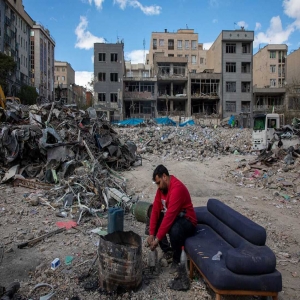
On February 28, 2026, in a joint military operation called 'Epic Fury,' the US and Israel attacked Iran, killing its supreme leader, Ayatollah Khamenei. It was an unprovoked, illegal aggression; an undeclared war that violated international law and the UN charter. American President Donald Trump and Israeli Prime Minister Benjamin Netanyahu misled the world to justify the aggression by claiming that Iran posed a serious security threat to America and Israel, as it was going ahead to make a nuclear bomb.
They claimed that the regime of the radical Islamic clerics in Iran was very oppressive, hence it must change. Therefore, de-nuclearising Iran and changing the regime became the main war objectives. Iran was attacked, while Oman was mediating in the US-Iran conflict at Geneva that yielded progress. The American intelligence agencies, including the CIA, told Trump that Iran had no plan to make nuclear bombs and that it had posed no threat to the US. Yet, Trump chose to go with Netanyahu's one-sided assessment that Iran was a serious threat to both Israel and America. It was at the instigation of Israel that the US carried out the 'Midnight Hammer' against Iran in June 2025 and bombed its nuclear enrichment facilities.
There is some misconception about Iran. A journalist, Sujit John, who visited Tehran last November to participate in a blockchain and cryptocurrency conference organised by the Iranian government, has interesting things to say about Iran in his write-up in The Times of India, March 19. According to him, the day-to-day reality in Iran is at variance with the Western narrative that all women wear hijabs. It was totally a wrong perception; barring some older women, no one wears hijabs. And socially, Iran is far from what most of us imagine. The Indian Embassy officials in Tehran say, "Iran is less religious today than India is ... a third of mosques in Tehran have shut down, because nobody goes to them."
The people of Iran are warm and friendly; shopkeepers routinely offer items freely. The West presents the Iranian regime as a monolithic bloc of Islamic fundamentalists. That may be far from the case. The regime is a mix of hardliners and reformists, and reformists are gaining ground. Even hardliners aren't as hardline as they once were. There are more women than men in many science and tech universities in Iran. Men are entering business rather than pursuing higher education, leading to incompatibility in marriage. Divorce rates are near 50%.
India did not condemn the US-Israel aggression on Iran, nor condoled the death of its supreme leader, despite Iran being a traditional friend with whom it had a civilisational link. This had outraged the opposition. The Modi government made a historical blunder by siding with America and Israel, deviating from India's well-established policy of playing the role of a neutral umpire and mediating in international conflicts. In her article Government's silence on killing of Iran leader is not neutral, it is abdication, The Indian Express, March 3, 2026, Sonia Gandhi was unsparing in criticising the government's partisan stand:
"The Prime Minister confined himself to condemning Iran's retaliatory strike on the UAE, without addressing the sequence of events that preceded it. When the targeted killing of a foreign leader draws no clear defence of sovereignty or international law from our country and impartiality is abandoned, it raises serious doubts about the direction and credibility of our foreign policy. If such acts pass without principled objection from the world's largest democracy, the erosion of international norms becomes easier to normalise.
For India, this episode is especially troubling. Our ties with Iran are civilisational as well as strategic. In 1994, when sections within the Organisation of Islamic Cooperation sought to advance a resolution against India at the UN Commission on Human Rights over Kashmir, Tehran played a consequential role in blocking that effort. That intervention helped prevent the internationalisation of the Kashmir issue. Iran has also enabled India's diplomatic presence in Zahedan, near the Pakistan border — a strategic counterbalance to the development of the Gwadar port and the China-Pakistan Economic Corridor.
India's post-Independence foreign policy was shaped by non-alignment — not as passive neutrality, but as a conscious assertion of strategic autonomy. It was a refusal to become subsumed into the rivalries of great powers. An uncritical silence in the face of unilateral military action by powerful states looks like a retreat from that principle ... an abandonment of our legacy. If sovereignty can be disregarded without consequence, as it is in the case of Iran, smaller powers are left exposed to the whims of the strong. India has repeatedly argued for a rules-based international order that protects the weak from coercion. At moments when the rules-based order is under visible strain, silence is abdication. India has long aspired to be more than a regional power; it has sought to serve as the conscience-keeper of the world."
Antagonised by the stand taken by India of siding with the US-Israel aggression, Iran did not allow easy passage of Indian ships through the Strait of Hormuz, which is closed to ships from hostile countries, creating a serious oil and energy crisis at home. Prior to the aggression, Iran was selling oil to India in Indian currency at a lower rate. Now India is forced to buy Iranian oil in Chinese currency. It is a self-inflicted pain. As the BRICS chair, India was expected to take a stand against the war on Iran, which is a BRICS member.
Trump is getting extremely unpopular and isolated at home and abroad; his NATO allies disapprove of the war with Iran, carried out under the influence of Netanyahu. Both Trump and Netanyahu needed an alibi to divert public attention from domestic issues, particularly the Epstein files and the arrest warrant from the International Criminal Court, respectively. The aggression against Iran provided that. The war has not served any American interest. A PEW Poll reports that 61% of Americans disapproved of the war.
Pratap Banu Mehta says, "the most worrying future of American democracy at this moment is not that it has grown more disposed to cruelty, but it seems to have reached a point where everyone seeks absolution from responsibility." It is disturbing that the rise of the US as the sole superpower has become oppressive. Iran, Libya, Somalia, Afghanistan, Venezuela and now Iran's destruction are sad reminders of this fact.
Trump faces 'No Kings' fury. As reported in The Hindu, April 1, a slogan rooted as a warning against rising authoritarianism under Trump's administration has grown into one of the largest protest movements in American history, with millions across the country and in cities abroad, taking to the streets on March 28 under the banner: "No Kings." The website of the 'No Kings' movement declared: "In America, We Have No Kings," a message that has now become a rallying cry. It goes on to accuse the Trump administration of unleashing masked secret police, pursuing illegal catastrophic war and undermining civil liberties and that 'power belongs to the people – not to winnable kings or their billionaire cronies.
The demonstration was the largest since Trump's second inauguration on January 20, 2025, when some 8 million people participated in nearly every major US city, alongside solidarity protests in Paris, London, Lisbon, Rome, and other cities. In Washington, hundreds marched past the Lincoln Memorial, holding signs that read "Put Down the Crown, Clown" and "Regime Change Begins at Home." The demonstrators carried placards reading "No Kings, No Crowns."
Iran, in retaliation, has attacked the countries in the Middle East - Kuwait, Saudi Arabia, Bahrain, Oman, Qatar, UAE, and Iraq - as they shelter the American military and air bases used by the American forces to strike at Iran. Trump talks of regime change in Iran. But what about the family monarchies – the Sheikhdoms - in the Gulf region, which have more oppressive dictatorial regimes supported by America to protect its strategic interests? An outside power cannot affect the change of regime in another sovereign country by using force. It is for the people of that country to change the regime.
By the same yardstick, America has no moral right to coerce Iran and threaten to destroy it by using armed forces to stop its nuclear programme, while it holds a vast nuclear arsenal capable of destroying the entire world. The US's close ally in the Middle East, Israel, though it claims to follow a policy of 'nuclear opacity,' has not signed the Non-Proliferation Treaty (NPT) and possesses hundreds of nuclear warheads, posing a serious security threat to the countries in the Gulf region, including Iran. Should Iran not have the right to defend its territory and sovereignty? And when there is the International Atomic Energy Commission (IAEA) to promote safe, secure and peaceful nuclear technology, why should America and Israel use force against Iran to stop its nuclear programme? This is a bulldozing of the international norms.
The Iranian blockade of the Strait of Hormuz brings back memories of the 1956 Suez Crisis. Following the nationalisation of the Anglo-French company that operated the Suez Canal, which fell in the Egyptian territory, by President Nasser in the autumn of 1956, Egypt was attacked by Israel, the UK and France. The Suez Canal served as a lifeline for global trade by facilitating the shortest shipping route between Asia, Europe, and America. The canal remained closed for more than five months.
Prime Minister Nehru played a decisive role in resolving the Suez crisis. In a letter to the UN Secretary General Dag Hammarskjöld, he said: "It is clear and admitted that Israel has committed large scale aggression against Egypt. Instead of trying to stop this aggression, the UK and France are themselves invading Egyptian territory." And following the UN General Assembly's passing a resolution to end the war, the UK and French forces withdrew from Egyptian territory. The Suez crisis ended British hegemony in the Middle East.
Similarly, the US-Israel aggression on Iran is likely to end the American hegemony in the Middle East and ultimately strengthen Iran in the region, shattering Israel's dream of dominating the region. Trump and Netanyahu miscalculated the strength of Iran and its power to resist the military might of a superpower. And Modi erred in siding with the US-Israel aggression. Iran is not Iraq or Gaza or Venezuela. Iran is a categorically different kind of political organism. It has a population of 90 million. It possesses a geography of mountains, deserts, and layered strategic depth that has exhausted conquerors across three millennia; an ancient civilisation that cannot be subdued. The people in Iran may be opposing the present regime that is so oppressive, but their nationalism and patriotism are too strong to accept an outside power to invade their country and destroy it.
Having failed to make Iran surrender unconditionally, Trump is now threatening to impose a naval blockade of the Strait of Hormuz, following the failure of peace talks in Islamabad. He is treating the world as if it is his real estate, doing whatever he feels like, hoping to have his own way eventually - a 'delusion of omnipotence.' He lives in his own world of make-believe, displaying the arrogance of military and economic power.
He must listen to Pope Leo XIV and end the war that he started. The Pope is opposed to the US-Israel war on Iran and conveys the message of the Gospel:
"The message of the Gospel is very clear: Blessed are the peacemakers. I believe that the Church has a moral duty to speak out very clearly against war and in favour of peace and reconciliation. God does not bless any conflict. Anyone who is a disciple of Christ is never on the side of those who once wielded the sword and today drop bombs. I will continue to speak out loudly against war, looking to promote peace, promoting dialogue and multilateral relationships among the states to look for just solutions to the problem."
Pope Leo, the first pontiff from the US, warns of the risk that democracies may slide into majoritarian tyranny. In a letter issued by the Vatican on April 14, he said:
"Democracies remained healthy only when they were rooted in moral values. Lack of this foundation risks becoming either a majoritarian tyranny or a mask for the dominance of economic and technological elites ... and that power should not be seen an end in itself, but as a means ordered toward the common good ... that the legitimacy of authority depends not on the accumulation of economic or technological strength, but on the wisdom and virtue with which it is exercised."
Trump and Netanyahu have committed heinous war crimes against the people of Iran, waging an unprovoked, undeclared, illegal war, assassinating several top leaders, killing thousands of civilians, including innocent children, striking at schools and hospitals, bombing civilian areas and rendering lakhs of people displaced. And Israel's unabated bombing of Lebanon is a genocide. Trump and Netanyahu have destroyed peace and security and international order, heading to the jungle raj, and created a serious energy and economic crisis across the globe. They should be held accountable for the heinous war crimes.
.jpg)
.png) Cedric Prakash
Cedric Prakash
 ICPA
ICPA
 ICPA
ICPA
 ICPA
ICPA
 ICPA
ICPA
 ICPA
ICPA
 ICPA
ICPA
.jpg)
 A. J. Philip
.jpg)
.png) Jacob Peenikaparambil
Jacob Peenikaparambil
.jpg)
.png) John Dayal
John Dayal