

.png) Jaswant Kaur
Jaswant Kaur
.jpeg)
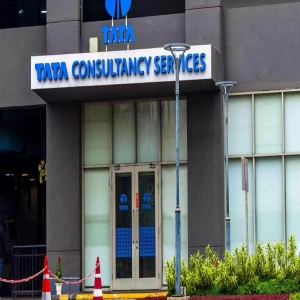
There are some brands you trust without thinking. And then some events force you to question why you trusted them at all. This is exactly what this writer felt when details emerged about alleged instances of sexual harassment from the Nashik unit of Tata Consultancy Services (TCS).
Of course, this is not the first case of sexual harassment that the corporate world has witnessed over the last few years. There have been many horrifying accounts. Yet, this case has actually sent shock waves across the country. It certainly goes against a carefully woven or cultivated belief that some organisations are fundamentally safer, more ethical, more "humane" than others.
When a company that has a long-standing tradition of being employee-friendly finds itself at the centre of allegations involving sexual exploitation, coercion and systemic silence, the discomfort is not just about the incident, but about the collapse of trust and the scale this kind of crime can take, if unchecked.
The reports of a covert police operation, multiple FIRs, and arrests suggest that this was not a one-off incident but something that had been continuing for several years. A complaint made by a woman accusing a colleague of rape, who allegedly hid his marital status and promised marriage, led to an investigation. Police personnel, posing as housekeeping staff, were deployed inside the 147-employee facility, collecting evidence against senior employees, leading to several FIRs and arrests.
The most uncomfortable revelation is that complaints were being ignored or inadequately acted upon. This is what distinguishes this case from misconduct to institutional failure. One of the leading national dailies reported that "In one case, a complainant said that an HR official told her to 'stay cool,' implying that certain behaviours were common in MNCs."
And yet, the industry voices are quick to label such incidents as "exceptions," that do not reflect the broader corporate culture. That argument might have held weight if the data had not consistently pointed in the opposite direction.
Globally, sexual harassment remains one of the most underreported and persistent issues in workplaces, including in large, highly regulated corporations. Data from the US Equal Employment Opportunity Commission (EEOC), one of the most credible sources tracking workplace discrimination, shows that between 2018 and 2021 alone, over 27,000 formal sexual harassment complaints were filed. These are not small numbers, and more importantly, they come from systems where reporting mechanisms are well established and legally enforced.
But the more revealing statistic is not how many complained of sexual harassment but how many do not. The EEOC itself acknowledges that nearly 90 per cent of individuals who experience harassment never take formal action. This fundamentally changes how we should look at every corporate disclosure or annual report that flaunts a "zero complaints" statistic. It tells us that what organisations officially record is only a fraction of what actually exists.
Recent trends show that the problem has only been increasing. Sexual harassment complaints have been rising again in the post-pandemic period. In 2023, the EEOC recorded over 7,700 sexual harassment charges, a sharp increase from just over 5,500 in 2021. Overall harassment complaints rose by nearly 47 per cent in the same period. This is not the trajectory of a problem being solved. It is the trajectory of a problem that is becoming more visible, validating the fact that it is more entrenched in the system than we can imagine.
Even more telling is the pattern of retaliation. Over 40 per cent of sexual harassment complaints filed with the EEOC are accompanied by allegations of retaliation. In simple terms, nearly half of the people who report harassment also report being punished for doing so. That is not a compliance failure; it is a cultural one.
Large corporations, including Fortune 500 companies, are often assumed to be better equipped to prevent such issues. They have policies, internal committees, training modules, global standards, and reputational incentives. But the data suggest that scale and sophistication do not necessarily translate into safety. In fact, they can mask problems more effectively.
This is where the TCS case becomes particularly significant, as it challenges a comforting but flawed assumption: that better policies lead to better outcomes.
In other words, we as a country might have had a robust legal framework under the Prevention of Sexual Harassment (PoSH) Act, but it does not necessarily imply no cases of sexual harassment. It is assumed that employees will use the systems, policies and procedures, but they often do not. One reason could be that the perceived cost of speaking up outweighs the expected benefit.
When an employee considers filing a complaint, factors such as the impact on career trajectory, internal politics, credibility battles, social stigma, and the risk of isolation carry more weight than the prospect of getting justice. This is exactly what the EEOC data on retaliation reinforces.
This brings us back to the most uncomfortable aspect of the Nashik case: that complaints did not trigger effective action. Even if a system fails once, it sends a signal far beyond that individual case. It tells others watching closely that the process may not protect them, silently institutionalising silence and injustice.
Besides inaction, another organisational dynamic comes into play, one rarely acknowledged openly. Companies that are widely seen as ethical often have more to lose from public scandals. This creates an implicit pressure to manage issues internally, to contain rather than confront, to resolve quietly rather than transparently. Over time, this can create what might be called "reputational inertia," where preserving the image becomes more important than addressing the issue.
And this operates through small decisions, such as delaying action, downplaying complaints, encouraging informal resolutions, or framing issues as interpersonal conflicts rather than systemic concerns. Each decision, in isolation, may appear reasonable. Together, they create an environment where misconduct can persist without formal acknowledgement.
For years, many employees, particularly young professionals entering the workforce, have believed that certain organisations offer not just better careers, but safer environments. But the Nashik case has actually shaken that faith and rightfully so.
The idea that safety is a function of brand rather than behaviour is fundamentally flawed. No organisation, regardless of its legacy or reputation, is immune to such cases unless it responds when confronted with failure.
The real question, therefore, is not whether TCS will conduct an internal inquiry or reiterate its zero-tolerance stance. It is whether organisations are willing to go beyond compliance checklists and confront deeper structural issues.
It implies addressing deeper questions: How to ensure the independence of Internal Committees? Are leaders held accountable for cultural failures, or only for financial performance? Are employees who report misconduct supported in practice, or only in policy documents? These are uncomfortable questions because they challenge the idea that the system is already adequate.
There is also a societal layer that cannot be ignored. Workplace harassment does not emerge in isolation. It reflects broader social attitudes, including the normalisation of inappropriate behaviour, the trivialisation of complaints, and a tendency to question victims rather than systems. This means that while policies can attempt to regulate behaviour, they cannot fully counter deeply ingrained biases.
The Nashik case should force organisations to move beyond performative compliance. It should push leadership to recognise that culture is not defined by values written on walls, but by decisions taken in moments of crisis. It can remind employees that systems must be continuously questioned, not passively trusted.
However, if this case, too, is allowed to be a chapter in a forgotten history or used as a case study by a few PoSH trainers, then we cannot expect change. We can only pave the way for perhaps more shocking revelations as we become the instruments of perpetrating crime.
Sexual harassment in workplaces is not a rare breakdown of otherwise functional systems. It is a recurring pattern that persists across geographies, industries, and organisational sizes.
Which is why the real test of this moment is not outrage, but how we respond. Do we create policies, structures, and systems alone, or do we also enforce behavioural change? Because, in the end, the question is not whether a respected organisation failed. It is whether anything will fundamentally change before it happens again.
.jpg)
.png) Cedric Prakash
Cedric Prakash

 ICPA
ICPA
 ICPA
ICPA
 ICPA
ICPA
 ICPA
ICPA
 ICPA
ICPA
 ICPA
ICPA
.jpg)
 A. J. Philip
.jpg)
.png) Jacob Peenikaparambil
Jacob Peenikaparambil
.jpg)
.png) John Dayal
John Dayal