

.jpg) Jessy Kurian
Jessy Kurian
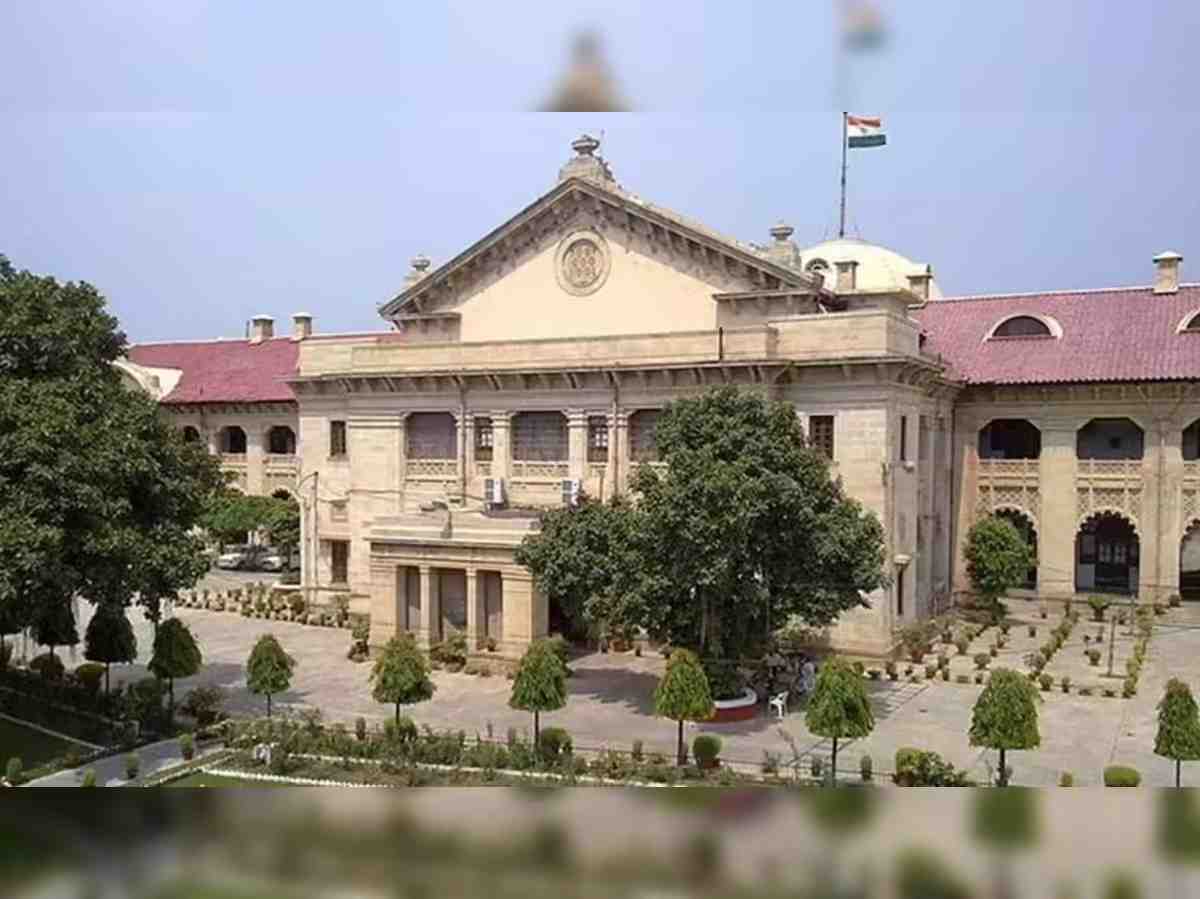
"Though a person may change religion, his or her caste remains the same despite conversion to another religion," noted a Single Bench of the Allahabad High Court. Justice Anil Kumar, while granting relief to a woman who married a man belonging to the Jat community, further stated, "Even marriage does not change her caste."
The Special Judge, Aligarh, summoned eight persons to face trial under the SC/ST Act on a criminal complaint filed by the woman, stating that the accused had assaulted her and used casteist slurs during an altercation.
The accused/appellants had moved the High Court against the Trial Court with the contention that the woman originally belonged to the SC/ST community by birth and is originally a resident of West Bengal; she lost her caste status after she married a man belonging to the Jat community. Therefore, the accused persons are not guilty under the SC/ST Act.
On the appellant's pleas that the woman has lost her caste after marrying someone from the Jat community, the High Court, in its order dated February 10, observed, "The caste of a person by birth remains the same even if he or she changes religion."
The gist of the ruling is that conversion or inter-caste marriage does not change the caste determined by birth.
It is pertinent to note the 1950 Presidential Order. "No person who professes a religion different from Hinduism shall be deemed to be a member of a Scheduled Caste."
The law directly links SC status to religion, meaning Dalits who convert to any religion other than Hinduism will lose their legal status as Scheduled Castes, along with associated affirmative action benefits.
Under pressure, the order was amended in 1956 to include converts to Sikhism and in 1990 to include converts to Buddhism. However, the status of converts to Christianity and Islam remains the same under the President's Order 1950.
The 1950 Order of the President was widely criticised for violating the equality enshrined in the Constitution of India because it restricts the Scheduled Caste status exclusively to Hindus, later amended for Sikhs and Buddhists, thereby discriminating against Dalits who convert to Christianity or Islam.
In 2011, the Supreme Court bench, comprising then Chief Justice SH Kapadia and Justices KS Radhakrishnan and Swatanter Kumar sent notice to the National Commission for Minorities and the National Commission for Scheduled Castes on petitions seeking to examine the validity of Paragraph 3 of the Constitution (Scheduled Castes) Order, 1950, which deprives Scheduled Castes of reservation benefits on their conversion to Christianity.
Unfortunately, the matter is still unresolved today, and there is currently no National Minority Commission. What remains is only the building, with neither a chairperson nor members. That is the end of the Supreme Court Notice as of today.
On January 8, 2020, the Supreme Court agreed to examine the Constitutional validity of the Presidential Order 1950. The Bench headed by the Chief Justice of India, Sharad A. Bobde, issued notice to the Government on a writ petition filed by the National Council of Dalit Christians (NCDC) that reservation for government jobs and admissions in educational institutions should be made "religion-neutral."
The Ranganath Misra Commission, established in 2004, clearly states that the Presidential Order 1950 is unconstitutional. But the Centre has not accepted the Ranganath Misra Commission, claiming, "it ignored many aspects."
However, the Central Government constituted an Inquiry Commission headed by Justice KG Balakrishnan on October 6, 2022. It was just to collect data on the socio-economic conditions of converts and to study the implications of granting reservations to Dalit Christians and Dalit Muslims. Unfortunately, as of today, the final report has not yet been submitted. Thus, the Union Government has again consciously deferred the matter and overlooked the main issue.
In many cases, Courts have not accepted the Scheduled Caste status after converting to Christianity, stating "Christianity and Islam are religions prevalent not only in India but also in other countries in the world. We know that in other counties these religions do not recognise a system of castes as an integral part of their creed or tenets."
The landmark case challenging the validity of the Presidential Order is Soosai v. Union of India, 1983. The Supreme Court, in its judgment delivered in 1985, while accepting that caste continues even after conversion, held that there was not enough evidence to verify that Dalit Christians, after their conversion, are socially and economically backwards as Dalit Hindus. It called for socio-economic data to prove the continuation of their oppressive severity in the new environment of a different religious community.
Recently, in early November 2025, the Supreme Court of India dismissed a PIL filed by a law student challenging the 1950 Presidential Order, calling it a "frivolous" and "Publicity" Interest Litigation. The Court emphasised that petitions challenging significant constitutional orders must be well-researched.
Thus, currently, a batch of petitions is pending before the Supreme Court challenging the Constitutional validity of the 1950 Presidential Order. These legal challenges have been pending for over two decades, with the primary writ petition dating back to 2004.
Whatever the reason, here is a judgment from the Allahabad High Court, consistent with the Constitution of India, which upholds the values of Equality and Justice.
The ultimate question here is, when the Courts, including the Supreme Court, held, "Caste remains the same even after conversion or marriage," are not the Dalit converts to Christianity entitled to receive the benefits granted to Dalits?
It is deemed that the Centre has no goodwill in this matter. Therefore, I strongly feel that the Catholic Bishops' Conference of India (CBCI) should take the initiative to move the matter at the earliest for the speedy disposal of the case, as the Christian Dalit converts are the affected party.
.jpg)
.png) Cedric Prakash
Cedric Prakash
 ICPA
ICPA
 ICPA
ICPA
 ICPA
ICPA
 ICPA
ICPA
 ICPA
ICPA
 ICPA
ICPA
.jpg)
 A. J. Philip
.jpg)
.png) Jacob Peenikaparambil
Jacob Peenikaparambil
.jpg)
.png) John Dayal
John Dayal