

 A. J. Philip
Among the many memories that remain vivid from my early years in journalism is a recollection that has little to do with politics or conflict. It concerns people. I have always considered Iranians among the most beautiful people in the world. At the risk of being accused of sounding politically incorrect, I must confess that their skin tone and features struck me uniquely. It was not merely appearance but a certain grace in their bearing that left an impression on me.
In the mid-1970s, when I worked as a reporter with The Hitavada in Bhopal, I frequently saw groups of Iranians in the city. They moved around together, spoke among themselves in a language that sounded musical to unfamiliar ears, and spent their leisure time playing football. That, at least, was the scene I remember most vividly: young men running across dusty grounds in the fading evening light.
They did not look like typical students. Many of them were married and had children. Yet they were in India on government scholarships from Iran, which at the time was ruled by the Shah, Mohammad Reza Pahlavi. Ironically, most of them, if not all, were supporters of Ayatollah Khomeini, who was then leading a resistance movement against the Shah from exile in Paris. Their political sympathies were obvious even in casual conversation.
When the Islamic Revolution erupted in 1979, the students disappeared from Bhopal almost overnight. They returned home to a country undergoing a dramatic transformation. A few months later, their leader returned to Bhopal for a brief visit. I met him again, curious to know what had happened after the revolution.
He told me, with disarming calmness, that he had been appointed a judge in revolutionary Iran. His task, he said, was to preside over trials of those who had wielded power under the Shah's regime. Many of them, he added without emotion, were being sent to the gallows. The conversation left me deeply unsettled. Revolutions often begin with ideals but can quickly acquire a ruthless edge.
In those days, the terms "Middle East" and "West Asia" were not commonly used in everyday conversation in India. Much of that vast region was casually referred to as "Persia." I remember having a relative working in Doha, the capital of Qatar. Whenever someone asked where he was employed, the standard reply in our family was simple: "He is in Persia."
Perhaps this linguistic habit reflected the long cultural and civilisational connections between India and Iran. Persian had once been a language of administration and literature in large parts of the Indian subcontinent. For many Indians, Iran was also associated with its legendary carpets. I had never actually seen one then, but I had certainly heard of the magical carpets of folklore.
A magic carpet, as readers of One Thousand and One Nights would know, is a legendary flying rug capable of transporting people through the air. In countless tales, these enchanted carpets whisk heroes across deserts and mountains in moments. They became a metaphor for magical journeys and imaginative escape.
The relationship between India and Iran was once remarkably close in practical terms as well. Until 1947, the two countries even shared a border through the territories that later became Pakistan. For many years afterwards, Indians travelling to Iran by air did not require a visa. Iran also stood by India in several international forums. On occasions when Pakistan tried to mobilise opinion against India in the Organisation of Islamic Cooperation, Tehran often adopted a more balanced approach.
Economically, too, the relationship was strong. India was, for long, one of the largest importers of Iranian oil until Western — in effect, American — sanctions made such transactions difficult. At the same time, Iran imported a wide range of goods from India.
For months, analysts had warned that the United States and Israel might eventually strike Iran. One report even mentioned that an elaborate dinner had been served to American sailors aboard the Fifth Fleet deployed in the region. In military tradition, such a feast is often interpreted as a symbolic ritual before battle — a moment of calm before violence begins.
Despite occasional diplomatic meetings between Washington and Tehran — the latest reportedly taking place in Geneva — few observers believed the talks would lead to a genuine breakthrough. Many suspected that the decision to confront Iran had already been taken.
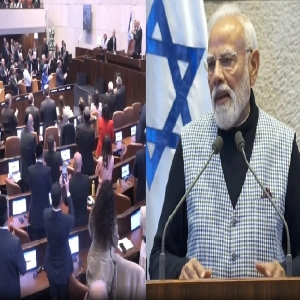
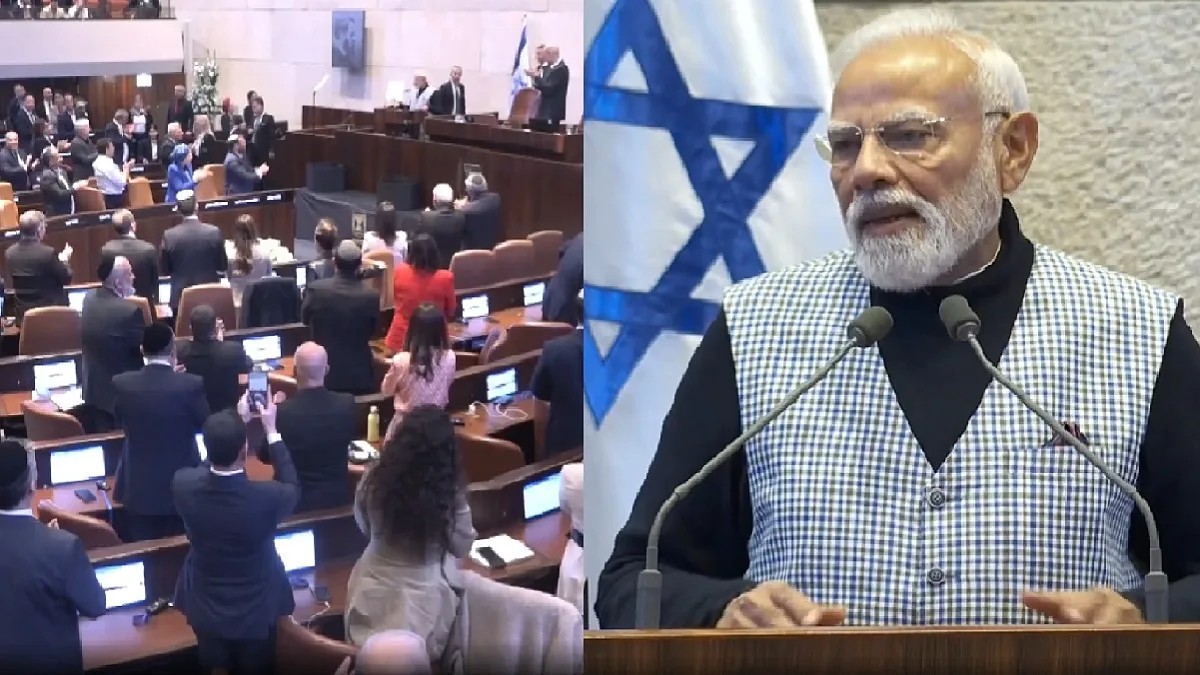
In an article I wrote a couple of weeks ago, I argued that the silence of the world could prove more dangerous than the machinations of leaders such as Donald Trump and Benjamin Netanyahu. Against this tense backdrop, I was genuinely shocked when Prime Minister Narendra Modi visited Israel and even addressed the Knesset.
No prudent leader, one would think, would choose such a moment to appear publicly aligned with a government preparing for war. Images from the visit showed Modi greeting Netanyahu and his wife. At one point, as cameras flashed, Modi burst into his trademark laughter as he was welcomed. Netanyahu's wife appeared in saffron attire — deliberately chosen to flatter Modi. The two leaders appeared friendly, almost jovial.
But politics often hides darker realities. Netanyahu has been facing several serious corruption charges that have dominated Israeli politics for years. He has consistently denied all wrongdoing, describing the cases as a politically motivated "witch hunt." Nevertheless, the trials have continued in Israeli courts, casting a long shadow over his political career and raising questions about his motivations in times of crisis. If Netanyahu succeeds militarily, he could even call an early election and attempt to extend his tenure. He is the longest-serving prime minister in Israel's history.
The hug in Tel Aviv had repercussions in the Indian Ocean. During a multinational naval exercise hosted by India at Visakhapatnam, an Iranian naval training vessel participated under strict conditions. The ship carried no missiles, torpedoes or heavy weapons because exercise rules required visiting vessels to remain unarmed. It functioned essentially as a training and goodwill ship representing the Iranian navy.
After the exercise, the vessel began its journey back toward Iran. Its first stop was Kochi. From there, it sailed toward Tehran, passing through waters near Sri Lanka. Somewhere in the Indian Ocean, an American submarine allegedly torpedoed the ship. At the time of the attack, it was about 2,000 kilometres from the Iranian coast and sailing in international waters.
When it issued distress calls, it was the Sri Lankan Navy that reportedly reached the scene and rescued many of the surviving sailors, pulling them from burning debris and lifeboats in rough waters. India, despite possessing what strategists proudly describe as a "blue water navy," seemed absent from the episode.
"Atithi Devo Bhava" is an ancient Indian ethos meaning "the guest is equivalent to God." It emphasises hospitality, protection and respect toward visitors who come to our land. If that principle truly guides us, we should perhaps have ensured the safety of a visiting vessel that had just participated in our own naval exercise. At the very least, the ship could have been kept temporarily in an Indian port until tensions subsided.
There seems to be some method in the madness. Ali Khamenei was killed in a targeted strike during the escalation of hostilities. According to early reports, precision missiles struck a heavily guarded compound where he was believed to be holding consultations with senior military and political advisers. His death sent shockwaves across Iran and the wider region.
It took five days for the Indian government to officially express condolences after his killing. Modi had met him in the past. Whether Khamenei was a harsh ruler or a benevolent one is not for me to judge. Nations cannot selectively mourn only those leaders they approve of. By failing to condemn the attack promptly, we risk appearing to endorse it.
Perhaps, diplomacy requires caution. But there are moments when silence begins to resemble complicity. And that is a troubling thought for a country that once prided itself on an independent foreign policy.
When Trump campaigned for the presidency, one of his most repeated promises was that he would keep America out of wars. He criticised earlier administrations for sending American soldiers to fight conflicts that, in his words, were "not America's battles." Trump argued that the US had spent trillions of dollars and lost thousands of lives in wars that produced little benefit for ordinary Americans.
Reality has been far less reassuring. Trump's approach to the crisis in Gaza revealed a startling level of ruthlessness. At one point, he suggested that the devastated territory could be transformed into a Mediterranean "Riviera" after the Palestinian population was removed. The idea sounded less like diplomacy and more like a real estate proposal. In effect, it meant emptying Gaza of its inhabitants so that the land could be redeveloped into a luxurious coastal enclave.
The unpredictability of Trump's rhetoric has also become a hallmark of his leadership. On some days, he jokes — or threatens — that Canada could become America's "51st state." On other days, he speaks of annexing Greenland, a Danish territory. Such statements might once have been dismissed as bluster, but they now form part of a troubling pattern.
His actions toward Venezuela demonstrated how far such impulses could go. Trump ordered the deployment of American naval forces near Venezuelan waters to increase pressure on the government of Nicolas Maduro. Eventually, Maduro was brought to the US to face charges related to narcotics trafficking and corruption. The episode raised serious questions about the legality of using power to capture a foreign head of state.
The American Constitution places clear limits on the power of the president when it comes to war. If the US is attacked, the president can respond militarily. But if the country wishes to initiate hostilities against another nation, the authority to declare war lies with Congress. Trump appeared to care little for such constitutional niceties when the attack on Iran was launched. The decision was taken by Trump and Netanyahu.
In that sense, the two men share a great deal in common. Both leaders face domestic political pressures. Trump's popularity has been sliding steadily, partly because of his erratic behaviour in economic policy. One day, he announces tariffs against trading partners; the next day, he withdraws them or replaces them with new ones. Such unpredictability has unsettled markets and confused allies. His name has also appeared prominently in the much-discussed Epstein files, which have cast a long shadow over many public figures in the US.
During a visit to Texas some years ago, I had the opportunity to meet Mr KP George, a public official in the Houston area, who held a position somewhat comparable to a district magistrate in India. He had earlier won elections as a Democrat and served two terms. This month, when he contested on the Republican ticket, he secured barely eight per cent of the vote. I see it as a straw in the wind.
Trump seems to have believed that a swift and decisive war would break Iran's resistance and allow him to shape the country's future — perhaps even installing a successor to Ali Khamenei who would be favourable to Washington. History suggests that such expectations are rarely fulfilled.
Regime change imposed from outside has almost never produced stable outcomes. Military might can destroy cities, infrastructure and even governments, but it cannot easily reshape the national identity of a proud civilisation such as Iran's. Any attempt to do so would almost certainly provoke deep resentment not only within Iran but across much of the world.
This brings us back to India. For decades, India followed a policy of non-alignment. That doctrine did not mean moral neutrality or equidistance between right and wrong. It meant preserving the freedom to make independent judgments rather than blindly following one power bloc or another.
There are moments in history when nations must decide where they stand. Consider the example of Spain. It is not a nuclear power and cannot project military strength on a global scale. Yet when the US sought permission to use Spanish airspace for missile operations against Tehran, Madrid refused. Nor did Spain feel compelled to ask Washington's permission before purchasing oil from Russia for its own economic needs.
The lesson is simple. Courage in international affairs is not measured by the size of a nation's arsenal or even by the circumference of a leader's chest. It is measured by the ability to withstand pressure and to speak out against injustice. Sometimes the most powerful statement a nation can make is simply to say no.
.jpg)
.png) Cedric Prakash
Cedric Prakash
 ICPA
ICPA
 ICPA
ICPA
 ICPA
ICPA
 ICPA
ICPA
 ICPA
ICPA
 ICPA
ICPA
.jpg) A. J. Philip
A. J. Philip
.jpg)
.png) Jacob Peenikaparambil
Jacob Peenikaparambil
.jpg)
.png) John Dayal
John Dayal