.jpg)

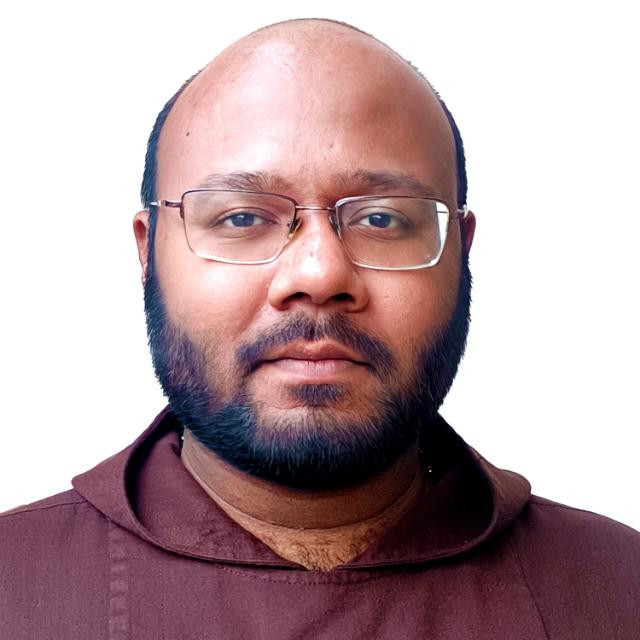 Fr. Gaurav Nair
.jpg)
Fuelled by a sense of power, the Roman Emperors, most notably Augustus (27 BC–14 AD), had taken to calling themselves Divi Filius (the son of god), a claim easily supported by Greek and Roman stories of the misadventures of Zeus and the like.
A casual perusal of history would reveal that it was not a zeitgeist. There have always been people throughout antiquity to the present who have claimed divine provenance. Some contemporary apt exemplars would be Kim Jong Un, some African dictators, and, closer to home, our own premier and, more recently, Trump.
A more intimate scrutiny would reveal the delusional tendencies that a sense of seemingly unadulterated power endows, and perhaps this is true also, at least, for a certain demographic that subscribes to such proclivities. However, the illusion is bound to break for even the most hardcore zealot when it touches their bottom line. And Mr Trump seems to have touched such a nerve when he chose to drag the Roman Pontiff into a tussle.
Mr Trump perhaps fails to see that though the Pope has no military, no finances, and no resources to challenge the American might, he has what possibly no other person in the World holds to the same degree — moral authority. When the Pope speaks, the World listens. To Trump, who finds his background and support in Evangelical America and megachurches, where faith is entangled with spectacle and power, morality appears negotiable, shaped by convenience rather than conviction. For a man who wages wars and simultaneously covets the Nobel Peace Prize, the idea of restraint must appear alien.
Kudos to the Holy Father for standing his ground even in the face of power. As the present occupant of the Chair of St Peter has reminded the World, authority is not measured in weapons or wealth, but in the capacity to speak truth when silence would be safer. That distinction, though subtle, is civilisational.
The present conflict is therefore not merely personal; it is philosophical. On one side stands a worldview that equates strength with domination, where dissent is weakness and spectacle substitutes substance. On the other hand stands an older tradition, one that insists power must justify itself before a moral order higher than the state. History suggests which of the two endures.
Empires have always mistaken their long continuances for destiny. Rome did. So did the colonial powers. So did every regime that believed itself immune to decline. The papacy, for all its own chequered history, has outlived them all. It has done so not by force, but by an insistence — sometimes honoured, sometimes betrayed — that power is accountable to something beyond itself.
Trump's outburst, then, is less an aberration than a symptom. It reflects a political culture increasingly impatient with limits, uncomfortable with critique, and eager to recast authority as infallibility. That such impulses now seek validation in religious imagery only deepens the irony. Divinity, invoked too often, begins to resemble theatre.
The lesson is neither theological nor partisan. Augustus called himself the son of god; others followed, and all were proven mortal. Power that refuses restraint walks that same path. When it confronts a voice it cannot bend, the pretence invariably collapses.
.jpg)
.png) Cedric Prakash
Cedric Prakash
 ICPA
ICPA
 ICPA
ICPA
 ICPA
ICPA
 ICPA
ICPA
 ICPA
ICPA
 ICPA
ICPA
.jpg)
 A. J. Philip
.jpg)
.png) Jacob Peenikaparambil
Jacob Peenikaparambil
.jpg)
.png) John Dayal
John Dayal