

.jpg) Don Aguiar
Don Aguiar
Diplomacy between nations is often like being on the dance floor – you try to watch your step, and you don't always know what the other person is thinking.
That came to mind after an accusation that a mosh-up occurred between the Trump administration and Pope Leo's officials on January 22 at the Pentagon. However, both sides strongly denied it and rejected the characterisation.
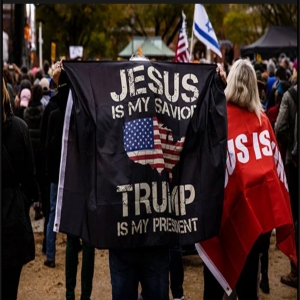
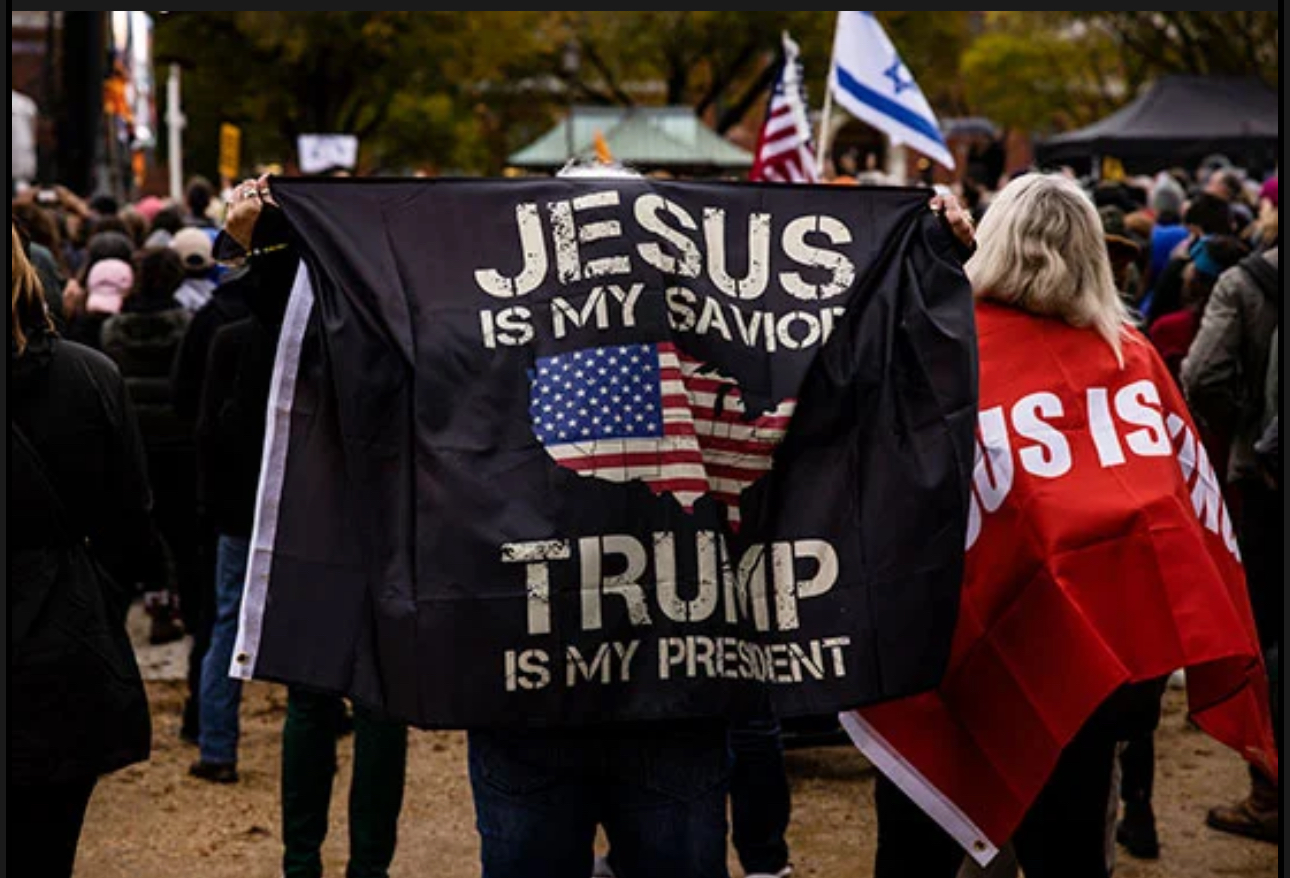
For more than a decade, Trump and his supporters have used explicitly religious rhetoric and images to mobilise his base. But in recent weeks, some of Trump's actions—from posts about the Vatican to messages about Iran posted on Easter Sunday—have caused a major schism among his supporters.
Taking a cue from the Son of God, making it clear to the meanest intelligence, telling Roman governor Pontius Pilate, who is about to sentence him to death, "You would have no power over me if it were not given to you from above."
Trump has taken this very seriously. In his Easter Sunday post, he trumpeted that he is Jesus, healing the lepers, raising the dead to life, and challenging peacenik Pope Leo to a theological duel.
Sharing and later deleting an AI-generated image depicting himself in a Christ-like pose – hands glowing, healing a sick man, amid American flags, soldiers, and eagles, only to claim later, it portrayed him as a physician, making people better, not a messianic figure.
This image, which Trump deleted from Truth Social after around 14 hours, seemed to invoke Jesus Christ, and it outraged some supporters who likened Trump's behaviour to the antichrist—a figure in Christian theology who opposes Christ and whose appearance many believe could augur the end of time.
Major figures in the MAGA universe quickly spoke out. "It's more than blasphemy. It's an Antichrist spirit." In a matter of time, MAGA media figures have gone from defending Trump as God's chosen president to making the case that he is actually the antichrist.
Trump also claimed divine intervention after the incident, as did many of his allies. Trump's frequent portrayals of himself as a messianic figure have helped bring MAGA to a breaking point. The reason why people have reached for the antichrist label is that Trump has actually set the stage for that himself.
This is not the first time Trump has angered Catholics with AI imagery. Last year, after the death of Pope Francis, Trump shared an AI-generated image of himself as the Pope.
The Vicar of Christ and the messiah of Evangelical America now spar in a battlefield that stretches the length and breadth of the globe, including some areas where perhaps the Bible has not yet done so.
The feud began as a policy disagreement over the US-Israel war against Iran and quickly escalated into a broader cultural and theological controversy.
President Donald Trump delivered an extraordinary broadside against Pope Leo XIV on Easter night, saying he didn't think the US-born global leader of the Catholic Church is "doing a very good job" and that "he's a very liberal person," while also suggesting the pontiff should "stop catering to the Radical Left," and that the only reason Leo became Pope was because of his presidency.
Trump's comments came after Leo suggested over the weekend that a "delusion of omnipotence" is fuelling the US-Israel war in Iran. While it's not unusual for popes and presidents to be at cross purposes, it's exceedingly rare for the Pope to directly criticise a US leader — and Trump's stinging response is equally uncommon, if not more so.
Before the ceasefire, when Trump warned of mass strikes against Iranian power plants and other infrastructure and that "an entire civilisation will die tonight," Leo described such sentiments as "truly unacceptable."
Trump attacked the pontiff on social media, saying that he should "get his act together as Pope, use Common Sense, stop catering to the Radical Left, and focus on being a Great Pope, not a Politician." "It's hurting him very badly and, more importantly, it's hurting the Catholic Church!" "Pope Leo is WEAK on Crime and terrible for Foreign Policy. I don't want a Pope who thinks it's OK for Iran to have a nuclear weapon."
The Pope responded that he seeks to promote the Gospel value of peace and has never said he wants Iran to have a nuclear weapon. He has been highly critical of Trump's actions in Iran, calling the war "atrocious" and adding that the leaders responsible for the conflict have "hands full of blood."
"I have no fear of neither the Trump administration nor of speaking out loudly about the message of the Gospel. And that's what I believe I am called to do and what the Church is called to do. We're not politicians. We're not looking to make foreign policy, as he calls it, with the same perspective that he might understand it. But I do believe that the message of the Gospel, 'blessed are the peacemakers,' is a message that the world needs to hear today," the Pope told reporters on his brief flight to Algiers April 13.
Leo said he did not want to enter into a debate. He clarified that the statements he makes condemning war and the violation of international law "are certainly not meant as attacks on anyone." Still, he said he would also "not shy away from pronouncing the message of the Gospel." The Gospel is very clear, 'Blessed are the peacemakers.'
Leo said, "To put my message on the same plane as what the President is attempting to do here is not understanding what the message of the Gospel is, and I'm sorry to hear that, but I will continue on what I believe is the mission of the Church."
Trump appeared unrepentant when asked about his remarks, "Pope Leo was very much against what I'm doing with regard to Iran, and you cannot have a nuclear Iran. He would not be happy with the end result; I think he's very weak on crime and other things." He believes the Pope is wrong and refuses to apologise to Pope Leo for his recent comments, which have drawn international condemnation.
Now their disagreement over the war in Iran has escalated spectacularly, and their comments show how differently each sees the conflict and its impact. It's an unusual spectacle involving the world's two biggest megaphones, both held by Americans for the first time.
It's all a rare exercise for the papacy, whose occupants often comment on global affairs without specifically naming secular politicians. And while Trump routinely lashes out at anyone he perceives as an enemy, these dynamics are uncommon for the president, too: This time, Trump is picking a fight with someone who does not accept the president's terms and faces no measurable political pressure to do so.
Much more than a personality conflict, this confrontation has reignited deep fissures between peaceniks and warmongers, evangelicals and Christians across denominations. The controversy also intersects with secular politics and Vatican independence, creating tensions between loyalty and doctrine.
.jpg)
.png) Cedric Prakash
Cedric Prakash
 ICPA
ICPA
 ICPA
ICPA
 ICPA
ICPA
 ICPA
ICPA
 ICPA
ICPA
 ICPA
ICPA
.jpg)
 A. J. Philip
.jpg)
.png) Jacob Peenikaparambil
Jacob Peenikaparambil
.jpg)
.png) John Dayal
John Dayal