

The Salesian Province of Kolkata will celebrate its centenary with the presence of the Rector Major of the Salesians, Fr. Fabio Attard, the 11th Successor of Don Bosco, across three venues in Bengal from 5–8 February 2026. The Salesian Family in the province includes Salesians, Salesian Sisters, Alumni, Salesian Cooperators, Sisters of Mary Immaculate, Missionary Sisters of Mary Help of Christians, Volunteers of Don Bosco, and the Disciples.
A century after eleven Salesian pioneers set foot in Shillong in 1922, their mission has grown into India's largest non?governmental skilling network. From that first technical school in Shillong to today's 11 provinces, 420 Don Bosco Tech centres, 174 Youth?at?Risk shelters, and 34 migrant desks.
In alignment with national priorities such as Skill India and the National Skill Development Mission, they have, in recent years, trained more than 4,81,000 young people, rehabilitated nearly 1,55,000 street children, and opened pathways for countless migrants and school dropouts. Their century?long legacy is measured not merely in institutions, but in lives transformed: from railway platforms to classrooms, from dropouts in workshops to dignified citizens. As India grapples with unemployment and migration challenges, the Salesians' instinct to skill the marginalised remains as prophetic today as it was in 1922.
The first impulse of the early Salesians was not to raise a church, but to build a workshop. Don Bosco Technical School, Shillong—with its printing press, carpentry benches, tailoring machines, motor mechanics garage, and electronics lab—became the cradle of employability in the region. For poor and marginalised youth, this was the decisive bridge between exclusion and dignity.
The pioneers understood that idle hands could turn restless, even dangerous. By skilling "dropouts" and potential "troublemakers," they prevented social unrest and transformed youthful energy into constructive livelihoods.
Colonial Neglect, Salesian Empowerment
When the Salesian pioneers arrived in Shillong, India remained under British colonial rule. The wounds of World War I (1914–1918) were still raw, and the empire grew anxious about unrest in its distant territories. The Northeast—then classified as the North-East Frontier Tracts—was regarded as a volatile borderland, inhabited by "tribal" communities and valued chiefly for its strategic role in imperial defence.
Colonial administrators often dismissed the region as peripheral, underdeveloped, and prone to instability. Education was scarce, opportunities limited, and youth left vulnerable to neglect, exploitation, and unrest. Into this fragile frontier stepped eleven Salesian pioneers—not with weapons or bureaucracy, but with a vision of education and empowerment.
By 1926, just four years after their arrival, the first Salesian province in India was formally established. Today, that seed has grown into eleven provinces across the country, each carrying forward Don Bosco's charism of skilling and empowering the young—especially the poor, the marginalised, and the abandoned.
Triple Vision for Youth
Skill the Dropouts (1922)
The Don Bosco Technical School in Shillong was nothing short of revolutionary. In colonial India, "dropouts" and unemployed youth were often branded as potential troublemakers. By teaching trades—printing, carpentry, tailoring, mechanics—the Salesians transformed idle hands into skilled workers. This was social engineering at its most humane: preventing unrest by channelling youthful energy into livelihoods. In a frontier dismissed as unstable, they created stability through skill.
Train the Trainers (1933)
At a time when higher education was largely reserved for elites in Calcutta, Delhi, Madras, and Bombay, the Salesians broke new ground by founding Salesian College, Shillong, in 1933—the first of its kind in the Salesian world, affiliated with the University of Calcutta. Its mission was to open university?level training to young Salesians, preparing them to serve as educators and mentors of youth.
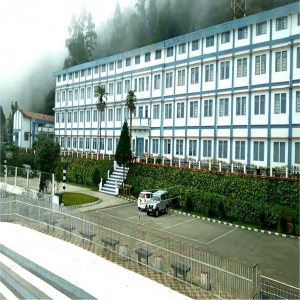
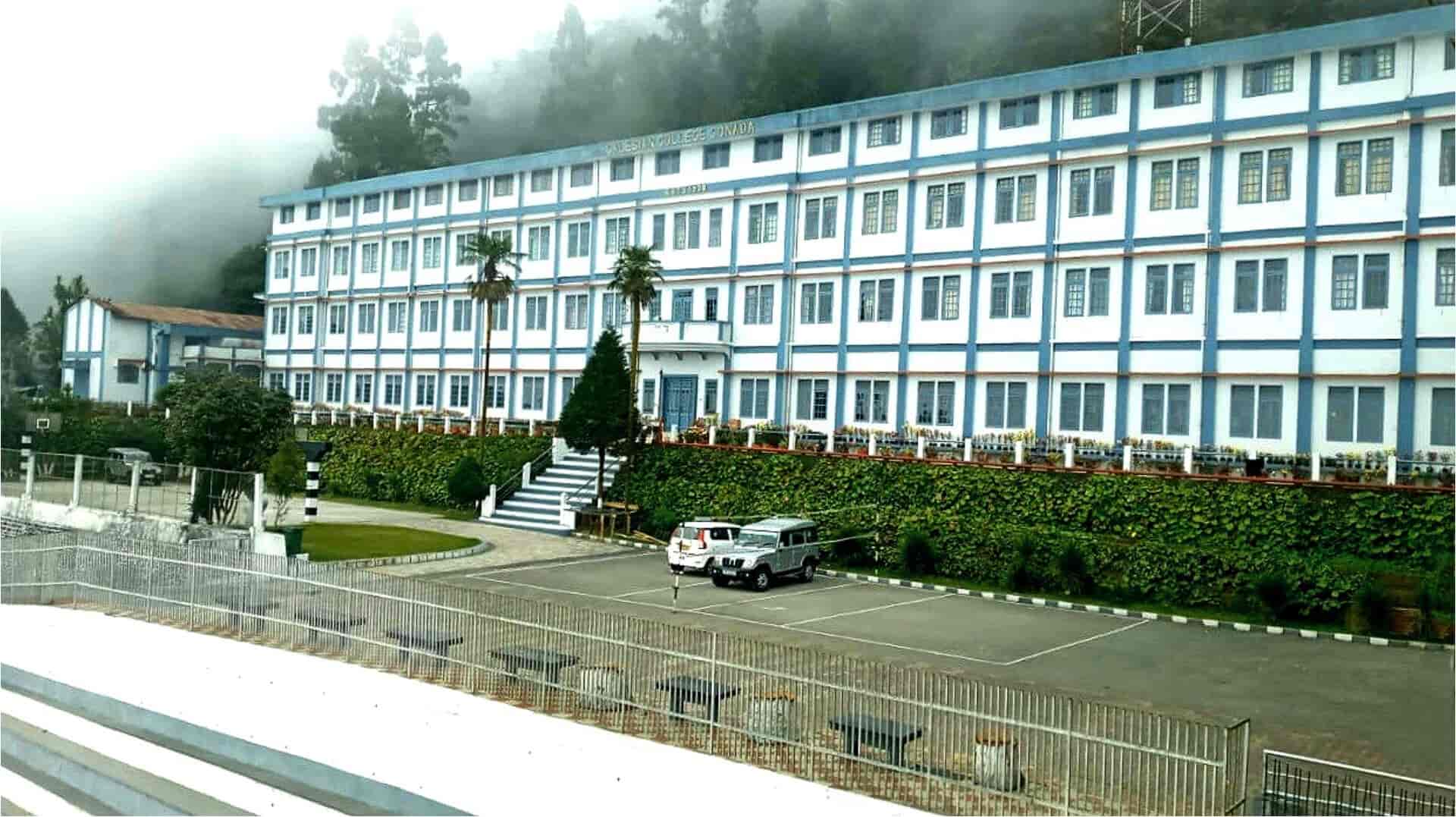
In a region dismissed as "backwards," they planted enduring seeds of intellectual leadership. After a devastating fire destroyed the wooden building in 1936, the college was relocated to Sonada, Darjeeling, in 1938, where it flourished as a cradle of higher learning. In 2009, the institution expanded further with the establishment of a new campus in Siliguri, extending its legacy of education and empowerment into the new century.
Preparing Leaders for Independent India (1934)
With the founding of St. Antony's College, Shillong, in 1934, the Salesians opened the doors of higher education to the less privileged, even as St. Edmund's College, Shillong (established in 1910) continued to serve the elite. It was a bold counter?narrative to colonial hierarchies. By educating talented yet marginalised youth, the Salesians nurtured future leaders of Northeast India—men and women who would later steer the region through independence and into a new era of self?determination.
Skilling Youth for Employability
That vision endures today through a vast network of Salesian initiatives. Across India, Salesian institutions are the nation's largest non?governmental contributors to youth skilling—second only to the Government itself. With nearly 3,000 Salesian Fathers and Brothers working across 11 provinces, their collective commitment ensures the continuity of Don Bosco's mission in every corner of the country.
The Don Bosco Tech (DB Tech) movement is the most visible ex
Since 1985, Don Bosco Ashalayam in Kolkata has empowered more than 155,000 children, rescuing 150 or more children every month from streets and railway stations, and offering them shelter, education, and dignity.
Across the nation, 174 Youth?at?Risk centres provide shelter, counselling, and vocational training, while Don Bosco for Migrants, through 34 migrant desks, offers legal aid, shelter, and reintegration support. During the COVID?19 pandemic, these desks coordinated relief for thousands of workers and families, safeguarding dignity and safety at a time of national crisis.
Voices of Hope
From modest beginnings in Shillong, the Salesian provincial administration eventually moved to Calcutta, giving birth to ten other Salesian provinces across India. Today, the Kolkata province extends its reach into Bengal, Bihar, Sikkim, Bangladesh, and Nepal. It comprises nearly 40 presences, animated by 242 Salesian Fathers and Brothers, serving in 32 parishes, more than 25 boarding schools with coaching centres, 30 higher secondary schools, 13 technical and vocational training institutes, and a college with campuses in both the hills and the plains.
The river that began in Shillong now flows across India and beyond, carrying hope to every youth—especially the marginalised—transforming lives with dignity, education, and opportunity.
.jpeg)
 A. J. Philip
.jpg)
.png) Jacob Peenikaparambil
Jacob Peenikaparambil
.jpg)
.png) John Dayal
John Dayal
.jpg)
 Pachu Menon
.jpg)

.png)

.png)
.png) Robert Clements
Robert Clements
.jpg)