

.png) Jaswant Kaur
Jaswant Kaur
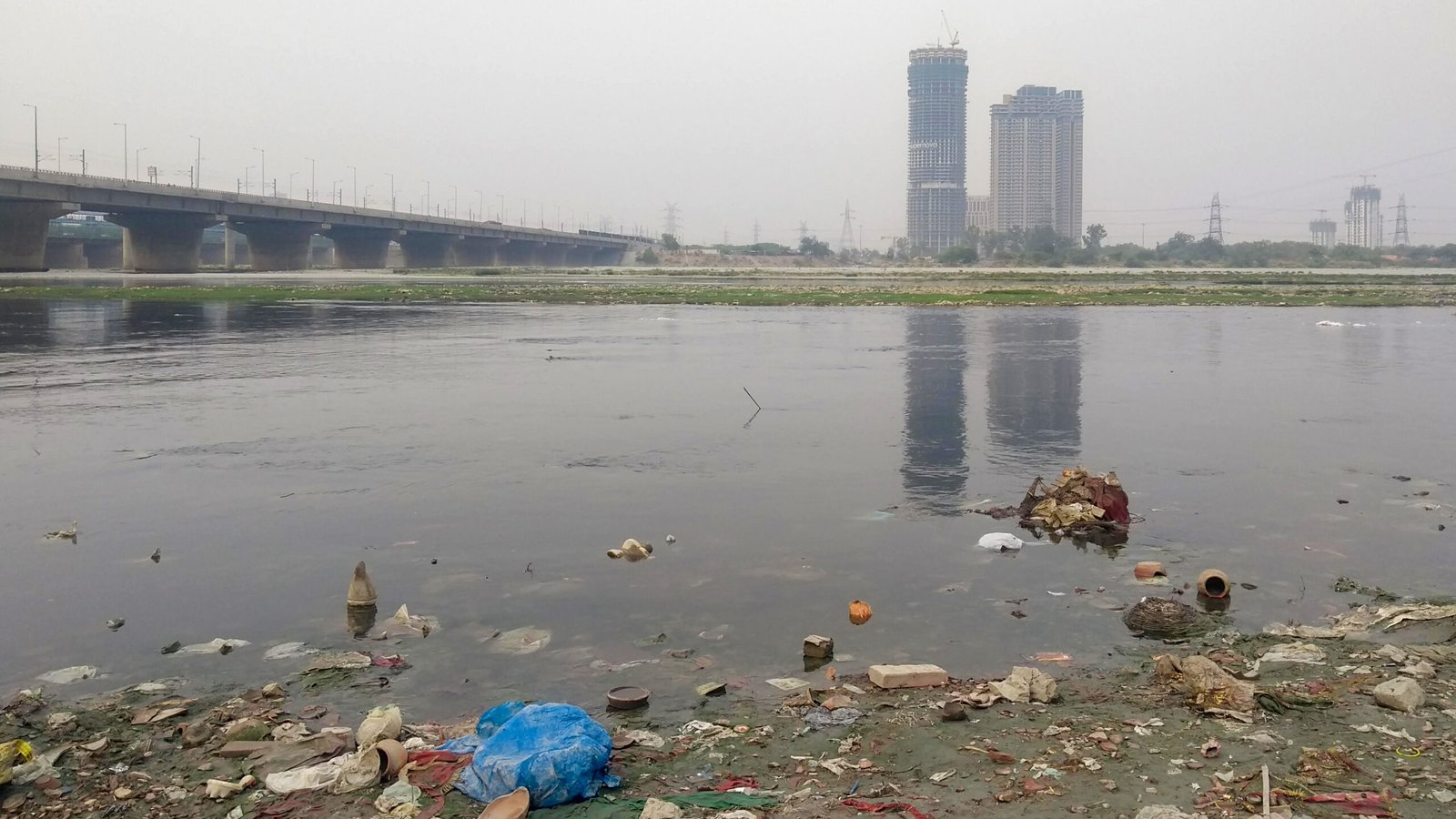
"Water, water, everywhere, Nor a drop to drink." The line from Coleridge's "The Rime of the Ancient Mariner" was meant to describe a sailor's nightmare. For millions of residents of the national capital, it has now become a lived reality. In a city crisscrossed by pipelines, treatment plants, reservoirs, and grand infrastructure promises, people are still unsure whether the water coming out of their taps is safe to drink.
A government that proclaims India as the world's fourth-largest economy - soon to be the third - should have understood that real power lies in ensuring access to safe drinking water and clean air. But in Delhi today, the inability to guarantee these most basic necessities is not just a failure of governance but also a breach of a fundamental right.
The Comptroller and Auditor General's recent performance audit of the Delhi Jal Board (DJB) makes this failure unavoidably clear. Of 16,234 groundwater samples tested, a staggering 8,933 (55 per cent) were found to be unfit for human consumption.
Even more shocking is the revelation that the Jal Board is testing drinking water against only 12 parameters when the Bureau of Indian Standards' own specification (IS 10500:2012) mandates 43 indicators to determine potability. This means that over two-thirds of crucial checks to identify the presence of toxic substances, heavy metals, biological contaminants and radioactive elements are not being conducted at all. In laboratory terms, this is like diagnosing a patient by looking at a third of the vital signs and declaring them healthy.
The immediate health implications are profound. Independent assessments by the Central Ground Water Board show that 13 to 15 per cent of Delhi's groundwater samples contain uranium in excess of the permissible limits, a naturally occurring but dangerous radioactive element. It is an established fact that exposure to uranium in drinking water over time can lead to kidney damage and other chronic health effects. Scientific studies show that when people drink groundwater contaminated with heavy metals, it can increase the risk of serious health problems, including cancer and other diseases.
While no widespread epidemiological study has yet linked Delhi's water to specific cancer rates, the presence of uranium, lead, nitrate, and other toxins in drinking water is precisely the kind of exposure associated with elevated cancer risk over time, according to established environmental health research.
This water crisis exists alongside a parallel public-health emergency caused by polluted air. Delhi's air routinely registers hazardous levels of particulate matter far above healthy limits. The World Health Organisation and medical professionals alike link prolonged exposure to particulate pollution to respiratory diseases, cardiovascular stress and lung cancer. In this environment, living becomes a health risk rather than a right.
When we talk of the "right to life" under Article 21, the Constitution is not being rhetorical. The Supreme Court has repeatedly held that the right to life includes the right to clean air and clean water, conditions essential for a dignified existence. But when the state fails to provide safe water and healthy air, that right becomes a mere paper tiger, a legal provision that crumbles in the face of everyday reality.
Every day, people living in Delhi are forced to gamble with their lives. Be it water or air, nothing assures safety. And our ministers have been busy painting a rosier picture, sprinkling water on AQI monitoring stations or claiming that air quality this year was better than last year!
And amidst all this lies a project that was approved but has never seen the light of day. Three decades ago, the governments of Delhi, Himachal Pradesh, and Uttarakhand signed a memorandum of understanding (MoU) to tap monsoon flows from the Renukaji, Kishau, and Lakhwar dams to ease Delhi's water shortage. The government has already spent Rs 231 crore to "tap hill rain into the Yamuna," which has the potential to cater to the water requirements of Delhi for the next 25 years. Yet, we have not seen a single drop because the necessary approvals, infrastructure and coordination have not been completed.
Another agreement executed between the DJB and the Himachal Pradesh government in December 2019 for the regular supply of 368 cusecs (237 Million Gallons per Day (MGD)) from November to February and 268 cusecs (173 MGD) from March to June every year has not yet been implemented.
Based on the available data, the DJB utilises the entire quantity of raw water received daily and does not have a water reserve for even a single day! Conducted from April 2022 to February 2023, the audit has laid bare the murky state of affairs.
Meanwhile, official data reveal that in just nine months, the Delhi Jal Board received 45,000 complaints of water contamination, ranging from household connections to neighbourhood supplies. The government has often blamed illegal plumbing work rather than the apathetic system.
In one case, the Central Pollution Control Board found dangerously high levels of faecal coliform in Janakpuri's water supply, far above acceptable limits where zero detection is the standard. This is incontrovertible evidence of sewage infiltrating potable water networks — a classic recipe for diarrhoeal diseases, hepatitis and potentially lethal infections.
And yet, the government chooses to celebrate growth statistics. India's economy may be climbing global rankings, but what does that mean if the people who live here are sicker, more vulnerable, and chronically exposed to environmental toxins? Economic growth must promise the growth of citizens. But growth that coexists with degraded water and air is nothing but a mirage.
The neglect in Delhi also raises a broader, sobering question. If the national capital, with its disproportionate visibility, resources and administrative attention, cannot secure safe water and clean air, what must be the situation in smaller cities and towns with less capacity for monitoring and accountability?
Evidence from groundwater assessments suggests that nitrate contamination — which can cause serious health effects, including "blue baby syndrome (a condition in which a baby's skin, lips, or nails turn bluish because the blood is not carrying enough oxygen)" in infants, cancer and thyroid disorders — is found in more than 20 per cent of samples across Delhi.
It is high time the government immediately complied with the full 43-parameter testing regime mandated under Indian drinking water standards. Partial testing is an avoidance. Second, laboratory capacity must be strengthened and brought under independent accreditation so that residents can trust the results they read. Third, transparent, real-time public dashboards should be instituted so that citizens can see water quality data without having to filter through official PR. Fourth, infrastructure, from pipelines to treatment plants, must be urgently repaired and upgraded, not as promises for the next decade, but as projects with clear, enforceable timelines.
Public health surveillance systems must also be resurrected and integrated, so that spikes in waterborne or pollution-related diseases are not buried in hospital corridors but addressed through public intervention. Waterborne diseases such as cholera, dysentery and typhoid should be tracked with urgency, not buried in statistics.
Economic growth means very little if a child cannot drink safe water, a mother cannot breathe clean air, and families incur medical expenses for preventable illnesses. The state's primary duty is to secure the right to life, and that duty begins with providing clean drinking water from the tap and clean air on every street.
If Delhi cannot ensure these basics for its citizens, then our proud economic milestones are meaningless. Growth without health is a paradox, and in the national capital today, it is also a tragedy. The right to life is not a statistic; it is a daily experience of health, dignity and safety. Delhi must wake up to this truth before it is too late.
.jpeg)
 A. J. Philip
.jpg)
.png) Jacob Peenikaparambil
Jacob Peenikaparambil
.jpg)
.png) John Dayal
John Dayal
.jpg)
 Pachu Menon
.jpg)

.png)
.png)
.png) Robert Clements
Robert Clements
.jpg)