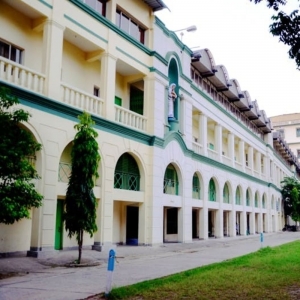


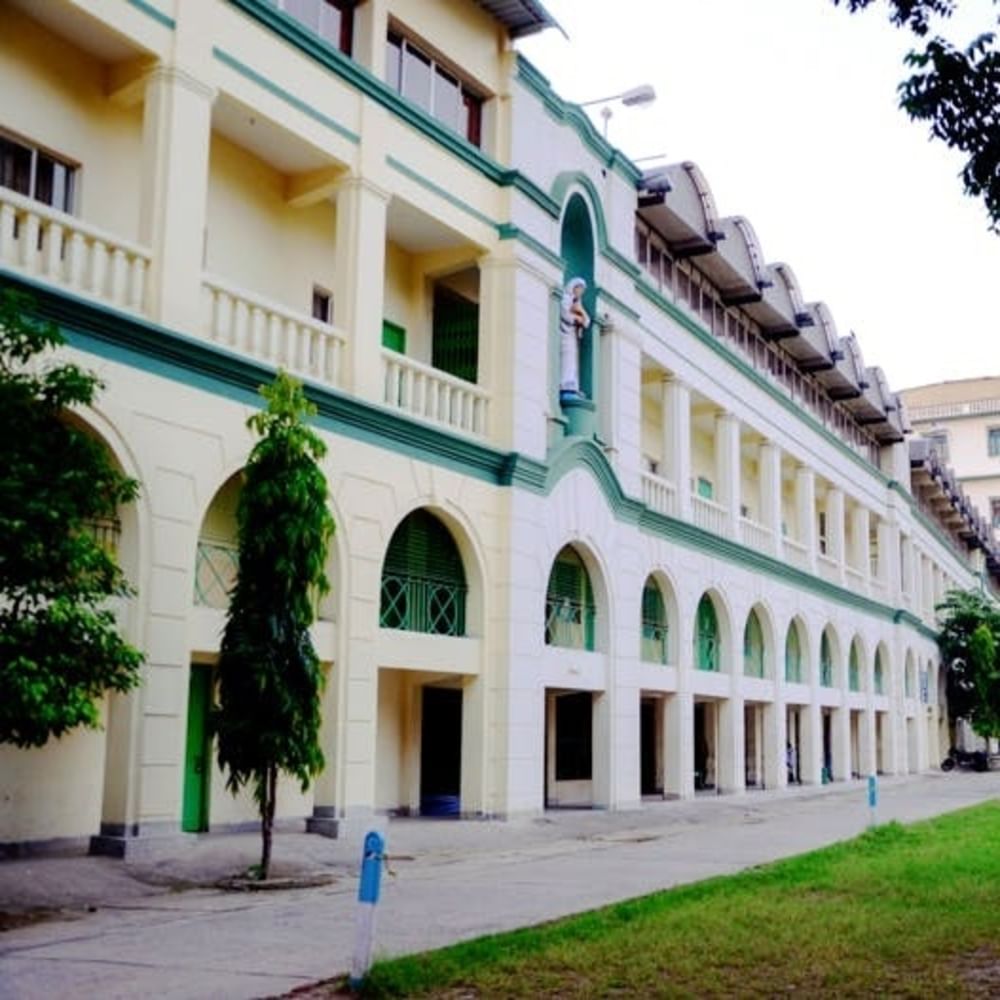
For me, this December 3rd is not merely a date on the calendar—it is a reminder. A reminder that every institution, especially one born from a mission, carries within its story decisive moments that shape not only what it was, but what it dares to become. Some of these moments pass quietly, almost unnoticed; others continue to echo across time, demanding reflection, honesty, and courage. For Jesuit education in India, two such moments—separated by almost a century—invite us to revisit the meaning of integrity, academic freedom, and fidelity to the Gospel mission.
In 1925, at St. Xavier's College, Kolkata, a Jesuit rector chose principle over caution. He opened the gates of a Catholic institution to Mahatma Gandhi—then viewed by authorities as a troublemaker, even a threat—to speak to students. The decision drew praise from some and sharp criticism from others, yet it stood firm as an act rooted in discernment, courage, and dialogue.
Nearly a hundred years later, in 2025, another Jesuit college faced a similar crossroads—not under colonial rule, but in independent India. This time, the outcome was different. A lecture in memory of Fr. Stan Swamy was cancelled—not because it was unlawful, unacademic, or un-Christian—but because opposition was anticipated and pressure was applied.
Placed side by side, these two stories are not just historical comparisons—they are mirrors. One reveals leadership anchored in mission; the other exposes the tension between institutional safety and prophetic truth. And together, they leave us with a question that cannot be avoided:
When the moment comes—do we speak with courage, or do we step back in silence?
What follows is not a verdict—but an invitation.
An invitation to remember.
To discern.
And ultimately—to choose.
The Rector of St. Xavier's College, Kolkata, in 1925 was Fr. Roeland. This was a time when India was struggling under British rule and striving to break free from colonial oppression. The Herald, in its August 1925 issue (page 512), carried the following announcement: "Mahatma Gandhi at St. Xavier's."
The following Thursday, August 13, 1925, a short account of the function appeared in the same column:
"The students of St. Xavier's College Department organised a very successful variety entertainment in aid of the Deshbandhu Memorial Fund. Mahatma Gandhi presided and spoke in very feeling terms of the wholehearted devotion of the late leader of the country and of the deep spirituality that was the base of his work. He also emphasised the devotedness of the Jesuit Fathers of the College. The programme included a Bengali play, Bengali songs, and sketches of the film of Deshbandhu's funeral procession were shown. Mr. Sinha was able to present to the Mahatma Rs. 1,000/- for the fund."
Not long after, the then Vicar Apostolic of India, Archbishop Alexis Henry M. Lepicier, reprimanded Fr. Roeland. For context, here is an excerpt from his letter:
Dear Very Reverend Father Rector,
I have been painfully surprised to read in the Catholic Herald of August 19th the news that Mr. Gandhi presided over a meeting at St. Xavier's and even addressed the students on the supposed spirituality of the late Mr. Das ...
The grievousness of the case is also enhanced by the fact that the political views of Mr. Gandhi and Mr. Das are in opposition both to the established order and the teaching of the Church.
Yours sincerely in Christ,
Sd/- Alexis Henry M. Lepicier
Archbishop of Tarsus
Vicar Apostolic of India
You may wonder how Fr. Roeland responded. His reply was as follows:
Your Excellency,
Your letter dated August 24th ...
I beg your permission for an explanation of the facts…
He then detailed the sequence of events:
At the death of C.R. Das, it was resolved to found a memorial in his honour; various organisations were approached.
Our students answered generously and asked permission to hold a concert to which Mahatma Gandhi would be asked to preside…
Since there was nothing political or religious in their request, they were allowed… Nothing reprehensible could be found in Gandhi's speech: no religious or political teaching. Besides, he had been officially invited by the European Association and the Y.M.C.A (Young Men's Christian Association).
I remain Your Excellency's most humble servant.
A noteworthy detail here is that, unlike many Jesuits of his time, Fr. Roeland had only minimal knowledge of Bengali or Hindi. Yet, despite the language barrier, he showed genuine interest in India's culture, people, and spirit. His actions reflect not only administrative discernment but also cultural sensitivity and moral courage.
A Century Later — A Parallel Story
Almost a hundred years after this event, in another Jesuit institution on the western side of the country, a similar situation arose—yet the outcome was markedly different.
St. Xavier's College, Mumbai, cancelled its annual Stan Swamy Memorial Lecture scheduled for August 9, 2025, after objections from the Akhil Bharatiya Vidyarthi Parishad (ABVP), a student organisation linked to the RSS. Their protest claimed that honouring Fr. Stan Swamy—an undertrial in the Bhima Koregaon–Elgar Parishad case under the UAPA—would glorify an individual allegedly associated with banned Maoist groups. The ABVP warned of protests and formal complaints.
The lecture, to be delivered virtually by Jesuit theologian Fr. Prem Xalxo on "Migration for Livelihood: Hope Amidst Miseries," was cancelled by the college, citing "unavoidable circumstances" and potential disruption to the campus environment.
Fr. Roeland's response and decisions reveal several admirable qualities:
1. He did not retract or apologise simply to appease powerful voices.
2. Allowing Mahatma Gandhi to speak demonstrated conviction rooted in principle rather than fear.
3. His reply was calm, reasoned, and focused on truth—not defiance.
4. He acknowledged no violation of Church teaching, political neutrality, or legal impropriety.
5. Despite limited language skills, he embraced engagement with Indian society respectfully.
In essence, he chose courage over comfort, academic freedom over control, and mission over fear.
By contrast, the Mumbai decision reflects a more cautious and reactive posture:
1. The cancellation appeared driven not by academic or moral discernment, but by fear of controversy.
2. The action implied that academic platforms may be shaped by intimidation rather than inquiry.
3. The institution retreated from its role as a safe space for open dialogue and contested ideas.
4. The decision signalled a departure from the Jesuit intellectual and prophetic tradition, embodied over centuries—from Matteo Ricci to Fr. Stan Swamy.
Gandhi was labelled anti-national under British law because the colonial sedition and emergency acts criminalised dissent and resistance. Today, similar language is used in narratives surrounding Fr. Stan Swamy under laws like the UAPA. The parallel is clear: both moments force us to confront not legality, but morality. When the law brands conscience as a threat—what do we choose: compliance or courage?
As we celebrate the Feast of St. Francis Xavier on December 3rd, we stand between two models of Jesuit leadership:
1. The path of conviction, courage, and prophetic witness—represented by Fr. Roeland.
2. The path of caution, convenience, and silence in the face of pressure.
As we look back on these two defining moments—separated by a century, yet united by context—we are reminded that institutions are remembered not merely for their buildings, enrollment, or reputation, but for the moral choices they make when tested. Fr. Roeland's stand in 1925 remains a testimony to courage rooted in conscience, dialogue, and fidelity to the Jesuit spirit of fearless engagement.
The recent decision in Mumbai, however, invites reflection: not condemnation, but honest examination. Jesuit education was never meant to operate from a place of caution or convenience, but from a deep commitment to truth, justice, and the dignity of every human voice. As inheritors of this mission, we stand at a threshold—between legacy and future, between fear and faith, between silence and prophetic witness. The Feast of St. Francis Xavier calls us not merely to remember, but to choose. And in choosing, may we reclaim the courage to stand where mission demands, not where comfort permits.
.jpg)
 A. J. Philip
.png) Cedric Prakash
Cedric Prakash
.jpg)
 P. A. Chacko
.jpg)
.jpg)
.jpg) Thomas Menamparampil
Thomas Menamparampil
.png)
.png)
.png) Robert Clements
Robert Clements
.jpg)
.png)
.png) Chhotebhai
Chhotebhai