

.png) Jacob Peenikaparambil
Jacob Peenikaparambil
.jpg)
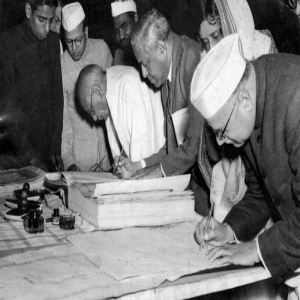
Every year, on January 26, India celebrates Republic Day, commemorating that day in 1950 when the Constitution of India came into force. This historic moment transformed India into a sovereign republic and laid the foundation of its democratic framework, guaranteeing fundamental rights to its citizens. Sadly, only a few now remember the real significance of this day—the adoption of the Indian Constitution itself.
What is prominently showcased in the Republic Day parade in New Delhi is India's military strength, along with its economic, scientific, technological, and cultural achievements. While these accomplishments are noteworthy, the emphasis has gradually shifted from a constitutional celebration to a largely jingoistic and militaristic spectacle. This shift symbolises, to a considerable extent, the distortions that have crept into the functioning of the Indian Constitution.
Dr BR Ambedkar repeatedly warned that the success of a constitution depends not merely on its text but on those entrusted with its implementation. A well-drafted constitution, he argued, can fail in the hands of bad implementers, while even a flawed one can succeed if guided by good people. For the Constitution to remain a living document embodying equality, liberty, and fraternity, citizens must uphold constitutional morality, faith in democracy, and commitment to peaceful change.
The danger Ambedkar foresaw at the time of the Constitution's adoption has, over time, become a reality. There has been a serious erosion in the implementation of constitutional values during the past 76 years. The most devastating instance was the Internal Emergency declared by Prime Minister Indira Gandhi in 1975, which suspended fundamental rights and led to the imprisonment of most opposition leaders. To her credit, the Emergency was lifted after two years, parliamentary elections were held, the Congress Party was defeated, and democracy and the rule of law were restored.
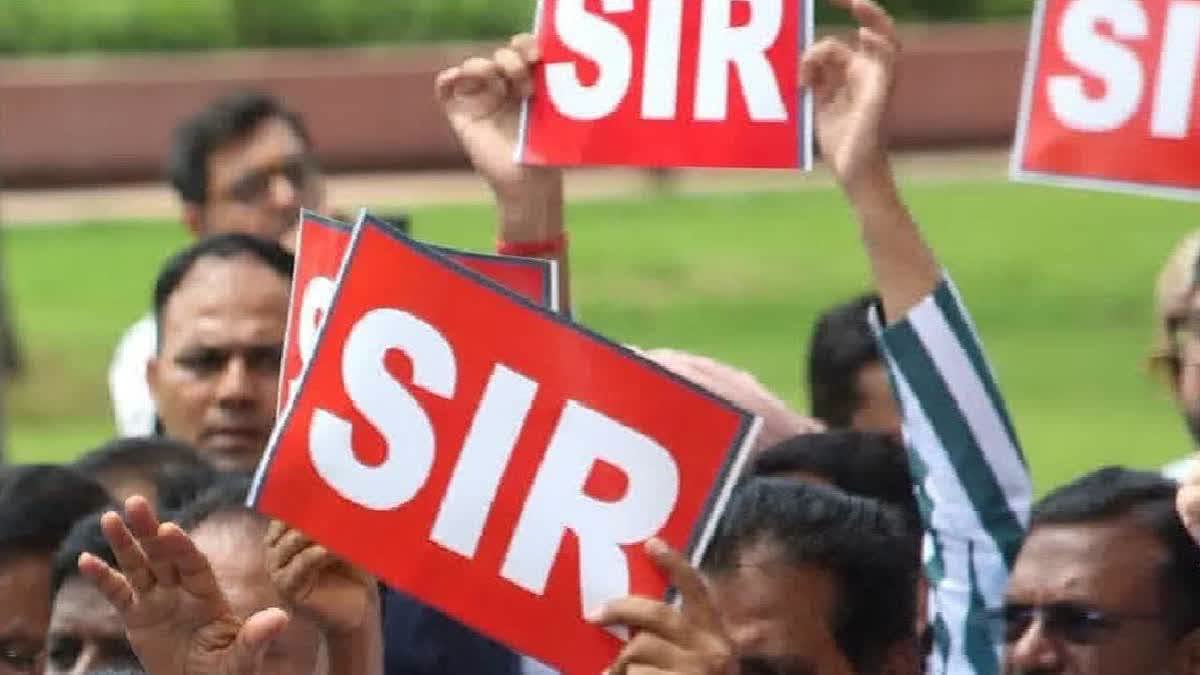
In contrast, critics argue that India has been experiencing an undeclared emergency since 2014. They point to the enactment of draconian and discriminatory laws, arrests and prolonged incarceration without trial of social activists, journalists, and political leaders critical of the BJP government and its ideological mentor, the RSS, the misuse of investigative agencies to harass opponents, alleged manipulation of electoral processes—particularly the highly controversial Special Intensive Revision (SIR) of electoral rolls—and the failure of the judiciary to deliver timely justice. Some critics have described the present system under the BJP rule as an electoral autocracy.
An electoral autocracy is a hybrid political system that holds regular multiparty elections but lacks genuine fairness and freedom. Incumbents manipulate institutions and rules to favour themselves, suppress opposition, and curtail civil liberties, thereby creating a façade of democracy under authoritarian control. Although elections take place, freedoms of ex
To understand the gravity of the alleged derailment of the Indian Constitution, one must revisit the basic structure doctrine laid down by the Supreme Court in the landmark Kesavananda Bharati case (1973). This doctrine holds that certain fundamental features of the Constitution cannot be amended by Parliament, even under Article 368.
The basic structure includes the supremacy of the Constitution, democracy, secularism, federalism, separation of powers, rule of law, judicial review, independence of the judiciary, fundamental rights, and the concept of a welfare state. Critics argue that although these features remain formally intact, there has been serious erosion in their practice over the last decade.
The biggest casualty, according to critics, has been secularism or pluralism. While the word "secular" continues to appear in the Preamble, it is increasingly attacked and ridiculed by leaders of the ruling party, including the Prime Minister. The Indian Constitution promotes secularism and equal respect for all religions primarily through Articles 25–28 (Right to Freedom of Religion), reinforced by Articles 14, 15, and 27, which guarantee equality, non-discrimination, and state neutrality. Although the term "secular" was added to the Preamble by the 42nd Amendment, the principle itself was integral to the Constitution from its inception.
The highly controversial and stringent anti-conversion laws enacted by BJP-ruled states, and the prolonged incarceration of hundreds of individuals without bail under these laws, are seen as serious violations of secular principles. Similarly, lynchings by cow vigilantes, violent attacks on minorities by right-wing Hindutva groups, and the failure of authorities to take action against perpetrators are cited as evidence of the erosion of India's pluralistic constitutional character.
According to the United Christian Forum (UCF), 2024 witnessed 834 incidents of violence against Christians, an increase from 734 incidents in 2023. "The alarming frequency of attacks translates to more than two Christians being targeted every day in India simply for practising their faith," UCF stated in a press release on January 10, 2025 (as reported by Jahnvi Sen in The Wire, January 10 2025).
Hate speech against minorities has also become, critics allege, a major political mobilisation strategy of the BJP, particularly during election campaigns. A report by India Hate Lab documented 1,165 verified in-person hate speech incidents targeting religious minorities in 2024—a rise of approximately 74.4% from 668 incidents in 2023. Nearly 80% of these incidents occurred in states or Union Territories governed by the BJP or its allies.
Critics further contend that democracy itself is under threat. The Preamble, beginning with "We, the people of India," establishes that sovereignty ultimately rests with the people. Citizens exercise this sovereignty through their votes and their right to question and criticise the government. Allegations surrounding the SIR process claim that this basic right is being undermined through arbitrary and discriminatory deletion of voters' names from electoral rolls. The Election Commission of India (ECI) is accused of acting in a partisan manner, disproportionately affecting voters perceived to support opposition parties.
As part of SIR 2.0, an astounding 6.5 crore names were reportedly removed from the draft electoral rolls across nine states and three Union Territories. Such large-scale deletions have raised serious questions about the ECI's intent and impartiality. Critics further point to the replacement of the Chief Justice of India with a Union Minister on the committee that recommends appointments to the ECI, along with the institution's lifetime immunity, as factors that have significantly eroded public trust in the institution.
The rule of law—the soul of democracy and a core feature of the Constitution—is also alleged to be under threat. Key concerns include the weaponisation of investigative agencies, arbitrary arrests and prolonged detention, "bulldozer justice," extrajudicial actions, curbs on free speech and the media, subversion of judicial independence, and discriminatory laws such as the Citizenship Amendment Act (CAA) and so-called "love jihad" legislation.
Federalism, another essential feature of the Constitution, is perceived to be weakening under the BJP government. Critics cite centralising fiscal measures like the Goods and Services Tax (GST), erosion of state autonomy, weakening of institutions such as the NITI Aayog and the Inter-State Council, misuse of central agencies like the CBI and ED in opposition-ruled states, appointment of partisan governors, delays in granting assent to state legislation, and the push for simultaneous elections—all contributing, they argue, to a shift towards a more unitary state.
Judicial independence, vital for safeguarding fundamental rights, is also seen as compromised. Allegations include targeted transfers of judges, pressure on the collegium system, controversial post-retirement appointments, selective case listings, and public criticism by the executive of judicial decisions unfavourable to the government.
According to critics, the root cause of this constitutional derailment lies in the Hindutva ideology of the ruling party, which they argue is fundamentally at odds with the Constitution's core values of pluralist democracy, justice, liberty, equality, and fraternity. When the Constitution was adopted on November 30, 1949, the RSS—ideological mentor of the BJP—opposed it. RSS ideologue MS Golwalkar wrote in Bunch of Thoughts:
"Our Constitution is just a cumbersome and heterogeneous piecing together of various articles from various Western constitutions. It has absolutely nothing which can be called our own. Is there a single word of reference in its guiding principles as to what our national mission is and what our keynote in life is? No!"
Recent statements by Prime Minister Narendra Modi to the newly appointed BJP president, Nitin Nabin, regarding party priorities—focusing on issues such as infiltration, demographic changes, and so-called "urban Naxals"—are seen by critics as clear indications that the BJP intends to continue its divisive, majoritarian policies targeting minorities.
In a context where the political opposition appears divided and weak, the responsibility for safeguarding the Indian Constitution ultimately rests with the people of India themselves. Some political observers argue that there is a significant difference between the internal Emergency of 1975–77 and the present socio-political situation. During the Emergency, public opinion was largely opposed to the regime; today, however, a substantial section of the population has been influenced by religious rhetoric and pseudo-nationalism and therefore offers uncritical support to those in power. The crucial question, then, is who will inspire and mobilise the people to bring about change.
.jpeg)
 A. J. Philip
.jpg) Jacob Peenikaparambil
Jacob Peenikaparambil
.jpg)
.png) John Dayal
John Dayal
.jpg)
 Pachu Menon
.jpg)

.png)
.png)
.png) Robert Clements
Robert Clements
.jpg)