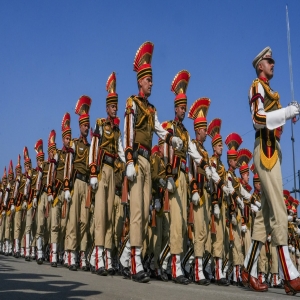


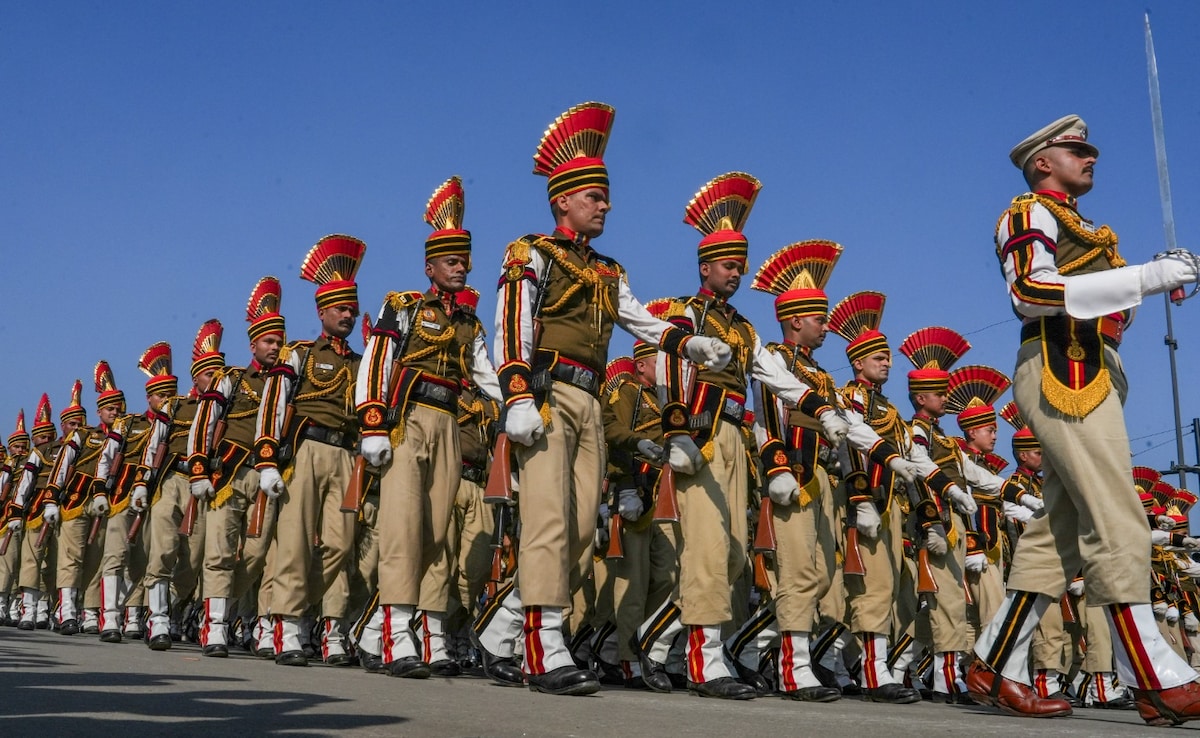
Every year on January 26, India celebrates Republic Day to commemorate the adoption of the Constitution in 1950. The day symbolises the transformation of India into a sovereign, socialist, secular, and democratic republic, founded on the principles of justice, liberty, equality, and fraternity.
However, more than seven decades later, a critical question increasingly emerges in public discourse: "Is India truly functioning as a republic in both letter and spirit?" An examination of the present scenario marked by rising violence, religious intolerance, poverty, and unemployment reveals that social and economic inequalities significantly hinder the full realisation of republican ideals.
A republic, in its essence, is a system where supreme power rests with the people and their elected representatives, not with a monarch or authoritarian authority. The Indian Constitution guarantees fundamental rights, secular governance, equality before the law, and protection of minority interests. Dr BR Ambedkar, the chief architect of the Constitution, emphasised that political democracy must be accompanied by social and economic democracy. Without these, he warned, constitutional morality would remain fragile.
While India has maintained regular elections and a formal democratic structure, the deeper values of republicanism, equal citizenship, mutual respect, and social justice appear increasingly strained in contemporary times.
The Challenges for Becoming Truly Republican India
India proudly identifies itself as a republic, a status it achieved on January 26, 1950, with the adoption of its Constitution. The Preamble declares India to be a sovereign, socialist, secular, and democratic republic, ensuring justice, liberty, equality, and fraternity to all its citizens. While these ideals provide a strong constitutional foundation, the journey toward becoming a truly republican nation remains incomplete.
A republic is not defined merely by constitutional text or electoral processes, but by how deeply its values are embedded in social, political, and economic life. India today faces several challenges that question the full realisation of its republican character.
Rising Violence and Religious Intolerance
One of the most pressing challenges to India's republican character is the rise in violence and religious intolerance. India's constitutional commitment to secularism implies equal respect for all religions and the freedom to practice, profess, and propagate faith. Yet, recent years have witnessed an increase in communal tensions, hate crimes, and mob violence.
According to the National Crime Records Bureau (NCRB), cases related to communal riots and crimes motivated by religious identity have shown periodic spikes. While the exact categorisation of "hate crimes" remains debated, data on riots indicate persistent social fractures. Reports by civil society organisations suggest that incidents of lynching, often linked to religious identity or allegations such as cow slaughter, have disproportionately affected minority communities.
Such trends threaten fraternity, which Dr BR Ambedkar regarded as essential for national unity and cohesion. A republic cannot function effectively when citizens are divided along religious lines and when identity becomes a tool for exclusion rather than a means of coexistence. These divisions undermine the constitutional values of secularism and fraternity, weakening the social fabric necessary for a true republic.
When fear replaces trust and identity becomes a basis for exclusion, the notion of equal citizenship weakens. A republic cannot thrive if segments of its population feel unsafe or marginalised due to their religious or cultural identity.
Freedom of ex
Another hallmark of a republic is the protection of free speech and the right to dissent. The right to dissent is fundamental to republican democracy. Citizens must be able to question policies, criticise leaders, and express alternative viewpoints without fear. However, the use of stringent laws, internet shutdowns, and the arrest of activists and students has raised concerns about the shrinking of democratic space.
A republic thrives on dialogue and debate. When dissent is equated with disloyalty, democracy risks becoming majoritarian rather than participatory. Ensuring civil liberties is therefore crucial to sustaining republican values. Constructive criticism of the government is not a threat but a necessity in a democratic republic.
India ranked 161st out of 180 countries in the World Press Freedom Index 2023, published by Reporters Without Borders, highlighting the challenges faced by the media.
Poverty: A Persistent Challenge to Equality
Economic inequality and poverty pose a serious challenge to India's republican ideals. Equality before the law becomes hollow if vast sections of the population lack access to necessities such as food, healthcare, education, and housing.
According to the World Bank, around 129 million Indians were living in extreme poverty in 2021, defined as living on less than 2.15 USD a day, partly due to the economic impact of the COVID-19 pandemic. While government welfare schemes have helped alleviate some distress, poverty remains widespread, especially in rural areas and among marginalised communities.
The Multidimensional Poverty Index (MPI) 2023, released by NITI Aayog and the United Nations Development Programme (UNDP), acknowledged that India has made some progress in reducing poverty. However, it also highlighted that millions still face deprivation in nutrition, sanitation, education, and living standards.
Persistent poverty limits meaningful participation in democratic processes, thereby weakening the essence of a republic where all citizens are meant to have equal opportunity.
Unemployment and Youth Disillusionment
Unemployment, particularly among educated youth, presents another significant challenge. Employment ensures dignity, social inclusion, and economic independence—key aspects of republican citizenship. Data from the Centre for Monitoring Indian Economy (CMIE) shows that unemployment rates remain a concern, especially in urban areas.
The lack of stable employment has led to frustration and disillusionment among young people, weakening faith in democratic institutions and governance. Unemployment, particularly among young people, further complicates the Republican promise of dignity and economic justice.
The CMIE reported that India's unemployment rate fluctuated between 7% and 8% in 2023, with urban youth unemployment significantly higher. The Periodic Labour Force Survey (PLFS) 2022–23 indicated that although labour force participation has improved, quality employment and job security remain significant concerns.
The question "Is our country still a republic?" does not demand a simple yes-or-no answer. India is a republic in form, but its substance requires constant nurturing. Rising intolerance, social polarisation, economic inequality, and restrictions on freedoms raise serious questions about how fully the republic's ideals are being realised.
Republic Day should therefore be more than a ceremonial celebration. It should serve as a moment of collective introspection, an opportunity to evaluate whether justice, liberty, equality, and fraternity are accessible to all citizens, not just enshrined in legal texts.
Addressing violence, promoting religious harmony, reducing poverty, generating employment, and safeguarding freedoms are essential to strengthening the republic. The Constitution provides the framework, but it is the responsibility of the state, civil society, and citizens alike to ensure that its ideals are lived realities. As Dr BR Ambedkar aptly stated, democracy is not merely a form of government but a mode of associated living
.jpeg)
 A. J. Philip
.jpg)
.png) Jacob Peenikaparambil
Jacob Peenikaparambil
.jpg)
.png) John Dayal
John Dayal
.jpg)
 Pachu Menon
.jpg)

.png)
.png)
.png) Robert Clements
Robert Clements
.jpg)